


The habibi meaning in Arabic is “my beloved,” “my dear,” or “my love,” depending on the situation. It is written حبيبي. Although the translation sounds romantic in English, Arabic speakers can use it affectionately with friends, family members, and partners.
That difference matters when you hear the word in a greeting or receive it in a message. Someone calling you habibi may be showing warmth rather than declaring romantic feelings. This guide explains the wording, the difference between habibi and habibti, and how to understand the expression naturally.
What Does Habibi Literally Mean?
Habibi combines a word meaning beloved with a possessive ending meaning “my.” A careful transliteration is ḥabībī. The final long vowel carries the possessive sense. “My beloved” is a close literal translation, while “my dear” may sound more natural in a friendly English conversation.
Translations need to fit the relationship and tone. A partner’s habibi may be translated as “my love,” but the same English wording could exaggerate the meaning in a conversation between friends. Good translation preserves the warmth without adding a romantic promise that the original speaker did not make.
Habibi in Arabic Writing and Pronunciation
The Arabic spelling is حبيبي. In ordinary English-letter writing, people usually write “habibi,” without the marks used in academic transliteration. You may also encounter “7abibi” in informal Arabic texting, where the number 7 represents the Arabic letter ح. It is a spelling convention, not the number seven spoken aloud.
The first consonant is an Arabic sound that is deeper in the throat than an ordinary English h. A rough English guide is “ha-bee-bee,” with long ee sounds, but this is only an approximation. Listening to a speaker of the dialect you are learning will give you a better model than treating English spelling as an exact pronunciation system.
Habibi vs Habibti
The usual masculine form of address is habibi, حبيبي, while the feminine form is habibti, حبيبتي. The distinction generally relates to the person being addressed, not the speaker. A woman addressing a man can say habibi; a man addressing a woman can say habibti.
Learners sometimes reverse that rule and choose a form based on their own gender. Instead, ask whom you are addressing. You may hear flexible or playful usage in real conversations, and dialect habits vary, but the masculine-versus-feminine addressee distinction is a useful starting point for learning the standard forms.
Is Habibi Always Romantic?
No. Habibi can be romantic, but it can also express friendship, family affection, or everyday warmth. A parent may use an affectionate address with a child, and close friends may use it casually. The same word can carry different emotional weight depending on the relationship and local speaking habits.
Imagine a friend handing over a forgotten notebook and saying “Here you go, habibi.” That may simply be friendly. Compare it with a partner using the word during a private, affectionate conversation. The word contributes warmth in both cases, but the surrounding situation tells you much more about the kind of affection involved.
What Does Ya Habibi Mean?
Ya habibi, يا حبيبي, is used when addressing someone directly. The word “ya” is a vocative particle: it calls or addresses the person. A literal rendering is “O my beloved,” though conversational English often uses “my dear,” “darling,” or simply the person’s name, depending on tone.
For example, “Ya habibi, come sit with us” may sound welcoming, while a drawn-out “ya habibi” in a disagreement could express exasperation. The words alone do not capture the speaker’s voice. Listen for the tone and consider the rest of the sentence before deciding whether the expression is affectionate, playful, or frustrated.
Habibi in Everyday Conversations
A simple example is shukran, habibi, meaning “thank you, my dear.” Someone might use it after a friend helps carry groceries or shares useful information. The phrase combines gratitude with warmth. Whether it feels natural depends on how the people already speak to one another.
In a text message, “Thanks for checking on me, habibi” may serve a similar purpose. A heart emoji can add affection, but it still does not establish a romantic relationship on its own. Avoid reading one term as proof of someone’s intentions. Their broader communication and your existing relationship are more informative.
How to Respond to Habibi
There is no single required response. If someone thanks you, “You’re welcome” is appropriate. The Arabic expression afwan, عفوا, can serve that purpose. If they greet you warmly, you can return the greeting or ask how they are. You do not need to mirror every affectionate word.
If you are comfortable using a term of endearment, choose the form that fits the person you are addressing. If you are not comfortable, a friendly reply without an endearment is perfectly reasonable. “Thank you, that is kind of you” acknowledges the warmth while allowing you to keep your own conversational style.
When Habibi May Feel Too Familiar
A word that sounds natural among friends may feel overly personal in a first business message or a formal setting. Before using habibi with someone you barely know, consider whether they welcome that level of familiarity. Observing how people address one another in the particular setting is more reliable than assuming one rule applies everywhere.
The same applies to copying language from songs or social media clips. A catchy phrase may be playful in entertainment but awkward in a serious conversation. Learn the meaning and the relationship behind the expression. Using a person’s name respectfully is always an available alternative when you are unsure.
Habibi Compared With Hayati
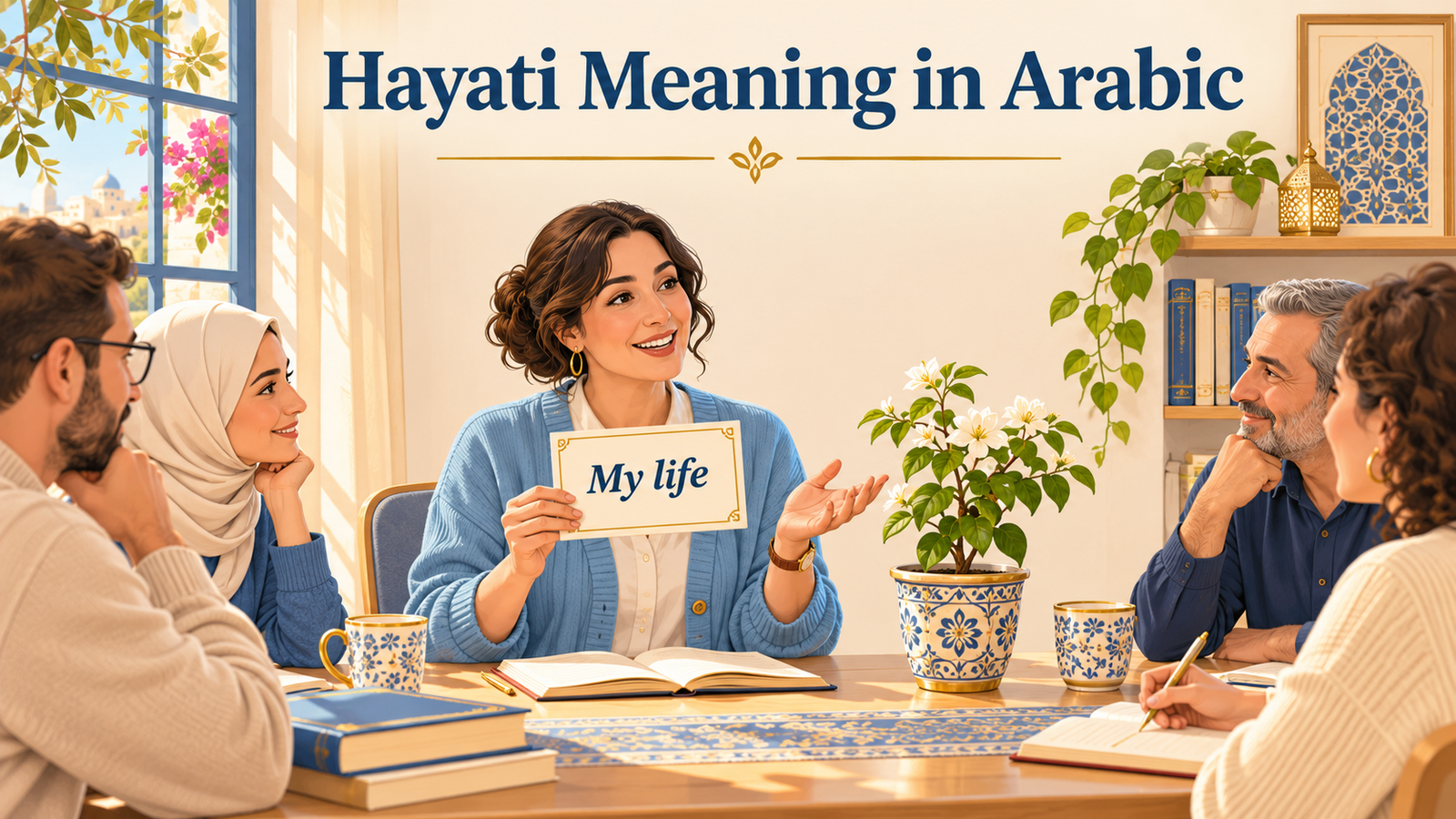
Habibi means “my beloved” or “my dear,” while hayati, حياتي, literally means “my life.” Both can function as affectionate forms of address, but their literal images are different. Habibi names someone dear to the speaker; hayati uses “my life” as an expression of closeness.
Neither word provides a reliable scale of love or commitment. It would be misleading to claim that everyone who says hayati feels more strongly than everyone who says habibi. People have individual habits, and expressions can become familiar parts of everyday speech. Interpret the relationship through context rather than ranking affectionate vocabulary.
Frequently Asked Questions
What does habibi mean in Arabic?
It means my beloved, my dear, or my love. The most natural English translation depends on whether the situation is friendly, familial, or romantic.
Can a woman say habibi to a man?
Yes. The masculine form generally refers to the person being addressed. The speaker does not have to be a man to use it.
What is the feminine form of habibi?
Habibti, written حبيبتي, is the usual feminine form of address. It is commonly used when addressing a woman or girl affectionately.
Does habibi mean someone is flirting?
Not necessarily. It can be friendly or familial. Consider the whole conversation and the relationship rather than treating the word as proof of romantic interest.
What does 7abibi mean?
It is an informal English-letter spelling of habibi. The number 7 represents the Arabic consonant ح in a common Arabic texting convention.
What should I say when someone calls me habibi?
Respond to their message naturally. Return the greeting, say thank you, or answer their question. You do not have to use an affectionate term in return.
Conclusion
The habibi meaning in Arabic combines affection with the possessive idea of “my”: my beloved, my dear, or my love. Habibi and habibti usually distinguish the person being addressed, while “ya” introduces a direct call.
Use the relationship, tone, and situation to understand the expression. Recognizing its warmth without assuming romance will help you read Arabic greetings and messages more accurately.









Leave a Reply