

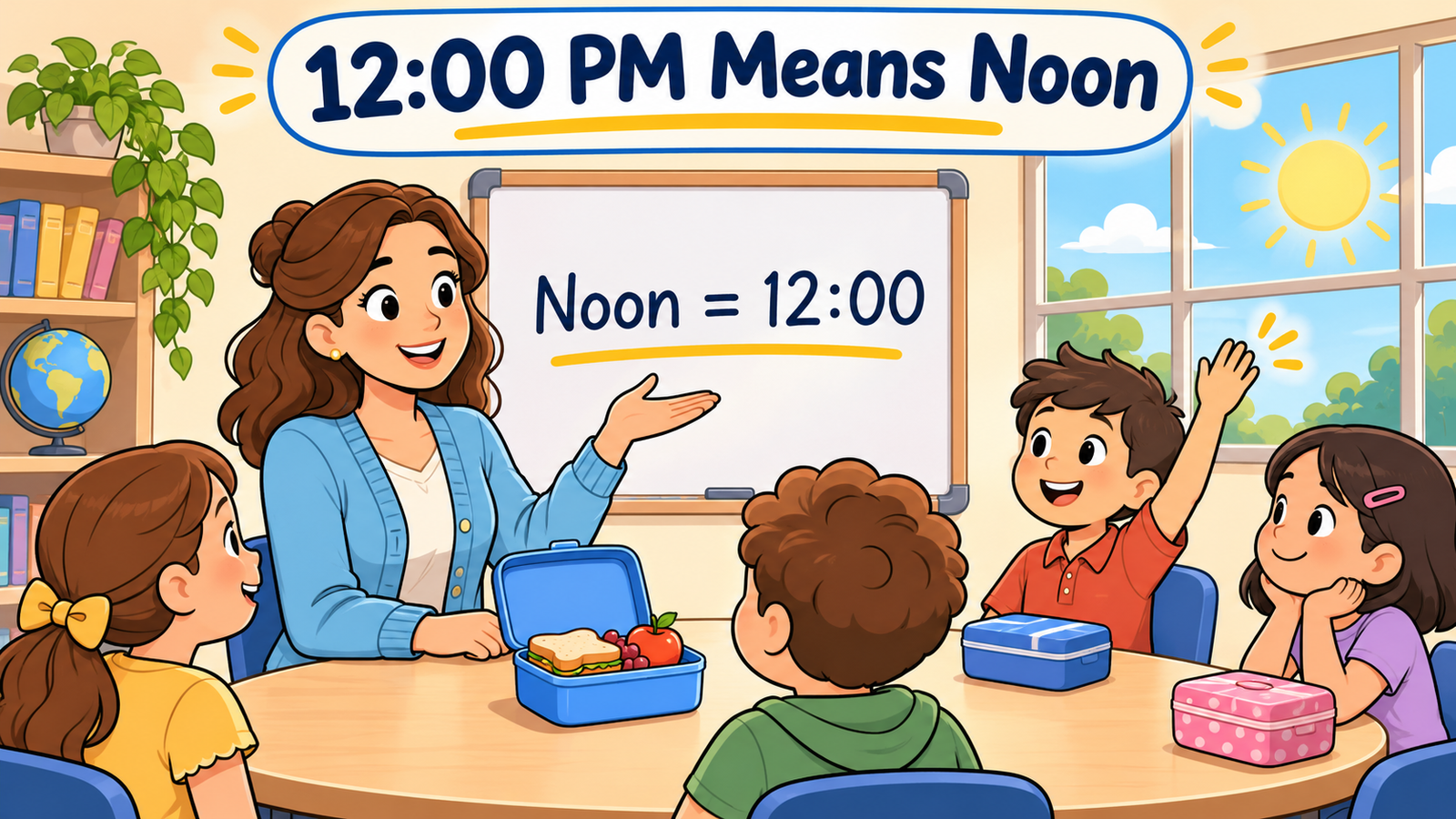
12:00 PM means noon, or midday. It is written 12:00 in 24-hour notation. Midnight is 12:00 AM, written 00:00. If it is 10:35 AM now, there are 1 hour and 25 minutes until noon on the same day.
The meaning of noon stays the same, but the wait until noon depends on your starting time and target date. This guide explains both the notation and the calculation, with examples you can apply to your own clock.
Why 12:00 PM Can Be Confusing
The twelve-hour clock cycles through the numbers one to twelve twice each day. AM and PM distinguish the two periods. The unusual part is that each period begins at twelve rather than one, so the label changes when the display reaches 12:00.
Watch the sequence around midday: 11:59 AM is followed by 12:00 PM, then 12:01 PM. At night, 11:59 PM is followed by 12:00 AM on the next date. Thinking through those transitions is often easier than trying to guess the label from the number twelve alone.
Noon and Midnight Are Different
Noon sits between the morning and afternoon portions of the day. Midnight marks the start of a new calendar date. They may show the same hour numeral on a twelve-hour display, but their AM/PM labels and their places in a daily schedule are different.
For an important instruction, using the word “noon” can remove doubt. “Submit the form by noon on Friday” is clearer than a bare “12:00 deadline.” If the audience spans time zones, add the relevant zone as well; a clear clock label still needs a clear location or offset.
Convert 12:00 PM to 24-Hour Time
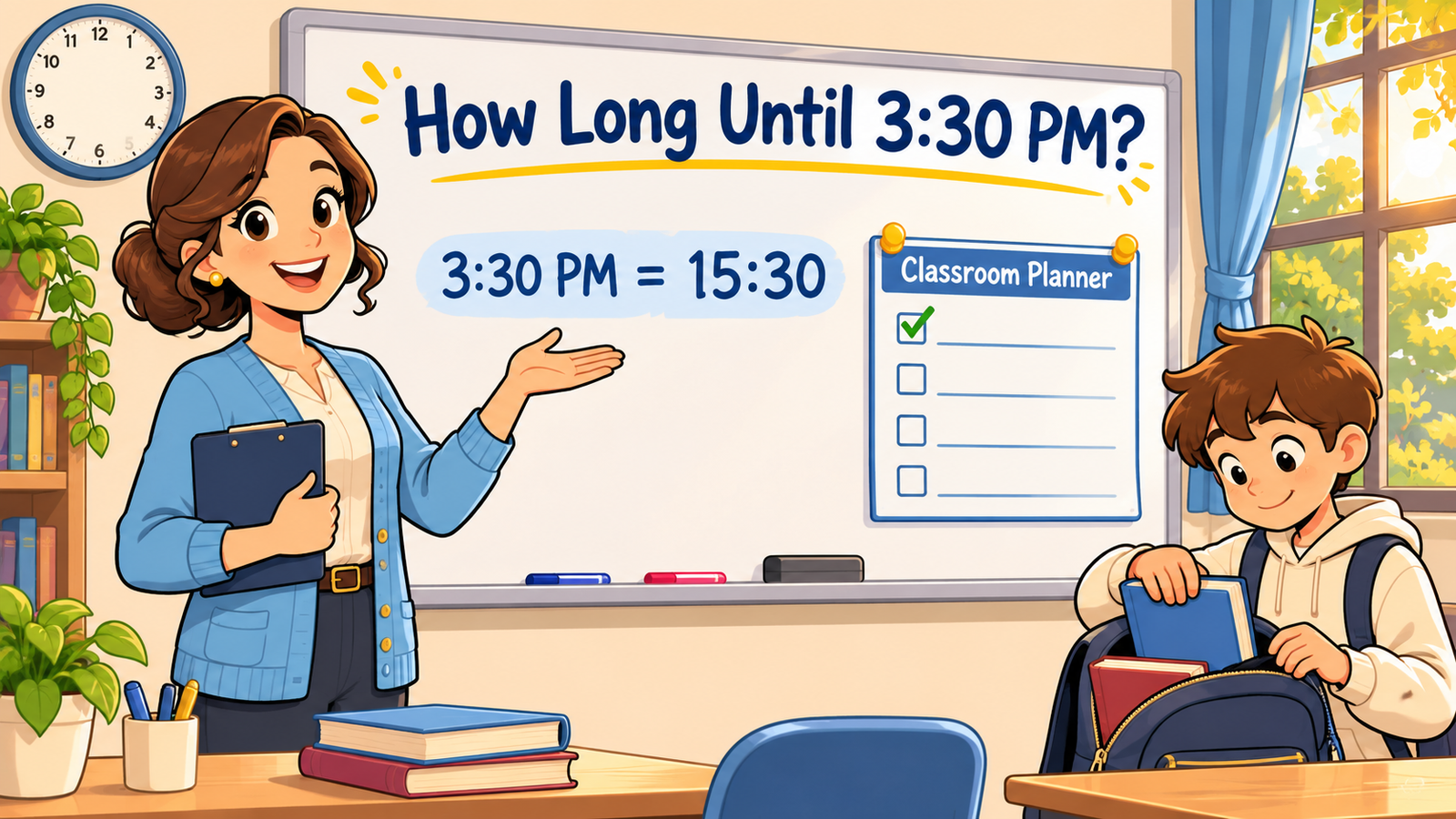
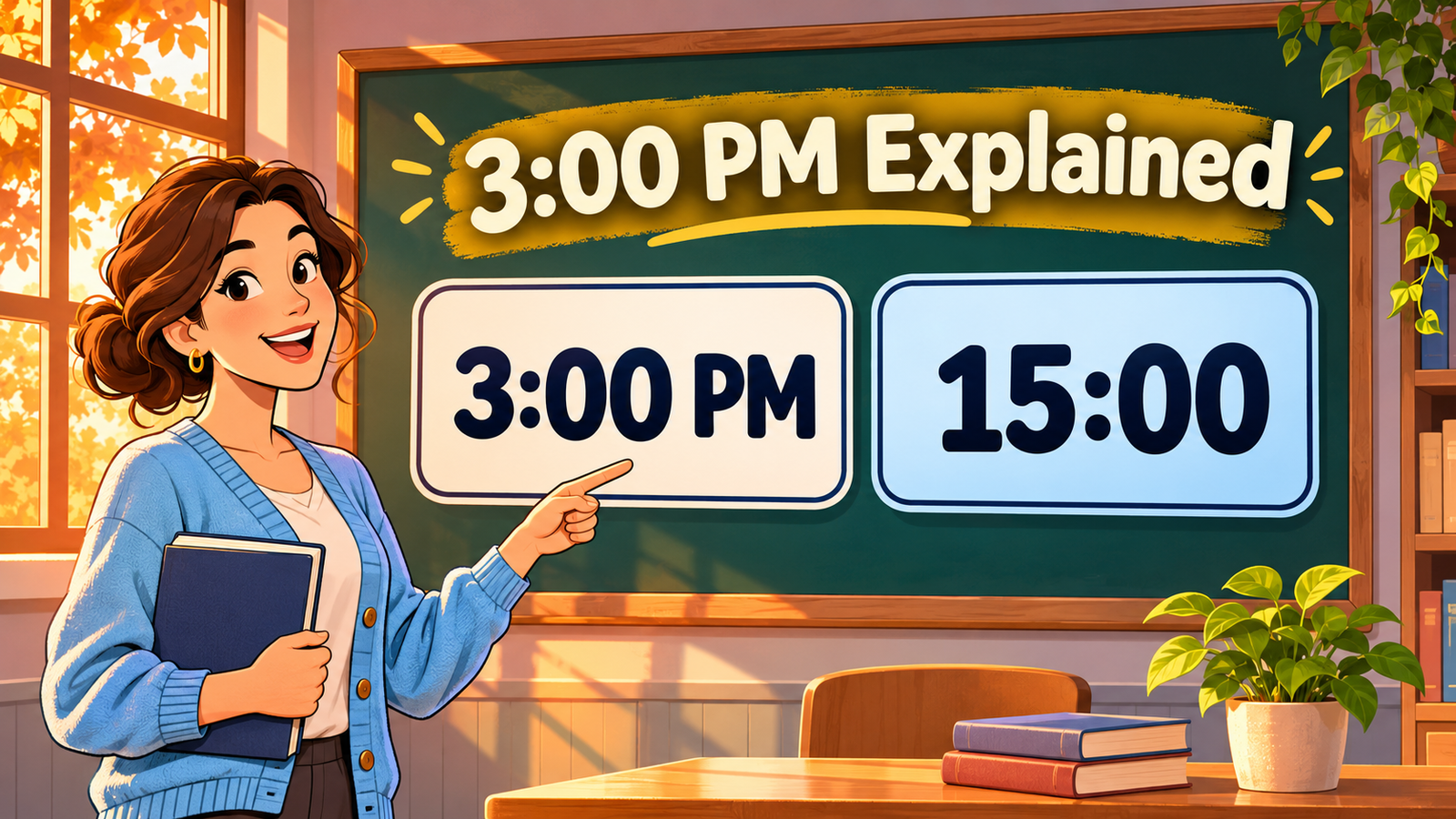
Noon stays 12:00 in the 24-hour system. Do not apply the afternoon “add twelve” rule to twelve itself. That rule works for hours from 1 PM through 11 PM, but noon is the exception you need to remember.
Midnight becomes 00:00. The minutes follow normally: 12:25 PM is 12:25, while 12:25 AM is 00:25. Keeping these two examples together makes it easier to see that the hour changes at midnight, whereas the noon hour retains its twelve.
What Does 1200 Mean?
In a schedule that uses four-digit 24-hour times, 1200 represents 12:00, or noon. The first two digits show the hour and the last two show the minutes. A colon is simply omitted in that style of notation.
Outside a time context, 1200 could be an ordinary number, price, or quantity. In everyday messages, write 12:00 PM or noon to make the meaning clear. Avoid combining systems into “12:00 PM noon” when the extra label adds clutter rather than clarity; one unambiguous form is usually enough.
How Long Until 12:00 PM?
Subtract the current time from noon on the intended date. At 9:20 AM, the wait is 2 hours and 40 minutes. At 11:08 AM, it is 52 minutes. At 11:59 AM, it is one minute if your starting reading is exactly on that minute.
These are worked examples rather than current countdown values. Read your own clock before using the method. If seconds matter, include them: from 11:59:40 AM to 12:00:00 PM, the remaining duration is twenty seconds, not a full minute.
Count Forward Through the Morning
Counting forward breaks a calculation into comfortable pieces. From 9:47 AM, count thirteen minutes to 10:00 AM and then two hours to noon. The total is 2 hours and 13 minutes. This avoids subtracting a larger minute value from zero.
From 10:36 AM, count twenty-four minutes to 11:00 AM and another hour to noon. The result is 1 hour and 24 minutes, or eighty-four minutes. You can verify either example by adding the duration back to the starting time.
Calculate the Difference in Minutes
Noon occupies minute 720 on a standard clock-position scale because twelve multiplied by sixty equals 720. Convert the starting time to minutes using hour times sixty plus minutes. At 10:36 AM, the total is 636.
Subtracting 636 from 720 gives eighty-four minutes. Divide by sixty to express the answer as one hour with twenty-four minutes remaining. These totals describe clock positions; use complete timestamps for actual elapsed duration if the interval includes a change in the local clock offset.
If Noon Has Already Passed
At 12:18 PM, today’s noon was eighteen minutes ago. If you mean the next noon, tomorrow’s noon is normally 23 hours and 42 minutes away. Those are two different answers because they refer to different target dates.
A deadline fixed at noon today does not move to tomorrow because a daily countdown rolls forward. Check the event’s date before choosing the next occurrence. For a future recurring reminder, tomorrow may be the right target; for a missed appointment, it is not a replacement for today’s scheduled time.
Use Noon in a Practical Schedule
Suppose a lesson begins at noon and you want to be ready ten minutes early. Your readiness target is 11:50 AM. If preparation takes twenty-five minutes, begin at 11:25 AM. Working backward from the appointment gives you a useful action time.
Keep travel time separate from preparation time. If reaching the venue takes another fifteen minutes, your departure must account for that as well. A countdown tells you the time available until the target; it does not automatically reserve time for each task you need to complete beforehand.
Alarms and Timers Answer Different Questions
An alarm set for 12:00 PM targets a clock time. A timer set for two hours measures a duration from when you start it. Starting that timer at 10:15 AM makes it finish at 12:15 PM under ordinary conditions, so it would miss a noon target.
Check the AM/PM selection and the date or recurrence setting before saving an alarm. A display showing only “12:00” may require an additional label elsewhere on the screen. For a one-time event, a dated calendar reminder can make the intended day easier to see.
Noon in Different Time Zones
Local noon is tied to a location’s clock. Two people in different time zones can reach 12:00 PM at different moments, so “meet at noon” needs a shared reference when participants are remote. Use a calendar event with the intended zone or write the zone explicitly.
For a countdown crossing an offset change, the actual number of elapsed hours may differ from ordinary clock subtraction. The simple examples here assume an unchanged offset. Exact calculations need both the start and target dates, not just the two clock readings.
Frequently Asked Questions
Is 12:00 PM noon or midnight?
It is noon. Midnight is 12:00 AM. Writing “noon” directly is helpful when you want to remove any possible confusion in an invitation or deadline.
Is noon 12:00 or 00:00 in 24-hour time?
Noon is 12:00. The notation 00:00 identifies midnight at the start of a calendar day, so the two should not be substituted for one another.
How long until noon from 10:35 AM?
There are 1 hour and 25 minutes remaining on the same day. Count twenty-five minutes to 11:00 AM and then one more hour to noon.
Does 12:30 PM mean after lunch?
It means thirty minutes after noon. Whether that is after lunch depends on a person’s schedule; the clock notation does not define when someone eats.
How long until the next noon from 1:15 PM?
The next noon is normally 22 hours and 45 minutes away, on the following date. Confirm the target date and account for any clock-offset change during the interval.
Is this a live countdown to 12:00 PM?
No. This page explains how to calculate the wait. Use your present local time and the intended noon date to obtain your own current answer.
Conclusion
12:00 PM means noon, and its 24-hour equivalent is 12:00. Remember that 12:00 AM is midnight, then check the target date before calculating the remaining wait.
For clear scheduling, write noon with the date and relevant time zone. Count forward or subtract clock positions in minutes, and keep any preparation or travel time separate from the event’s start.




Leave a Reply