


How long until 11 PM? If it is 8:35 PM, there are 2 hours and 25 minutes left. If it is 10:48 PM, there are 12 minutes left. Your actual answer depends on your current time, the target date, and the time zone.
11 PM is written 23:00 in the 24-hour clock. This guide explains how to calculate the interval yourself. The times below are worked examples, not a live countdown, so begin by checking your own clock and confirming which occurrence of 11 PM you mean.
What Does 11 PM Mean?
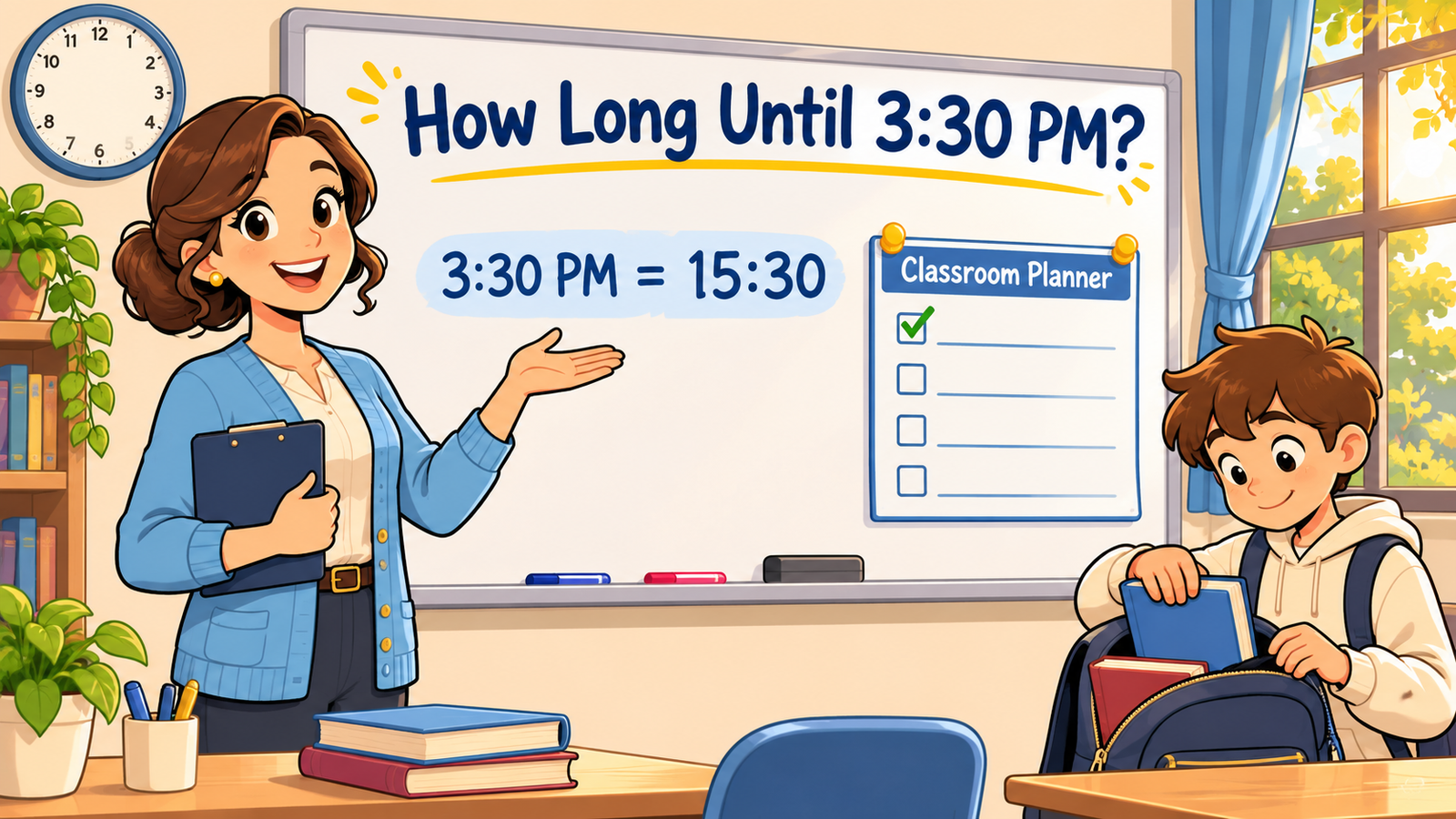
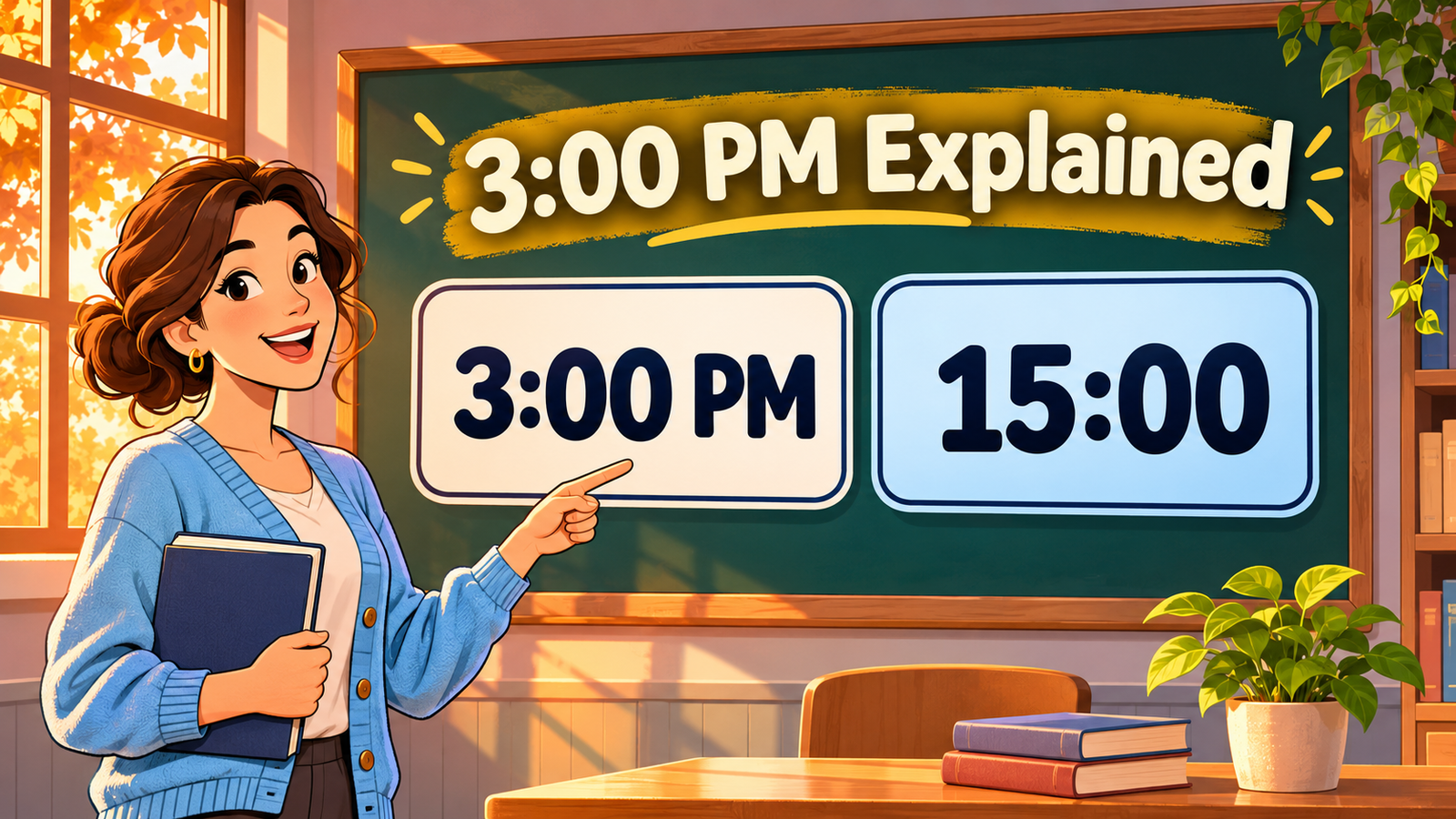
11 PM is eleven o’clock at night, one clock hour before midnight. It is different from 11 AM, which is in the morning. On a 24-hour display, 11 AM remains 11:00, while 11 PM becomes 23:00. That distinction prevents a twelve-hour error.
For a dated event, 11 PM still belongs to the date shown before midnight. An event at 11 PM on Monday is on Monday, even if it continues past midnight into Tuesday. Write the date beside the time when arranging late-night activities so people do not arrive a day early or late.
Count Forward in Manageable Pieces
To calculate mentally, move from your starting time to the next whole hour, then continue to 11 PM. At 7:26 PM, there are 34 minutes until 8 PM. From 8 PM to 11 PM is three hours. Together, that is 3 hours and 34 minutes.
The reverse check is straightforward: 7:26 PM plus three hours is 10:26 PM, and another 34 minutes reaches 11 PM. Counting forward is especially useful when the target has zero minutes and the starting time does not, because it avoids awkward borrowing during subtraction.
Use 24-Hour Time for Subtraction
Convert the starting time to 24-hour notation before calculating. For example, 6:42 PM becomes 18:42. The target 23:00 represents 1,380 minutes after midnight, while 18:42 represents 1,122 minutes. The difference is 258 minutes.
Convert 258 minutes into four hours and 18 minutes. This gives the same answer as counting 18 minutes from 6:42 PM to 7 PM and then four hours to 11 PM. Both methods work; choose the one you can check most comfortably.
Evening Countdown Examples
From 5:15 PM, the wait until 11 PM is 5 hours and 45 minutes. From 8:05 PM, it is 2 hours and 55 minutes. From 9:32 PM, it is 1 hour and 28 minutes. From 10:54 PM, it is six minutes.
These examples assume the same calendar date and no change in the local clock offset. If seconds matter, include them too. At 10:59:10 PM, the remaining interval is 50 seconds. Rounding that to a full minute is acceptable for a rough estimate, but not for an exact countdown.
Starting in the Morning or Afternoon
You can calculate until 11 PM from any earlier time that day. At 9:20 AM, count 2 hours and 40 minutes to noon, then 11 more hours to 11 PM. The total is 13 hours and 40 minutes. At 3:45 PM, the interval is 7 hours and 15 minutes.
Avoid subtracting 9 from 11 and calling the morning example a two-hour wait. That calculation ignores the AM/PM difference. Writing 09:20 and 23:00 makes the long interval visible and is a useful habit whenever your starting time and target fall on opposite sides of noon.
What If It Is Already After 11 PM?
At 11:25 PM, today’s 11 PM was 25 minutes ago. The next daily occurrence is tomorrow at 11 PM. With an unchanged UTC offset, that wait is 23 hours and 35 minutes. A countdown to tonight’s specific event, however, should say the event time has passed.
This is particularly important for closing times and deadlines. A closing time that passed tonight does not become tomorrow’s opening time, and a missed deadline does not automatically renew. Decide whether you are measuring a repeating clock time or a fixed event before applying a next-day calculation.
What Happens Just After Midnight?
At 12:15 AM, the next 11 PM is later on the same calendar day. There are normally 22 hours and 45 minutes until it. People sometimes say “tomorrow night” loosely after staying up late, but calendar calculations should use the actual date.
If it is early Tuesday morning, Tuesday at 11 PM is the same-date target. Monday at 11 PM is already in the past. Writing the weekday or date is more reliable than using “tonight” or “tomorrow” when people are messaging around midnight and may interpret those words differently.
Separate a Deadline From a Reminder
If a task must be completed by 11 PM, a reminder at exactly 11 PM may be too late to help. Suppose it is 9:10 PM and you need 60 minutes of work plus 20 minutes to review and send it. The 110 minutes available leave a 30-minute buffer.
You could aim to finish the work by 10:10 PM and complete review and sending by 10:30 PM. The remaining half-hour provides room for delays. This example shows why the countdown should inform your start time, rather than becoming the moment you first begin preparing.
Time Zones and Daylight-Saving Changes
For an event advertised in another location, 11 PM means 11 PM in the stated event zone. It may be a different hour or date for you. Use the event date with the zone when converting; some locations change their offsets seasonally, while others do not.
Overnight calculations are especially likely to cross a clock change in places that observe daylight saving. In that situation, counting hours on a clock face may not equal the actual elapsed duration. A date-aware calendar or timestamp calculation is the appropriate way to handle the change accurately.
Choosing an Alarm or Countdown
An alarm is convenient when the target is a specific local clock time. A countdown timer is convenient when you already know the duration and start it immediately. If you calculate a two-hour wait but start the timer ten minutes later, it will no longer end at the intended time.
For a one-time event, include the date and zone in a calendar entry. For a repeating reminder, check that the intended days are selected. Whichever method you use, verify the target instead of relying only on a label such as “night reminder,” which may hide an incorrect AM/PM setting.
Frequently Asked Questions
How long until 11 PM from 9 PM?
There are two hours, or 120 minutes, on the same date with no clock-offset change.
How long until 11 PM from 10:20 PM?
There are 40 minutes remaining.
What is 11 PM in 24-hour time?
It is 23:00. The time 11:00 refers to 11 AM.
Is 11 PM before or after midnight?
It is one clock hour before the following midnight.
At 12:30 AM, how long until 11 PM?
The usual same-day interval is 22 hours and 30 minutes, assuming no offset change during that period.
Does this guide calculate the current wait automatically?
No. It provides examples and methods. Use your own current time and the correct target date.
Conclusion
To calculate how long until 11 PM, use 23:00 as the target and compare it with your starting time on the intended date. Counting forward and subtracting minutes are both reliable for ordinary unchanged-offset intervals.
Near midnight, keep the calendar date visible. For deadlines and remote events, also confirm preparation time and the event’s time zone so the calculation supports the right plan.

Leave a Reply