

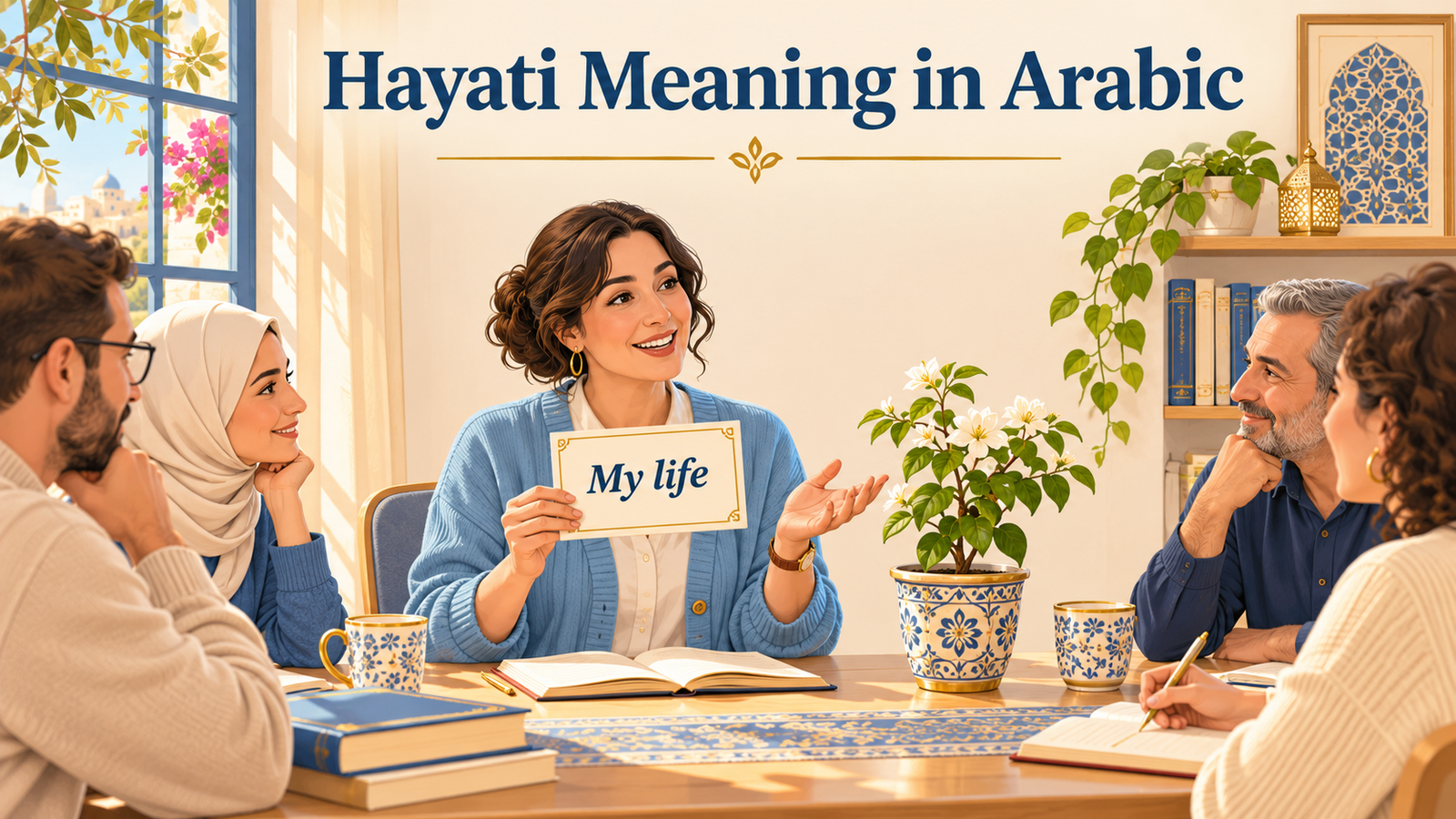
The hayati meaning in Arabic is “my life.” Written حياتي, the word can refer literally to someone’s life or function as an affectionate expression similar to “my darling.” The sentence tells you which use is intended.
That distinction is useful when you see hayati in a message, caption, or conversation. A partner calling someone hayati is using an endearment, but a person talking about a difficult period “in my life” is using the same word literally. This guide explains both meanings and how to recognize them.
What Does Hayati Literally Mean?
Hayati is built from the Arabic word for life, حياة, with an ending that means “my.” The resulting form, حياتي, is commonly transliterated as ḥayātī. The literal translation remains “my life,” even when the phrase is used affectionately.
For a learner, separating the literal meaning from the conversational purpose is helpful. English also uses expressions that mean more than their individual words in context. When someone addresses a loved one as “my life,” they are usually expressing closeness, rather than making a factual statement that the person and their biological life are identical.
Hayati in Arabic Script and English Letters
The spelling حياتي is useful to recognize because English-letter versions vary. You may encounter “hayati,” “hayaty,” or “7ayati” in informal messages. The number 7 can represent the Arabic letter ح. These variations can point to the same expression rather than separate words with different emotional meanings.
A rough pronunciation guide is “ha-yaa-tee,” though the Arabic opening consonant is deeper in the throat than an English h. The long vowels also matter. Dialect pronunciation may differ, so treat English-letter spellings as an introduction rather than a complete pronunciation lesson. Listening to the speaker you are communicating with gives better guidance.
Hayati as a Term of Endearment
When addressed to a loved one, hayati can function like “my darling” or “my love.” The literal image is that the person is deeply important to the speaker. A partner might use it in a loving greeting, and a family member may use it to express tenderness.
It does not follow that every use has the same intensity. Some people use endearments frequently; others reserve them for very close relationships. A warm message containing hayati is evidence of affectionate language, but it is not a guarantee of a particular commitment. Read it alongside the person’s actions, tone, and other words.
What Does Ya Hayati Mean?
Ya hayati, يا حياتي, directly addresses someone. The word “ya” is used to call or address a person, so a literal translation is “O my life.” In natural English, “my darling” may better convey the intended feeling than reproducing that literal wording in every situation.
Imagine a loved one saying “Ya hayati, I am happy to see you.” The phrase adds warmth to the greeting. In another situation, the same expression may introduce reassurance or concern. It is the rest of the sentence that tells you whether the speaker is welcoming someone, comforting them, or asking for their attention.
Can You Say Hayati to a Man or a Woman?
Yes. Hayati itself can be used as an affectionate address to a man or a woman. It means “my life,” and its form does not change simply because the person being addressed is male or female. The noun’s grammatical gender is not a label for the recipient’s gender.
Other words in the sentence may change, however. In standard Arabic, “you” is anta when addressing a man and anti when addressing a woman. Both can appear before hayati in a sentence meaning “You are my life.” Dialects may use different pronunciations, but the endearment hayati remains recognizable.
Literal Hayati Versus Affectionate Hayati
A useful literal phrase is fi hayati, في حياتي, meaning “in my life.” In a discussion of experiences, memories, or personal changes, hayati may simply refer to the speaker’s life. It does not automatically refer to another person or carry a romantic meaning.
Compare an English sentence such as “That was an important year in my life” with “Good morning, my life,” addressed affectionately to a partner. The first discusses experience; the second uses an endearment. When translating Arabic, check whether hayati belongs to a statement about life or is being used to address someone.
Hayati vs Habibi and Habibti
Habibi means “my beloved” or “my dear” in the masculine form of address, and habibti is the usual feminine form. Hayati means “my life” and does not make that same male-versus-female distinction in the endearment itself. The words share an affectionate function but have different literal meanings and grammatical patterns.
Do not treat them as a fixed ranking, with one always expressing stronger love than another. A person may prefer hayati because it is familiar in their family, while someone else may use habibi more often. The speaker’s habits and your relationship matter more than a supposed universal scale of affection.
How to Reply When Someone Says Hayati
Reply to the message and the level of closeness you share. If a partner sends a loving greeting, you might respond with your own affectionate greeting. If a relative uses the word warmly, a simple “Thank you” or “I am happy to see you too” can be perfectly natural.
You do not have to repeat the expression or increase the intimacy of the conversation. If you are unsure what the person intended, a neutral, friendly response gives you time to understand their style. If the word makes you uncomfortable, you can ask them to use your name instead without debating the dictionary definition.
Using Hayati Naturally and Respectfully
An endearment works best when it fits an existing relationship. Before using hayati with a new acquaintance, consider whether affectionate language is welcome. What sounds ordinary between close family members may feel too personal in a workplace introduction or a message to someone you have just met.
For learners, a good practice is to understand the word before adopting it. Notice who uses it, whom they address, and how the other person responds. Avoid copying a dramatic song lyric into an everyday interaction and assuming the emotional effect will be identical. Simple greetings are useful while you learn those conversational differences.
Common Misunderstandings About Hayati
One misunderstanding is that hayati always means “I love you.” It can communicate affection, but it is not the same sentence. Another is that the word can only be used romantically. Family affection and literal references to one’s life also provide contexts in which you may encounter it.
A third misunderstanding is that every English-letter spelling represents a new word. Hayati and hayaty may just reflect different transliteration choices. At the same time, do not assume that every similarly spelled name in every language has the same meaning. This guide concerns the Arabic expression حياتي in its relevant context.
Frequently Asked Questions
What does hayati mean in Arabic?
Hayati means “my life.” It can refer literally to the speaker’s life or serve as an affectionate address similar to “my darling.”
How do you write hayati in Arabic?
It is written حياتي. The common English spelling is hayati, although informal transliterations such as hayaty and 7ayati also appear.
What does ya hayati mean?
Ya hayati addresses someone affectionately as “my life.” In natural English, “my darling” may communicate the intended tone more smoothly.
Can a woman call a man hayati?
Yes. Hayati can address a man or a woman. The word itself does not change according to the addressee’s gender in this use.
Is hayati the same as habibi?
No. Hayati literally means my life; habibi means my beloved or my dear. Both may be affectionate, but they are different words.
Does hayati always indicate romantic love?
No. It may express family affection or refer literally to someone’s life. The relationship and the complete sentence determine its meaning.
Conclusion
The hayati meaning in Arabic begins with the literal phrase “my life.” In affectionate address, that wording can express closeness and tenderness, while in ordinary sentences it may simply refer to personal experience.
Recognize the Arabic spelling, distinguish hayati from habibi and habibti, and pay attention to the relationship. Those habits will help you understand the expression without assuming more than the speaker has actually said.








Leave a Reply