


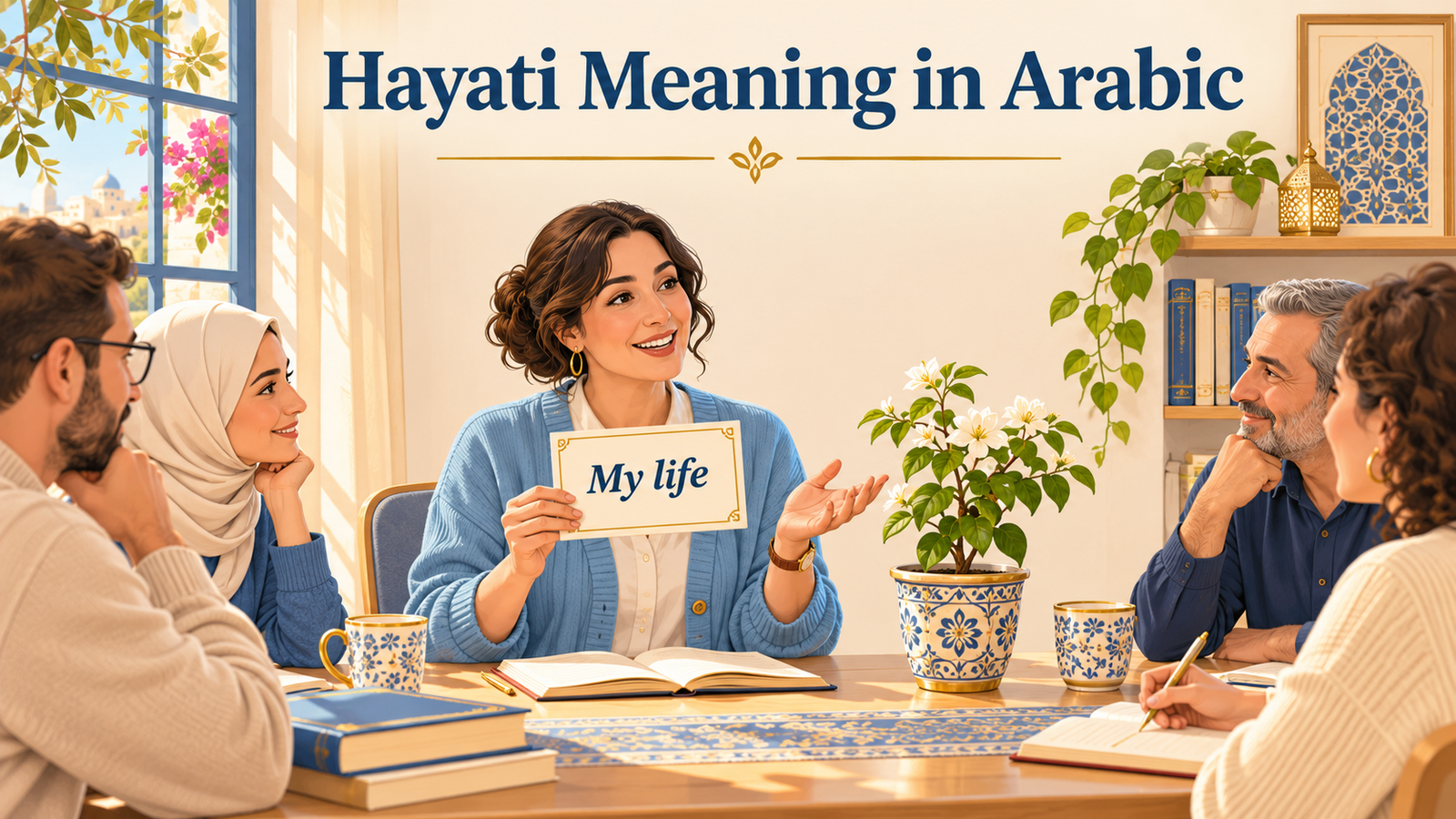
The habibti meaning in Arabic is “my dear,” “my darling,” or “my beloved” when addressing a woman or girl. It is written حبيبتي. The word expresses affection, but it does not automatically mean the speaker is flirting.
You may hear habibti between partners, from a parent to a daughter, or between close women friends. Understanding whom it addresses and how it fits the relationship will help you choose a natural translation. Here is a practical guide to its meaning, grammar, examples, and replies.
What Does Habibti Mean?
Habibti is an affectionate form of address. “My beloved” is a close translation, but “my dear” often sounds more natural in a friendly English exchange. “My darling” may fit a tender family conversation or a romantic message. There is no single English equivalent that captures every situation.
For example, a friend checking whether you arrived home might add habibti to show warmth. Translating that message as a declaration of love would overstate it. Start with the basic meaning, then let the relationship and the rest of the sentence determine how affectionate the English version should sound.
Habibti in Arabic Writing
The Arabic spelling is حبيبتي. Its fuller standard form is transliterated ḥabībatī, while the familiar spoken form is commonly written habibti. It comes from ḥabība, a feminine word for a beloved person, with the possessive ending -ī, meaning “my.”
The t appears when the feminine ending connects to the possessive suffix. It is therefore more accurate to understand the word as a feminine noun plus “my” than to treat “ti” as a universal Arabic ending for “my woman.” You do not need advanced grammar to use the expression, but this distinction prevents a common misunderstanding.
Habibti vs Habibi
The usual distinction concerns the person being addressed: habibti addresses a woman or girl, while habibi addresses a man or boy. A speaker does not choose the form according to their own gender. A woman can say habibi to a man, and a man can say habibti to a woman.
Consider a brother thanking his sister for help: habibti is the relevant affectionate form if that is how they normally speak. If she thanks him in return, habibi is the corresponding masculine form. Real dialect usage can be flexible, but this addressee-based distinction is the clearest starting point for learners.
Is Habibti Romantic or Friendly?
Habibti can be either, and it can also express family affection. A partner may use it romantically, a grandmother may use it tenderly with a granddaughter, and a friend may use it casually. The word itself does not identify the relationship or establish anyone’s intentions.
Imagine receiving “I saved you a seat, habibti” from a close friend. The practical gesture and existing friendship help explain the warmth. A private message from a romantic partner may carry a different tone. Neither interpretation requires changing the dictionary meaning; the difference comes from how people relate to one another.
What Does Ya Habibti Mean?
Ya habibti, يا حبيبتي, directly addresses the person. “Ya” is a calling or addressing particle. A literal translation is “O my beloved,” but ordinary English often uses “my dear” or “darling” without an equivalent of “O.” The natural translation depends on the sentence.
For instance, “Ya habibti, your notebook is on the chair” could be a gentle reminder. The same expression in a worried voice may introduce concern. It is useful to notice whether the speaker is welcoming, reassuring, teasing, or expressing frustration rather than assuming every use has an identical emotional tone.
Everyday Examples With Clear Context
شكراً يا حبيبتي means “Thank you, my dear.” A woman might say it to a close friend who has helped organize a family gathering. The gratitude is the central message; habibti adds affection. In English, a warm “Thank you so much” may sometimes convey the same social effect.
صباح الخير يا حبيبتي means “Good morning, my dear.” This could be a greeting to a daughter or a partner, depending on who is speaking. When learning these examples, keep the situation attached to the words. Memorizing a phrase without its relationship context can make it sound too intimate in the wrong setting.
How to Respond to Habibti
Respond to what the person actually says. If they thank you, “You’re welcome” is appropriate; afwan, عفوا, is one Arabic option. If they ask about your day, answer the question. Being addressed affectionately does not create an obligation to reply with another endearment.
If you do return the warmth, choose language that feels natural for your relationship. A simple “Thank you, you are very kind” works when you are still learning. You can also use the person’s name. There is no need to guess a romantic reply just because an English translation includes “my love.”
Spelling and Pronunciation Variations
Habibti is a common English-letter spelling of the spoken form. You may see habibati when the fuller standard pronunciation is being represented. Informal messages may also use 7abibti, with 7 standing for the Arabic letter ح. Those writing choices do not by themselves signal different levels of affection.
The first consonant is deeper in the throat than an ordinary English h. A rough guide to the everyday form is “ha-beeb-tee,” but English spelling cannot fully reproduce the Arabic sounds. For pronunciation practice, follow a speaker of the dialect you are learning and avoid assuming every Arabic-speaking community uses exactly the same vowels.
When Habibti Can Sound Too Familiar
Habibti is personal language, so it may feel inappropriate in a first business email or when addressing someone who has not invited that familiarity. Even a well-meant endearment can seem patronizing if the listener feels it dismisses their concerns. The relationship matters as much as the speaker’s intention.
A useful approach is to observe how people address one another and use names or neutral greetings while you learn. If someone says they dislike an endearment, use their preferred form of address. Knowing the word gives you a choice; it does not mean you need to insert it into every Arabic conversation.
Frequently Asked Questions
What does habibti mean in English?
It means my dear, my darling, or my beloved when addressing a woman or girl. The most natural translation depends on the relationship and tone.
Can a woman call another woman habibti?
Yes. It can express friendship or family affection between women. It does not automatically indicate a romantic relationship.
Can a man say habibti?
Yes. The feminine form normally describes the person being addressed, not the speaker. Whether it is appropriate depends on their relationship.
Is habibti the same as habibi?
They are related affectionate expressions. Habibti is the usual feminine form of address, while habibi is the usual masculine form.
Does habibti mean girlfriend?
Not automatically. It means my beloved or my dear, and it can address someone who is a friend or family member as well as a partner.
What should I say back to ya habibti?
Answer the greeting, question, or thanks that came with it. You can respond warmly without using an endearment yourself.
Conclusion
The habibti meaning in Arabic combines affection with a feminine form of address: my dear, my darling, or my beloved. Its grammar points to the person being addressed, while its emotional meaning comes from the relationship.
Read the whole message, notice the tone, and respond naturally. That approach helps you recognize the word’s warmth without mistaking every friendly use for romance.









Leave a Reply