

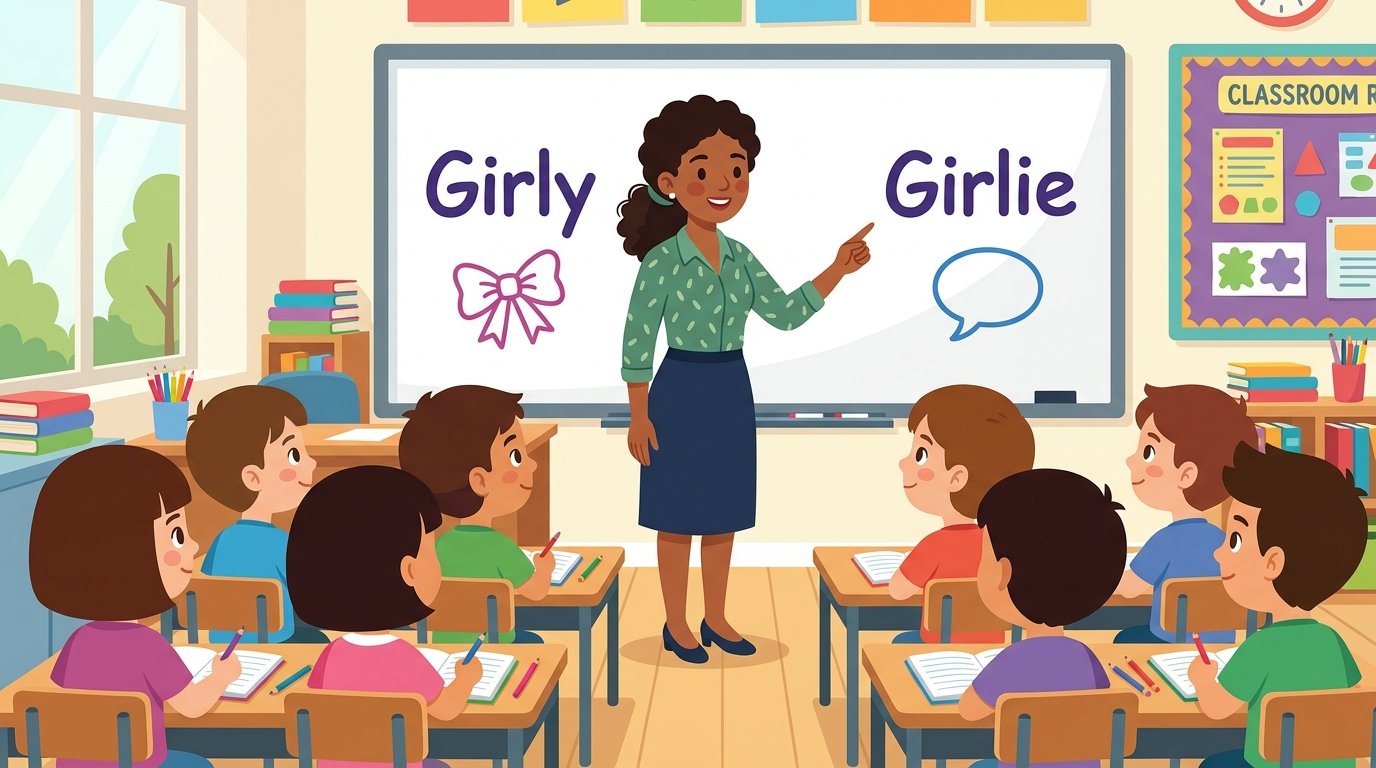
Ever typed “girlie” and paused, wondering if “girly” was actually the correct spelling? You’re definitely not alone. The two words look alike, sound nearly identical, and often get used in overlapping ways both online and in everyday conversation.
The debate over girlie or girly has picked up even more steam thanks to TikTok trends, “corporate girlie” culture, and general social media slang. Both words connect to femininity, but they aren’t always used the same way.
This guide breaks down the meanings, grammar, slang usage, spelling differences, and the modern internet trends surrounding these two commonly confused words.
Is It Girlie or Girly?
Technically, both spellings are correct — they just serve slightly different purposes.
Girly
Girly is the more traditional, widely accepted adjective. It describes something feminine or traditionally associated with girls.
Examples:
- Girly clothes
- Girly decor
- Girly fashion
- Girly colors
Girlie
Girlie typically shows up as:
- A casual nickname
- Slang
- A playful noun
- An internet culture term
Examples:
- “Hey girlie”
- “Corporate girlie”
- “Gym girlie”
So when people ask which is correct girlie or girly, the answer really depends on context.
What Do the Words Actually Mean?
Although the two words are closely related, their tone feels noticeably different.
What “Girly” Usually Means
Girly typically describes appearance, style, or behavior associated with femininity. It might refer to:
- Pink aesthetics
- Makeup
- Dresses
- Soft or feminine styles
- Traditionally feminine hobbies
The word functions mainly as an adjective.
Example:
- “Her room has a very girly design.”
What “Girlie” Usually Means
Girlie more often refers to a person rather than a style. It carries a playful, trendy, social-media-driven tone. In many online spaces, “girlie” feels friendly, casual, and tied to identity.
Example:
- “I’m a coffee girlie.”
- “That Pilates girlie lifestyle looks relaxing.”
How Internet Slang Uses “Girlie”
Modern internet slang has reshaped how these words get used.
Platforms like:
- TikTok
- Snapchat
- X
have helped make “girlie” especially popular with younger audiences.
Today, “girlie” is often used humorously or affectionately to describe personality types, lifestyles, or aesthetics.
Examples:
- Clean girlie
- Gym girlie
- Fashion girlie
- Wellness girlie
Meanwhile, “girly” stays more traditional and descriptive in tone.
The “Corporate Girlie” Trend
One of the biggest social media trends in recent years is the corporate girlie aesthetic.
This phrase usually describes women balancing:
- Office life
- Fashion
- Coffee culture
- Productivity
- Wellness routines
“Girlie” fits here because it feels casual, trendy, and community-driven.
People rarely say “corporate girly,” since that phrasing sounds more like describing clothing than describing a person or identity.
Gym Girlie or Girly: Which Sounds More Natural?
Online, gym girlie has become extremely popular.
It describes someone interested in:
- Fitness routines
- Workout culture
- Healthy lifestyles
- Gym fashion
- Wellness trends
“Gym girly” shows up far less often, since “girlie” feels more personality-driven and conversational. Social media slang tends to favor words that sound playful and relatable.
Hey Girlie or Girly: What Do People Actually Say?
If you’ve scrolled through TikTok videos or Instagram memes, you’ve likely spotted the phrase:
- “Hey girlie”
This has become a recognizable internet expression, often used:
- Jokingly
- Sarcastically
- Affectionately
- Throughout storytelling videos
“Hey girly” technically exists too, but “hey girlie” sounds more natural in modern online slang, since it feels friendlier and more personal.
Girlie or Girly Pop: What Does It Mean?
“Girly pop” or “girlie pop” are internet slang phrases used to describe someone in a playful, affectionate way.
You’ll spot these phrases in:
- Meme culture
- TikTok captions
- Fan communities
- Humorous commentary
Example:
- “Listen, girly pop, that was not your best idea.”
The tone here is usually lighthearted and trendy rather than serious.
Grammar Behind the Two Words
Another major difference between the two comes down to grammar.
Girly as an Adjective
“Girly” mostly describes things.
Examples:
- Girly shoes
- Girly style
- Girly bedroom
Girlie as a Noun
“Girlie” more often refers to people or identity categories.
Examples:
- “I’m a skincare girlie.”
- “She’s a book girlie.”
That’s part of why “girlie” feels more tied to internet culture and self-expression.
Why “Girlie” Took Off Online
A few different factors helped “girlie” grow so popular.
1. Social Media Identity Culture
People love labeling aesthetics and lifestyles online.
2. A Softer Tone
“Girlie” simply sounds more playful and friendly.
3. A Sense of Community
It creates a feeling of shared identity among users.
4. Fast-Moving Trend Cycles
TikTok and Instagram spread slang phrases quickly.
Internet language moves fast, and “girlie” fits perfectly into modern digital communication.
Feminine Things People Describe With These Words
Both words tend to show up when discussing traditionally feminine interests.
Common examples include:
- Skincare
- Fashion
- Makeup
- Journaling
- Candles
- Pilates
- Iced coffee culture
- Room decor
That said, language today is far more flexible than it used to be. Many people now use these terms playfully rather than as strict gender labels.
Spelling Rule: Which One Should You Use?
Here’s the easiest way to remember which spelling to use:
- Use “girly” when describing something feminine.
- Use “girlie” when referring to a person, trend, or online identity.
Examples:
- Girly outfit
- Girly handwriting
- Wellness girlie
- Corporate girlie
Both spellings count as valid English usage — the right one just depends on context.
Is Either Word Considered Offensive?
Usually, no.
Today, both words tend to be used positively or humorously, though tone still matters.
In the past, “girly” was occasionally used negatively to criticize someone as overly feminine. Modern internet culture has largely reclaimed feminine language in a more empowering, playful way.
FAQs About These Two Spellings
Is it girlie or girly?
Both are correct, but they’re used differently. Girly is usually an adjective, while girlie often functions as slang or a noun-like internet term.
Which is correct — girlie or girly?
Neither is universally “more correct.” The right choice depends on the sentence and the meaning you’re going for.
What does “girly” mean?
Girly describes something feminine or traditionally associated with girls.
What does “girlie” mean?
Girlie is a casual slang term often used online to describe a person, aesthetic, or identity.
Why do people say “corporate girlie”?
It’s a social media trend describing women balancing office life, fashion, wellness, and productivity culture.
Is “hey girlie” considered slang?
Yes. It’s a playful internet expression commonly used on TikTok and Instagram.
Is “girlie pop” an insult?
Usually not — it’s generally playful, humorous, or affectionate in tone.
Conclusion
Understanding the difference between these two spellings becomes much easier once you see how each word actually functions in modern language. Girly is typically used to describe feminine styles or characteristics, while girlie has evolved into a playful internet slang term tied to identity, aesthetics, and online culture.
As social media keeps shaping how we speak, words like “girlie” are showing up more and more in everyday conversation. Whether you’re talking about a “gym girlie,” “corporate girlie,” or simply a girly outfit, context is what determines which spelling makes the most sense.
If you enjoy digging into internet slang, modern language trends, and commonly confused words, exploring similar vocabulary guides can help you stay current with evolving online culture.

Leave a Reply