

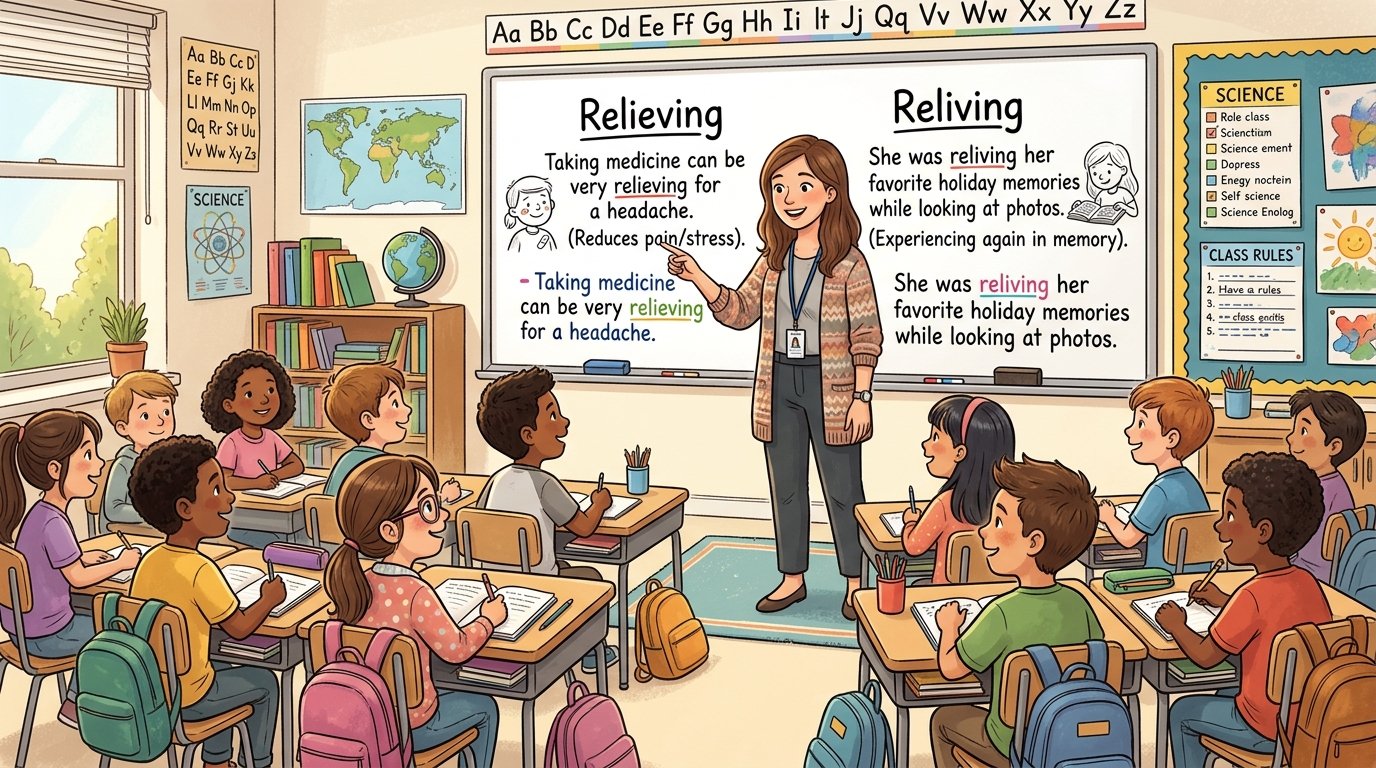
Ever stopped mid-sentence, unsure whether the right word was relieving or reliving? You’re definitely not the only one. These two words look strikingly alike on paper, yet their meanings sit worlds apart. Getting a handle on this difference can save you from an awkward mistake in your writing or conversations.
In this guide, we’ll dig into relieving or reliving, break down what each one actually means, walk through real examples, and share a few easy tricks to keep them straight. By the time you finish reading, you’ll be able to use both words the right way without second-guessing yourself.
Why This Word Pair Trips People Up
The mix-up happens because both words look and sound so close to one another. Just a single letter separates them, yet that one letter completely changes what the sentence is saying.
When people write quickly, it’s easy to slip one word in for the other by accident. Autocorrect tools don’t always help either, and sometimes make the confusion worse.
Once you understand what each word truly means, keeping them apart becomes much simpler.
So What Does Relieving Actually Mean?
Relieving comes from the verb relieve, which describes lowering pain, stress, discomfort, pressure, or a heavy responsibility.
In plain terms, relieving means making something feel lighter, easier, or less overwhelming.
A Few Examples of Relieving
- A short walk outside can feel relieving after a rough day at work.
- The medicine did a great job relieving her pain.
- Opening up to a friend can be relieving when times get hard.
- That cool breeze felt relieving on such a hot afternoon.
In every one of these, something uncomfortable is being lightened or eased.
Where You’ll Typically See “Relieving” Used
This word shows up a lot in conversations about:
- Managing stress
- Handling pain
- Emotional comfort
- Cutting down workload
- Medical care and treatment
The underlying idea stays consistent: something heavy or unpleasant is being reduced.
Now, What Does Reliving Actually Mean?
Reliving comes from the verb relive, meaning to go through something again, usually inside your own memory or recollection.
It typically describes mentally traveling back to a past moment and feeling the emotions tied to it all over again.
A Few Examples of Reliving
- She spent her evening reliving memories from childhood.
- The documentary had him reliving key moments from his career.
- Flipping through old photographs can feel a lot like reliving the past.
- Some veterans find themselves reliving traumatic experiences they’d rather forget.
In each case, someone is mentally stepping back into an earlier event.
Where You’ll Typically See “Reliving” Used
This word tends to appear in discussions around:
- Memories
- Nostalgia
- Life experiences
- Historical moments
- Emotional recollection
The focus here is on revisiting something from the past, not on easing discomfort.
Relieving vs Reliving: Where the Real Difference Lies
Even though only one letter separates them, these two words point in completely different directions.
Relieving
- Refers to reducing pain, stress, or pressure
- Tied to comfort and a sense of ease
- Connected to what’s happening in the present moment
Reliving
- Refers to experiencing a memory all over again
- Tied to nostalgia and recollection
- Connected to something that already happened in the past
One easy way to lock this in is to focus on the base verb:
- Relieve = lift a burden away
- Relive = live through it once more
A Simple Trick to Never Mix These Up Again
A small memory trick can spare you from making this mistake.
For Relieving
Picture the word relief.
Whenever something brings relief, it’s relieving.
Example:
“The vacation was relieving because it took so much stress off her shoulders.”
For Reliving
Picture the word live.
If you’re living through a memory a second time, you’re reliving it.
Example:
“He was reliving his college years while watching those old videos.”
Seeing Both Words in Everyday Sentences
Here’s a side-by-side look at how each word fits naturally into writing.
Proper Use of Relieving
- A hot bath can feel relieving after a tiring day.
- Deep breathing exercises are relieving when things get overwhelming.
- The doctor’s treatment did wonders relieving her discomfort.
Proper Use of Reliving
- The reunion had the whole group reliving old memories together.
- Watching home videos felt exactly like reliving that entire trip.
- The athlete loved reliving the moment his team won the championship.
Notice how one word centers on easing discomfort, while the other centers on returning to a past experience.
Mistakes Worth Watching Out For
Because these words sound so similar, plenty of writers accidentally swap them.
Incorrect
- Looking through old photos was very relieving.
Correct
- Looking through old photos was very reliving.
This version is correct because flipping through photos means revisiting memories, not easing pain.
Here’s another example:
Incorrect
- The medication was reliving my headache.
Correct
- The medication was relieving my headache.
This is correct because medicine works by reducing pain, not by bringing back a memory.
When You Might Use Both Words in the Same Sentence
Interestingly, both words can show up together within a single thought.
For instance:
“Talking through the experience was relieving because it kept him from constantly reliving the event in his mind.”
Breaking this down:
- Relieving points to a reduction in emotional stress.
- Reliving points to repeatedly experiencing the memory itself.
This example really highlights just how different these two meanings are, despite how similar the words look.
Related Words You Can Use Instead
Alternatives to Relieving
- Comforting
- Soothing
- Reassuring
- Calming
- Easing
- Alleviating
Alternatives to Reliving
- Recalling
- Remembering
- Revisiting
- Re-experiencing
- Recollecting
- Reflecting on
Swapping in these synonyms can add more variety to your writing while keeping the intended meaning intact.
Why It’s Worth Getting This Right
Picking the wrong word here can completely shift what your sentence is trying to say.
For example:
- “The therapy was relieving.” means it eased her distress.
- “The therapy was reliving.” suggests she was mentally re-experiencing old events.
Whether you’re writing something academic, professional, or personal, precision matters. Choosing the correct word keeps your message clear and easy to understand.
Frequently Asked Questions
What’s the actual difference between relieving and reliving?
Relieving refers to easing pain, stress, discomfort, or a heavy burden. Reliving refers to mentally experiencing a past event or memory again.
Is reliving considered a real word?
Yes. Reliving is a standard English word describing the act of mentally or emotionally going through something from the past once more.
Can relieving describe emotions too?
Absolutely. Relieving often describes emotional comfort, lowered anxiety, or a general sense of stress being lifted.
What’s an easy way to remember which word to use?
Link relieving with relief, and reliving with living again. That small connection makes the distinction much easier to recall.
Is reliving always a positive experience?
Not necessarily. People can relive happy memories just as easily as painful ones. The word itself is neutral — its tone depends entirely on context.
Can a memory itself be described as relieving?
A memory is usually something you relive rather than something relieving on its own. That said, recalling a memory can feel relieving if it brings comfort or reassurance.
Final Thoughts
Making sense of relieving or reliving gets much easier once you focus on what each word is really about. Relieving centers on reducing pain, pressure, or stress, while reliving centers on stepping back into a memory or past experience. Although just one letter separates them, these words serve completely different purposes in everyday communication.
Next time you’re writing and unsure which one fits, remember this simple rule: if something brings comfort or eases a burden, go with relieving. If someone is mentally revisiting a past moment, go with reliving. Mastering this small distinction will make your writing noticeably clearer, more polished, and more precise.



Leave a Reply