

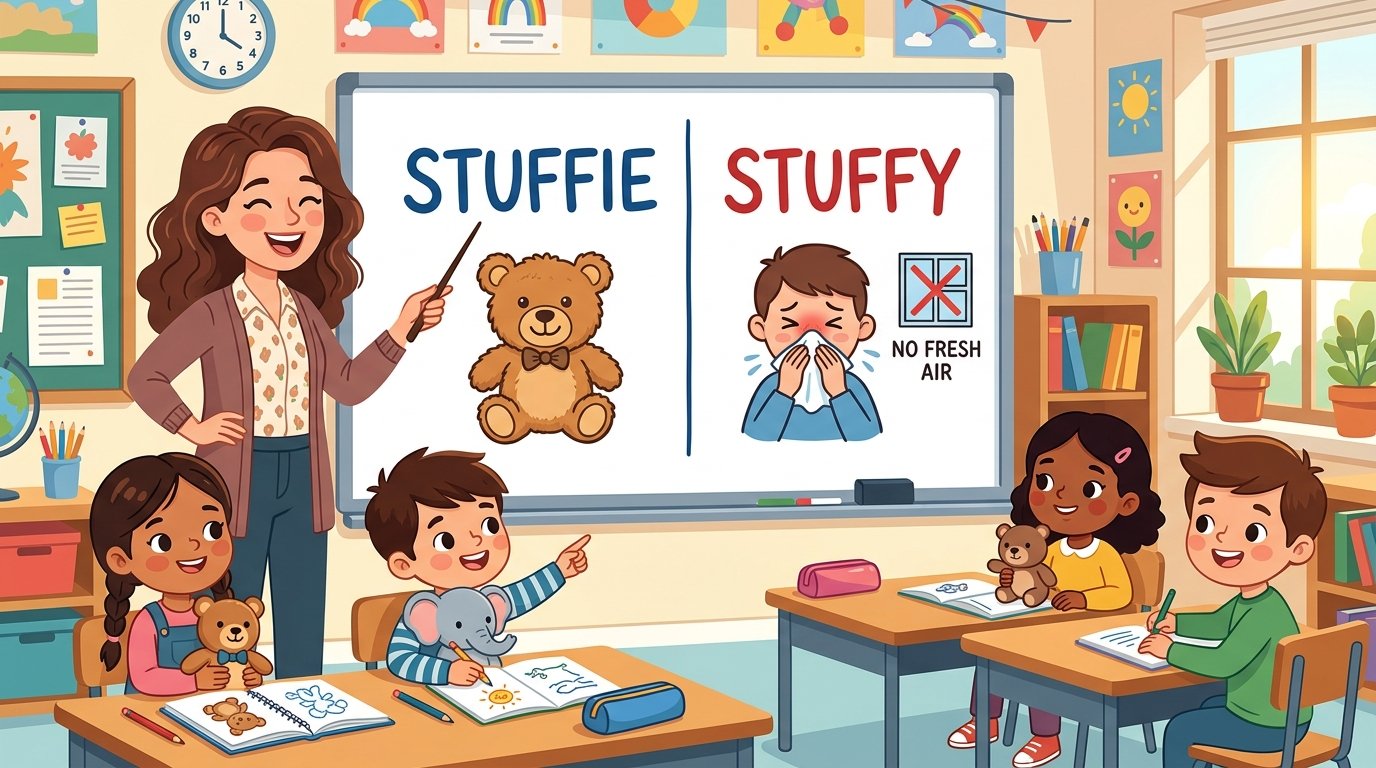
Language gets especially interesting when two words sound alike but mean something completely different. One mix-up plenty of people run into is stuffie or stuffy. At first glance, the words look almost identical, but they aren’t interchangeable in every situation.
This distinction matters even more when you’re talking about plush toys, children’s language, or expressions tied to discomfort. If you’ve ever wondered is it stuffie or stuffy, this guide clears everything up in simple terms.
Both words are genuine English terms, but they mean different things and belong in different contexts. Knowing when to use each one can make your writing and conversations noticeably clearer.
Stuffie or Stuffy: Where the Difference Lies
The core difference comes down to meaning.
- “Stuffie” usually refers to a stuffed animal or plush toy.
- “Stuffy” usually describes something uncomfortable, formal, or lacking fresh air.
Even though the words sound similar, they aren’t used the same way at all.
What Does “Stuffie” Mean?
The word “stuffie” is an informal, affectionate term for a stuffed toy.
Children and parents commonly use it to describe:
- Teddy bears
- Plush animals
- Soft toys
- Comfort toys
Examples
- My child sleeps with her favorite stuffie.
- He brought his dinosaur stuffie to school.
- The shelf was full of colorful stuffies.
The term carries a warm, playful, and casual feel.
Stuffie or Stuffy Toy: Which One Is Correct?
When referring to a stuffed animal, the preferred term is:
Stuffie
Not:
Stuffy toy
People sometimes accidentally say “stuffy” because the pronunciation is close, but “stuffie” is the more natural, widely recognized word for plush toys.
Common phrases include:
- Teddy bear stuffie
- Plush stuffie
- Favorite bedtime stuffie
What Does “Stuffy” Mean?
Unlike “stuffie,” the word “stuffy” carries several completely different meanings.
It can describe:
- A room with poor airflow
- A blocked nose
- A formal or boring personality
- An uncomfortable environment
Examples
- The office felt stuffy after the meeting.
- I have a stuffy nose from allergies.
- The event seemed too stuffy and formal.
As you can see, “stuffy” has nothing to do with stuffed animals.
Is It Stuffie or Stuffy for a Stuffed Animal?
If you’re talking about:
- Plush toys
- Soft animals
- Comfort toys
then the correct casual term is “stuffie.”
Parents, children, and online communities regularly use this word affectionately.
For example:
- She collects bunny stuffies.
- His shark stuffie goes everywhere with him.
Using “stuffy” in this context would sound off or confusing.
Why Do People Mix Up Stuffie and Stuffy?
A few different reasons explain why this confusion happens so often.
1. Similar Pronunciation
The words sound nearly identical in fast conversation.
2. The Informal Nature of “Stuffie”
“Stuffie” is more casual and conversational, so some people aren’t sure whether it’s officially recognized.
3. Autocorrect and Spell-Check
Some spell-check tools automatically favor “stuffy,” since it’s older and more formally established in dictionaries.
Is “Stuffie” Actually a Real Word?
Yes — “stuffie” is widely used in modern English, especially across North America.
While it might sound playful or childlike, it’s become a common informal noun for stuffed animals and plush toys.
The word regularly shows up in:
- Parenting blogs
- Toy descriptions
- Social media posts
- Online marketplaces
- Children’s conversations
Even adults often use it casually when talking about sentimental plush toys.
The Different Meanings of “Stuffy”
The word “stuffy” shifts meaning depending on context.
1. Poor Airflow
Example:
- The room became stuffy without air conditioning.
This sense refers to heat, lack of ventilation, or stale air.
2. Nasal Congestion
Example:
- I woke up with a stuffy nose.
This is common during allergies or colds.
3. Overly Formal Personality
Example:
- The restaurant felt too stuffy for casual dining.
Here, the word suggests stiffness or a lack of relaxation.
“Stuffie” in Modern Culture
The rise of plush toy collecting has pushed “stuffie” further into the mainstream than ever.
Today, the word shows up often in:
- Online collector communities
- Mental health comfort discussions
- Gift shops
- Toy branding
- Social media trends
Plenty of adults hold onto favorite childhood stuffies for emotional comfort or nostalgia.
How Kids Naturally Use This Word
Children naturally shorten and soften language, which is a big reason “stuffie” caught on.
Kids often say things like:
- “Where’s my stuffie?”
- “I need my bunny stuffie.”
- “Can my stuffie come too?”
The word sounds friendly and comforting, which is part of why it’s become so popular among families.
Words Related to “Stuffie”
A few related terms get used interchangeably.
Examples include:
- Plushie
- Plush toy
- Teddy bear
- Soft toy
- Stuffed animal
Among these, “stuffie” and “plushie” are especially popular in casual online conversation.
Which Word Should You Use?
Here’s the simplest way to keep the two straight.
Use “Stuffie” When Talking About:
- Plush toys
- Stuffed animals
- Comfort toys
Use “Stuffy” When Describing:
- Airless rooms
- Congestion
- Formal environments
- Boring attitudes
The meanings stay completely separate, even though the words look and sound alike.
Common Examples in Sentences
“Stuffie” Examples
- My daughter carries her panda stuffie everywhere.
- The child fell asleep hugging a stuffie.
- We donated old stuffies to a shelter.
“Stuffy” Examples
- The classroom felt stuffy after lunch.
- He sounded congested because of a stuffy nose.
- The ceremony was too stuffy for younger guests.
These examples make the difference much easier to spot going forward.
FAQs About Stuffie or Stuffy
Is it stuffie or stuffy for a stuffed animal?
“Stuffie” is the correct informal term for a stuffed animal or plush toy.
What does “stuffy” mean?
“Stuffy” can describe stale air, nasal congestion, or an overly formal atmosphere.
Is “stuffie” a real word?
Yes. It’s a widely used informal word for stuffed toys and plush animals.
Why do people confuse “stuffie” and “stuffy”?
The words sound very similar, and spell-check tools sometimes favor “stuffy.”
What’s another word for “stuffie”?
Common alternatives include plushie, stuffed animal, soft toy, and teddy bear.
Can adults say “stuffie”?
Absolutely. Plenty of adults use the term casually, especially collectors and parents.
Is “stuffy” always negative?
Usually, yes. It typically describes discomfort, stiffness, or poor airflow.
Conclusion
The confusion around stuffie or stuffy makes sense, since the words sound nearly identical, but their meanings are completely different. “Stuffie” refers to a stuffed animal or plush toy, while “stuffy” usually describes stale air, congestion, or a formal atmosphere.
Knowing the difference helps you communicate more clearly and sidestep an awkward misunderstanding. Whether you’re talking about a child’s favorite plush toy or describing a room with no ventilation, choosing the right word makes your writing sound more polished and natural.
If you enjoy sorting out confusing English words and everyday language differences, exploring more vocabulary guides can help strengthen your communication skills even further.

Leave a Reply