

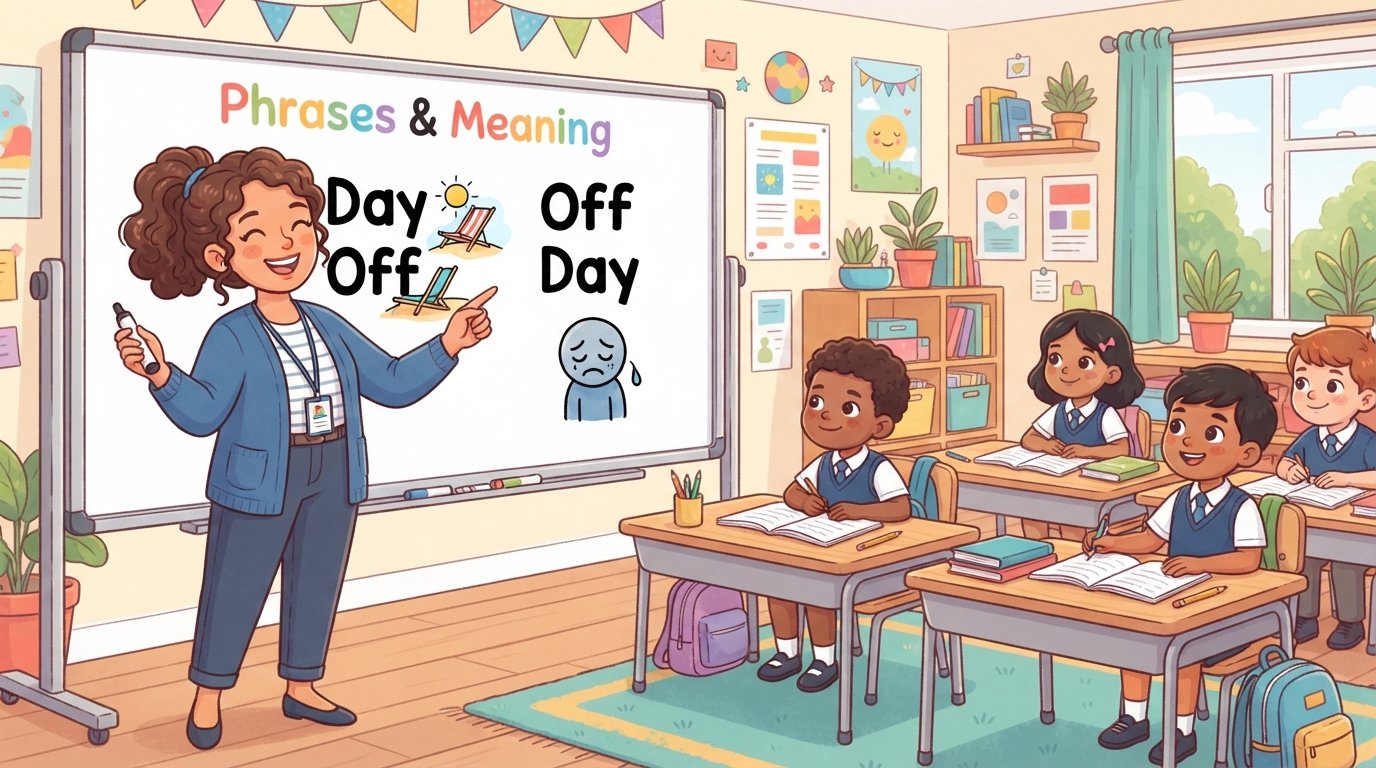
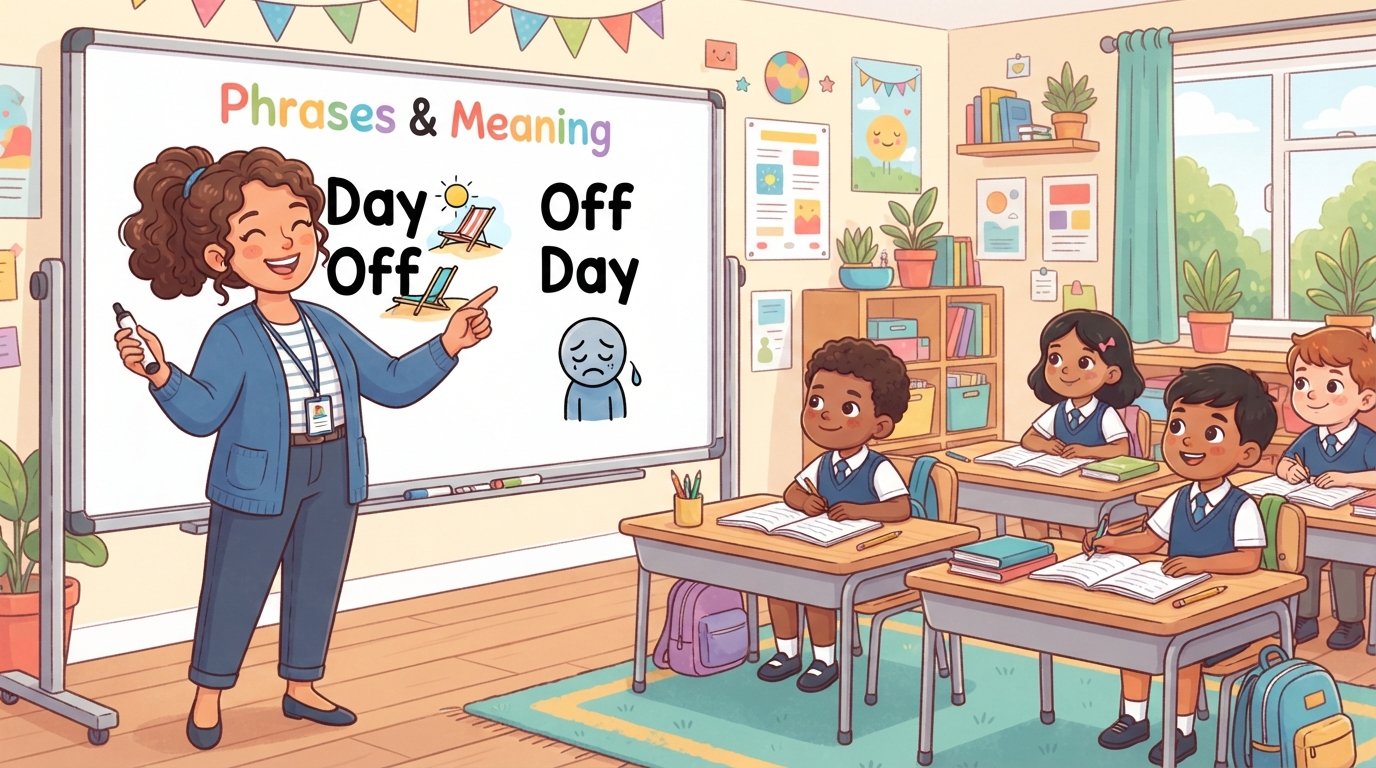
Swap the word order in this pair, and you flip the entire meaning of the sentence. Day off vs off day looks like a simple word-order quirk, but it actually separates a planned break from an unplanned bad day. Here’s exactly how to tell them apart.
Day Off vs Off Day: The Quick Answer
- Day off — A planned, scheduled break from work, school, or routine responsibilities.
- Off day — An unplanned day when things don’t go as well as usual, often marked by poor performance, low energy, or bad luck.
Quick Comparison
| Phrase | Meaning | Planned? | Example |
|---|---|---|---|
| Day off | A scheduled break from work or duty | Yes | “I’m taking a day off tomorrow to relax.” |
| Off day | A day when performance or mood is worse than usual | No | “The pianist had an off day and kept missing notes.” |
What Does “Day Off” Mean?
A day off is a day you deliberately don’t go to work, school, or attend to your usual responsibilities. It’s something you plan and often look forward to.
Examples
- “I have a day off tomorrow, so I’m sleeping in.”
- “She took a day off to catch up on rest.”
- “Can I have a day off next Friday?”
- “My day off is usually Sunday.”
People take days off for all kinds of reasons: rest, a doctor’s appointment, a personal errand, or simply to recharge. Airlines and companies even define “day off” formally in employment contracts, describing it as a calendar day completely free from duty.
What Does “Off Day” Mean?
An off day is something entirely different — it’s a day when you’re technically working or functioning as usual, but nothing seems to go right. Performance dips, focus slips, or you just feel “off.”
Examples
- “The pianist usually plays flawlessly, but today was an off day.”
- “I’ve had an off day — I can’t seem to focus on anything.”
- “Even the best athletes have an off day now and then.”
This phrase shows up constantly in sports, performance, and workplace contexts, where someone’s usual skill or energy just isn’t showing up that day.
Day Off or Off Day: The Core Difference
The clearest way to separate these two phrases:
When you take a day off, you plan not to work. When you have an off day, you plan to work, but things don’t go well.
| Situation | Correct Phrase |
|---|---|
| You scheduled time away from your job | Day off |
| You showed up to work but felt unproductive | Off day |
| You’re on vacation | Day off |
| You made mistakes during a performance | Off day |
Why People Mix These Two Phrases Up
Since both phrases use the exact same two words — just in a different order — it’s easy to see why they get confused, especially for English learners. The words “day” and “off” flip position, and that single change in word order completely reverses the underlying meaning.
Adding to the confusion, both phrases are common in casual conversation, sports commentary, and workplace small talk, so they’re heard constantly but not always distinguished carefully.
Causes of an Off Day
An off day can come from several sources:
- Poor sleep or fatigue — not resting well the night before
- Stress or distraction — mental clutter pulling focus away from the task
- Illness — feeling physically unwell without taking formal time off
- External interruptions — unexpected demands eating into productive time
- Simple bad luck — sometimes things just don’t click, with no clear reason
Unlike a day off, an off day isn’t something you choose. It happens to you, often unpredictably.
Benefits of Taking a Day Off
A day off — when used intentionally — offers real advantages:
- Rest and recovery for both body and mind
- Space for hobbies, family time, or personal projects
- Reduced stress and improved long-term productivity
- Stronger relationships through quality time away from work
Taking regular days off is widely seen as essential for avoiding burnout, rather than a sign of laziness.
Should an “Off Day” Be an Excuse?
Here’s an important distinction: an off day describes what happened, not a justification for it. If someone consistently underperforms and blames it on “just having an off day,” that explanation loses credibility fast. A true off day is occasional and unusual — not a repeated excuse for poor effort or behavior.
Day Off vs Off Day: More Examples in Sentences
Day Off Examples
- “We haven’t had a day off in weeks.”
- “I’m taking the day off tomorrow — feeling exhausted.”
- “My off day from work is usually Saturday.” (note: even here, “off day” sometimes casually replaces “day off” in speech, especially outside formal writing)
Off Day Examples
- “Today is, like, an off day — nothing’s going right.”
- “You’ve had an off day for two weeks straight now.”
- “Even champions have an off day sometimes.”
Day Off vs Off Day: A Quick Note on Overlapping Usage
In casual speech, some people use “off day” loosely to mean “day off” — as in “My off day is Saturday,” meaning their scheduled day away from work. While this crossover does happen informally, especially in spoken English, it’s technically imprecise. For clear, accurate writing, it’s best to keep the two phrases separate: day off for a planned break, and off day for an unplanned dip in performance or mood.
Similar and Related Terms
If you want alternatives depending on context, consider:
- Rest day — similar to “day off,” often used in fitness or training contexts
- Leave — a more formal term for time away from work
- Vacation / Holiday — extended time off, often for travel or leisure
- Bad day — similar to “off day,” but broader and less specific to performance
FAQs About Day Off vs Off Day
What’s the difference between “day off” and “off day”?
A “day off” is a planned break from work or routine, while an “off day” is an unplanned day when performance or mood is worse than usual.
Can “off day” mean the same as “day off”?
In casual speech, some people use them interchangeably, but this isn’t technically accurate. For precise writing, keep the two meanings separate.
Is having an off day a valid excuse for poor performance?
Occasionally, yes — everyone has off days. But using it repeatedly as an excuse for consistent underperformance isn’t appropriate.
What causes an off day?
Common causes include poor sleep, stress, illness, distractions, or simply an unpredictable lapse in focus or energy.
Why is taking a day off important?
Days off support rest, mental health, and long-term productivity. Regular breaks help prevent burnout and improve overall well-being.
Conclusion
Though day off vs off day use identical words, their meanings couldn’t be more different. A “day off” is something you plan — a deliberate break from work or routine. An “off day” is something that happens to you — an unplanned dip in performance, mood, or energy. Keeping this distinction clear helps you communicate precisely, whether you’re scheduling time away or explaining why today just isn’t your best day.




Leave a Reply