

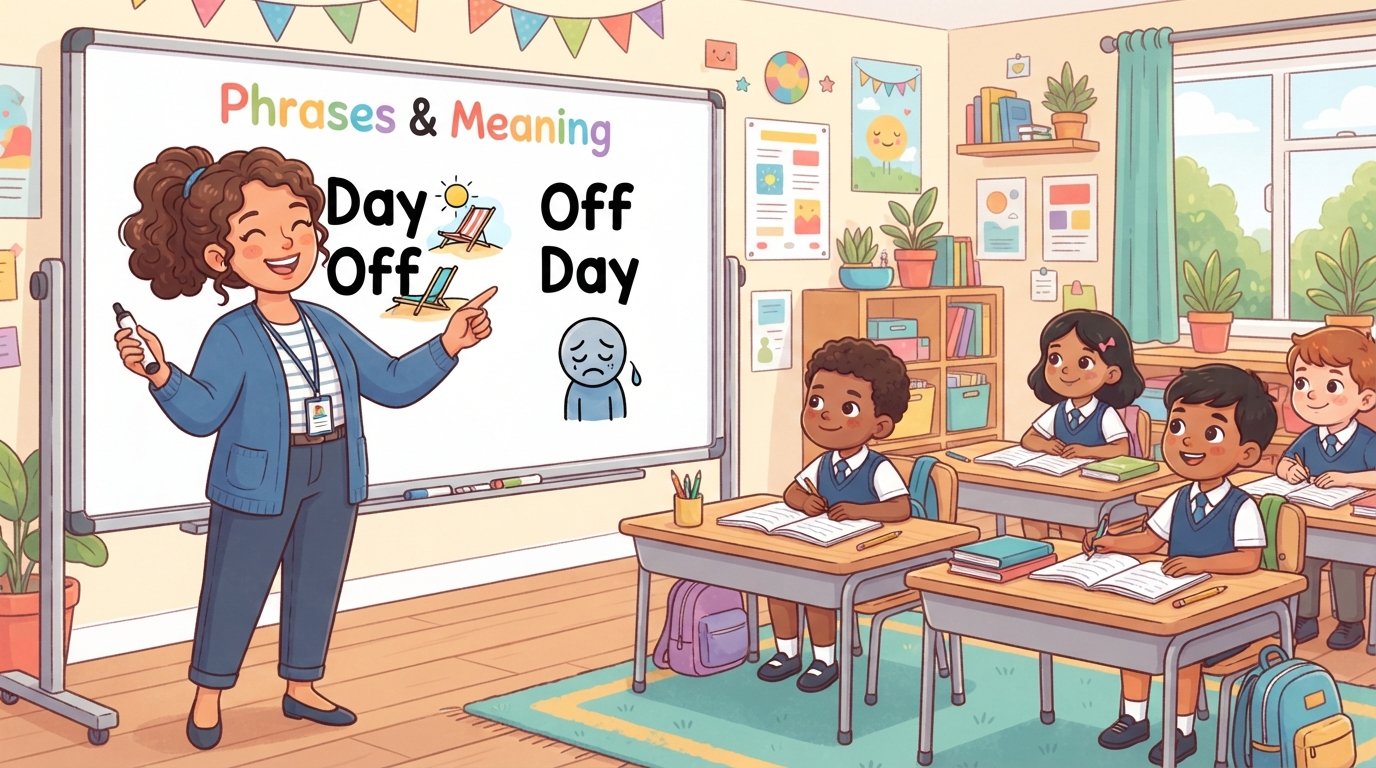
Say “I’ll finish it in an hour” and “I’ll finish it within an hour,” and most people won’t blink. But these two sentences carry a subtle, meaningful difference — one that matters far more than it seems. In vs within is a classic preposition mix-up, and once you see the pattern, it clicks instantly.
In vs Within: The Quick Answer
- “In” describes something happening after a specific period passes.
- “Within” describes something happening before a specific period ends.
Quick Comparison
| Preposition | Focus | Example |
|---|---|---|
| In | After the time period elapses | “I’ll be back in five minutes.” (after 5 minutes pass) |
| Within | Before the time period runs out | “I’ll be back within five minutes.” (sometime before 5 minutes) |
The Core Difference Explained
Here’s the clearest way to understand it: “in” points to a specific moment once a duration has passed, while “within” points to any moment inside a range, as long as it doesn’t exceed the limit.
Compare these two sentences:
- “Lisa will be back in five minutes.” → She returns exactly after five minutes pass.
- “Lisa will be back within five minutes.” → She returns sometime during those five minutes — maybe in two minutes, maybe in four, but not later than five.
“Within” leaves room for early completion. “In” typically implies the action happens once that specific span has elapsed.
What Does “In” Mean?
“In” is used to describe a point in time after a duration has passed, or to describe enclosed spaces, months, years, and centuries.
Time Usage
- “He was born in 1995.”
- “I will finish the project in two hours.”
- “The meeting starts in ten minutes.”
Place Usage
- “She is in the room.”
- “The papers are in the drawer.”
When “in” refers to future time, it usually implies the action or event happens right around when that period ends — not necessarily before it.
What Does “Within” Mean?
“Within” signals that something will happen before a time limit ends, or inside a specific range or boundary. According to the Oxford Dictionary, “within” means “occurring inside a particular period of time” — emphasizing the endpoint, not the full duration.
Time Usage
- “The package should arrive within three working days.”
- “We expect results within a week.”
- “The report must be submitted within three days.”
In each case, “within” sets an outer limit. The action can happen anytime up to that limit — but never after it.
Distance and Range Usage
- “Diya lives within walking distance of the station.”
- “Stay within the yellow line for safety.”
- “The park is within walking distance of my home.”
Here, “within” describes something inside a boundary or limit — whether that’s time, distance, or a set of rules.
In vs Within: Side-by-Side Examples
| Sentence with “In” | Meaning |
|---|---|
| “I will finish it in an hour.” | It will be done once an hour has passed. |
| Sentence with “Within” | Meaning |
|---|---|
| “I will finish it within an hour.” | It will be done sometime before the hour is up. |
This is exactly why “within” is the safer, more precise choice for deadlines — it guarantees completion no later than the stated time, while “in” is more casual and open to interpretation.
In vs Within for Deadlines
Because “within” focuses on the endpoint rather than the whole duration, it’s the preferred word in formal writing, contracts, and instructions where a clear deadline matters.
Examples
- “We must finish the project within a year.” (anytime before the year ends)
- “Please return the library books within a week.”
- “The ambulance arrived within ten minutes.”
Using “in” for the same sentences would technically suggest the action happens right at that time mark, rather than any point before it — which is why “within” reads as more precise for deadlines.
Common Mistakes With In vs Within
| Incorrect | Correct |
|---|---|
| “I will finish it within two hours later.” | “I will finish it within two hours.” |
| “The school is within of walking distance.” | “The school is within walking distance.” |
A common trap: pairing “within” with extra words like “later” or “of” that don’t belong. “Within” already implies “before this limit,” so adding “later” is redundant.
“Within” as an Adverb: A Different Sense Entirely
Beyond time and distance, “within” can also function as an adverb describing inner thoughts or feelings — something not shown outwardly.
Examples
- “She smiled during the meeting, but within she was deeply worried.”
- “He remained calm for the children, though within he felt close to panic.”
This literary usage contrasts a person’s outward behavior with their private, internal state — a completely different sense from the time-and-distance meaning covered above.
In vs Within: A Simple Memory Trick
Think of it this way:
- “In” = a point on the timeline.
- “Within” = a window before the timeline ends.
If you can replace the word with “before [time] is up,” use “within.” If the sentence describes something happening right at or after a set point, “in” usually fits better.
Do Native Speakers Always Distinguish Them?
Not strictly. In casual, everyday speech, many native speakers use “in” even when “within” would be more technically accurate — saying “I’ll be back in five minutes” when they mean “sometime within the next five minutes.” The distinction matters most in formal, written, or legal contexts, where precision counts, such as contracts, instructions, or professional deadlines.
FAQs About In vs Within
What’s the main difference between “in” and “within”?
“In” typically points to a moment after a period has passed, while “within” points to any moment before that period ends — emphasizing a deadline or limit.
Which one should I use for a deadline?
Use “within” for deadlines, since it clearly communicates “no later than” a specific time, which is more precise than “in.”
Can “in” and “within” be used interchangeably?
Sometimes, especially in casual speech. But in formal or precise writing, they carry different implications, so it’s best to choose deliberately.
Does “within” only apply to time?
No. “Within” also applies to distance (“within walking distance”) and limits or boundaries (“within the rules”), and can even describe inner feelings as an adverb.
Why does “within” sound more formal than “in”?
“Within” is used less often in casual speech and carries a more precise, deliberate tone, which is why it feels more formal, especially in professional or legal writing.
Conclusion
Though in vs within might look like a minor grammar detail, the difference actually shapes how clearly you communicate deadlines and limits. “In” points to a moment after time passes, while “within” guarantees something happens before a limit is reached. For everyday chat, either often works — but for contracts, instructions, or professional deadlines, choosing “within” adds the precision your writing needs.



Leave a Reply