

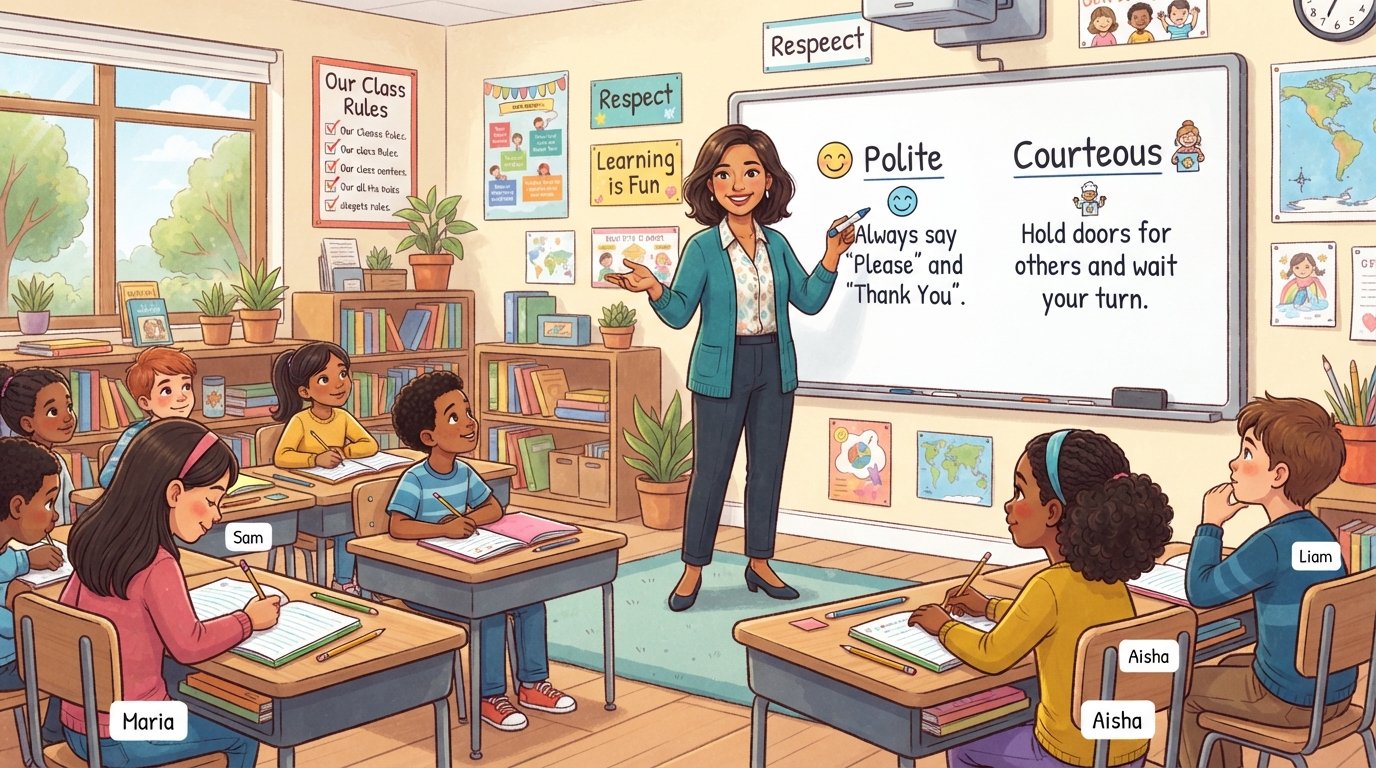
When learning English, many learners often get confused about whether polite and courteous mean exactly the same thing. Both words describe good manners and respectful behavior, but they aren’t perfectly interchangeable. Polite generally describes following basic social rules and showing consideration in everyday interactions, while courteous carries a slightly deeper meaning, often implying genuine respect, thoughtfulness, and a more formal kind of graciousness. For example, you might say, “He was polite and said thank you,” but you’d say, “The staff were courteous, going out of their way to make guests feel welcome.” Understanding this subtle distinction helps you choose the right word depending on tone, formality, and context.
Knowing the difference between polite vs courteous is genuinely useful for writing clearly and expressing exactly the level of respect or formality you intend. This distinction can feel subtle at first, since both words describe positive social behavior, but with a few clear examples, the contrast becomes much easier to see. Paying attention to context — whether you’re describing basic manners or a deeper sense of consideration — will sharpen both your vocabulary and your overall communication. Over time, learning these nuances, reviewing real examples, and practicing regularly all add up to more precise, confident English.
Understanding “Polite” vs. “Courteous”
At the core of this comparison is a simple distinction:
- Polite refers to following accepted social rules of good behavior, such as saying “please” and “thank you.”
- Courteous refers to a deeper, often more deliberate form of respect and consideration, frequently involving thoughtful actions toward others.
Here’s a quick reference table:
| Word | Meaning | Example |
|---|---|---|
| Polite | Following basic social manners and etiquette | “She was polite and greeted everyone politely.” |
| Courteous | Showing genuine respect and thoughtful consideration | “The staff were courteous and attentive to every guest.” |
Notice that polite tends to describe surface-level good manners, while courteous often implies a warmer, more genuine display of respect.
What Does “Polite” Actually Mean?
Polite describes behavior that follows the basic, expected rules of social interaction. It’s about showing consideration for others in a straightforward, everyday way.
Key Features of Politeness
- Following common social etiquette, like saying “please” and “thank you”
- Being respectful in ordinary, everyday conversations
- Avoiding rude or inconsiderate behavior
- Adjusting behavior slightly depending on culture or setting
Examples in everyday sentences:
- It’s polite to hold the door open for someone behind you.
- She gave a polite nod before leaving the room.
- He was polite enough to wait his turn in line.
Common expressions using “polite”:
- Polite conversation
- Polite society
- A polite request
Politeness is often considered the baseline expectation in social interactions — the minimum standard of good manners most people aim to meet.
What Does “Courteous” Actually Mean?
Courteous goes a step further than simple politeness. It describes behavior rooted in genuine respect, thoughtfulness, and consideration for others’ feelings or needs, often involving a bit more effort or formality.
Key Features of Courteousness
- Showing genuine respect, not just following surface rules
- Often involves thoughtful, proactive gestures
- Frequently used in formal or professional contexts
- Implies graciousness and warmth, not just correctness
Examples in everyday sentences:
- The hotel staff were extremely courteous, offering to carry our bags without being asked.
- He gave a courteous reply, even though he disagreed with the criticism.
- The company is known for its courteous customer service.
Common expressions using “courteous”:
- Courteous driver
- Courteous service
- A courteous gesture
Courteous behavior often reflects a genuine intention to make someone feel valued, rather than simply following a social script.
Polite vs Courteous: The Key Difference at a Glance
| Feature | Polite | Courteous |
|---|---|---|
| Depth of Meaning | Surface-level good manners | Genuine, thoughtful respect |
| Formality | Casual to neutral | Often more formal |
| Effort Involved | Minimal, expected behavior | Often involves extra thoughtfulness |
| Typical Context | Everyday interactions | Customer service, professional settings |
| Example | “She was polite and said hello.” | “She was courteous and helped the elderly man.” |
A simple way to remember it:
- Polite = following the basic rules of good manners
- Courteous = going a step further with genuine, thoughtful respect
Why This Distinction Matters
Choosing between polite vs courteous can shape how your writing or speech comes across.
- Describing someone as merely “polite” can sometimes feel neutral or even slightly distant, implying they followed the rules but nothing more.
- Describing someone as “courteous” suggests warmth, genuine care, and a willingness to go beyond the bare minimum.
For example:
- “The waiter was polite.” (He followed basic service etiquette.)
- “The waiter was courteous.” (He went out of his way to make the meal enjoyable.)
This is exactly why businesses often emphasize “courteous service” in their branding — it implies a higher standard of care than simple politeness.
Common Mistakes and How to Avoid Them
Here’s a list of frequent errors related to polite vs courteous:
- Using the words interchangeably in formal writing:
- Less precise: The staff were polite during the emergency, helping everyone calmly.
- More precise: The staff were courteous during the emergency, helping everyone calmly.
- Overusing “polite” in professional or customer-facing contexts:
- Less effective: Our customer service team is polite and always available.
- More effective: Our customer service team is courteous and always available.
- Assuming courteous always means more formal, even in casual contexts:
- Sometimes “polite” is simply the more natural, casual choice: “He was polite and said thanks.”
Tips to avoid these mistakes:
- Ask yourself whether you’re describing basic manners or a deeper sense of respect.
- Reach for courteous when describing thoughtful, above-and-beyond behavior.
- Reach for polite when describing everyday, expected good manners.
Practical Tips for Mastery
Getting comfortable with polite vs courteous takes a little practice, but a few strategies can help:
- Think about depth of effort: polite is expected behavior, courteous often involves going the extra mile.
- Use a memory trick: “Polite says please and thank you; courteous goes out of its way to help.”
- Practice with real sentences: try describing the same situation using both words to notice the shift in tone.
- Pay attention to context: courteous fits especially well in professional, service-related, or formal writing.
A short practice exercise: Fill in the blanks below.
- She was ___ (polite/courteous) and simply said “excuse me” as she passed.
- The flight attendant was incredibly ___ (polite/courteous), personally checking on every passenger.
- It’s ___ (polite/courteous) to say “thank you” after receiving a gift.
- The company prides itself on ___ (polite/courteous) customer service that goes above expectations.
Answers: 1) polite 2) courteous 3) polite 4) courteous
Wrapping Up
In English, choosing correctly between polite and courteous comes down to depth and intention. Remember that polite describes following the basic, expected rules of good manners, while courteous describes a deeper, more genuine form of respect and thoughtfulness, often involving extra effort. By paying attention to context, formality, and the level of consideration being described, you can choose the word that best captures your intended tone. Practicing with real examples and reviewing these subtle differences regularly will help your English sound more precise, natural, and confident.
Frequently Asked Questions
Are “polite” and “courteous” exactly the same?
Not quite. “Polite” describes following basic social manners, while “courteous” implies a deeper, more thoughtful form of respect, often involving extra effort.
Which word is more formal?
“Courteous” generally carries a more formal tone and is often used in professional or customer-service contexts, while “polite” fits comfortably into everyday, casual conversation.
Can these two words be used interchangeably?
In many everyday situations, yes. However, in formal or professional writing, choosing “courteous” can convey a stronger sense of genuine care and respect.
Why do people often confuse polite and courteous?
Since both words describe respectful, well-mannered behavior, many people use them interchangeably without noticing the subtle difference in depth and formality.
What’s an easy way to remember the difference?
Think of “polite” as following basic social rules, and “courteous” as going a step further with genuine thoughtfulness and consideration.


Leave a Reply