


How long until 2 PM? Subtract your current time from 2:00 PM, using the same date and time zone. For example, if it is 10:35 AM, the wait is 3 hours and 25 minutes. If it is 1:42 PM, only 18 minutes remain.
There is no single permanent answer because the starting time keeps changing. The examples below are calculation examples rather than a live countdown. Check your own clock, decide whether you mean today’s 2 PM or a later date, and follow the method that fits your situation.
Understand the Target Time
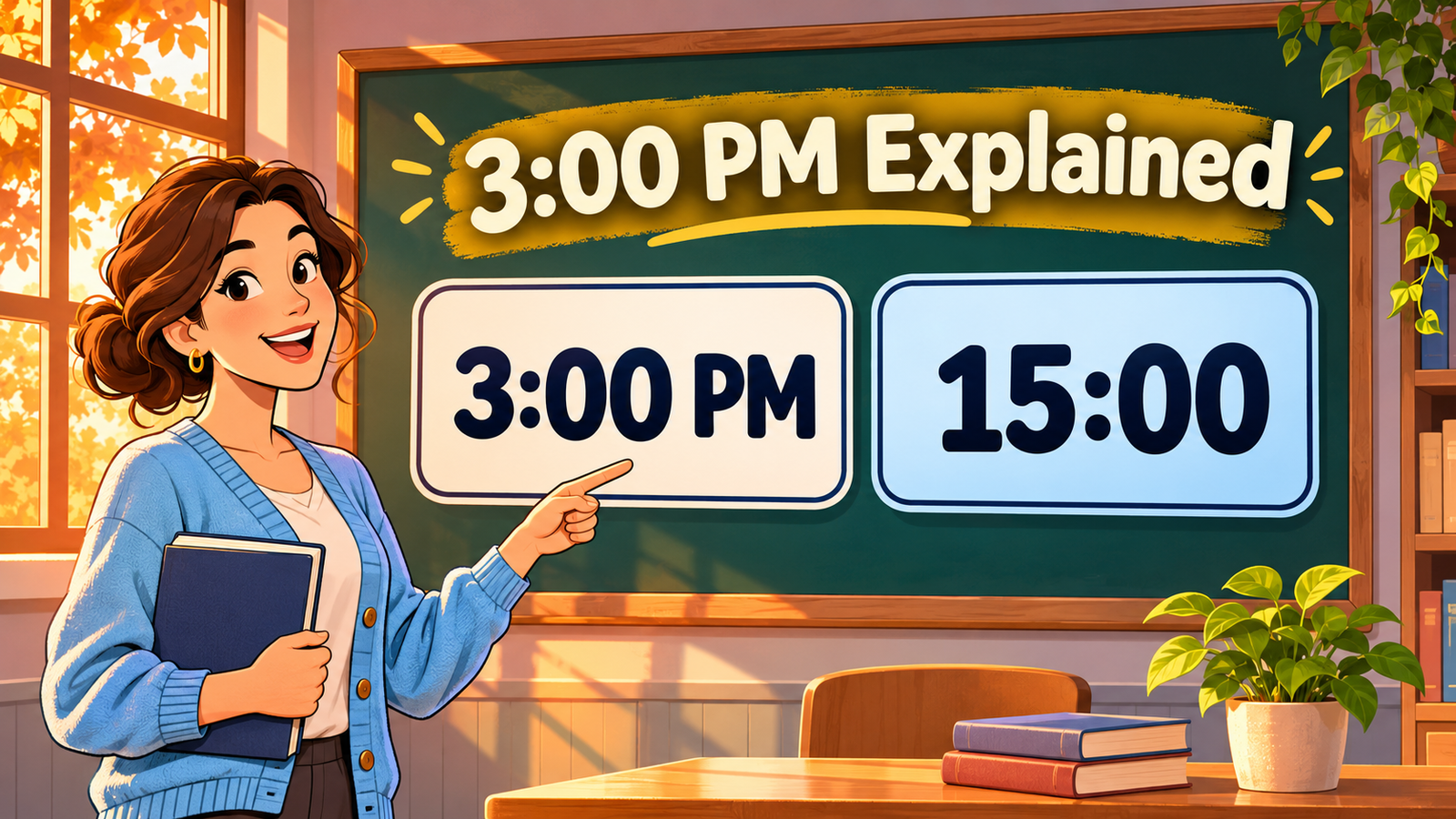
2 PM means two o’clock in the afternoon. In 24-hour notation, it is 14:00. The equivalent morning time is 2 AM, written 02:00. Mixing up those two times changes the answer by twelve hours, so include AM or PM whenever the context is not completely clear.
Noon is 12 PM, making 2 PM two hours after noon. Midnight is 12 AM. If you begin your calculation in the morning, counting to noon first can help you move across the AM-to-PM boundary without accidentally adding or subtracting an extra twelve hours.
Count Up to the Next Whole Hour
A simple mental method is to count forward in pieces. If it is 11:23 AM, there are 37 minutes until noon. From noon to 2 PM is another two hours. The total is 2 hours and 37 minutes, or 157 minutes.
This method avoids subtracting a larger minute value from zero. Rather than attempting 14:00 minus 11:23 directly, you use a familiar checkpoint. It also makes the result easier to explain to someone else: 37 minutes to noon, then two more hours to the target.
Subtract Using Minutes After Midnight
For a more mechanical method, convert the clock times into minutes. The target 14:00 is 840 minutes after midnight. At 9:46 AM, the starting time is 9 × 60 + 46 = 586 minutes. Subtracting gives 254 minutes remaining.
To convert 254 minutes back, divide it into complete hours and a remainder. Four hours account for 240 minutes, leaving 14 minutes. Therefore, the wait is 4 hours and 14 minutes. Adding that interval to 9:46 AM returns 2 PM, confirming the calculation.
Quick Examples Before 2 PM
At 8:20 AM, there are 5 hours and 40 minutes until 2 PM. At 11:50 AM, there are 2 hours and 10 minutes. At 12:25 PM, there are 1 hour and 35 minutes. At 1:37 PM, there are 23 minutes.
Each example assumes the same day and an unchanged clock offset. Use the example closest to your starting time as a check, but do not copy it without adjusting the minutes. Being ten minutes later than the example means having ten fewer minutes left, provided you have not passed the target.
What Happens After 2 PM?
At 2:18 PM, today’s target was 18 minutes ago. If you mean the next occurrence of 2 PM, that is tomorrow. Under ordinary unchanged-offset conditions, the interval is 23 hours and 42 minutes. The date is essential to making that answer meaningful.
For a deadline specifically set for today, tomorrow is not an automatic substitute. The deadline has passed even though another 2 PM will occur. Always distinguish “time until the next daily 2 PM” from “time until my scheduled event.” A repeating clock time and a dated commitment are different things.
Use the Remaining Time Realistically
Suppose it is 12:10 PM and you must submit a document by 2 PM. You have 110 minutes. If reviewing takes 20 minutes and uploading takes 10 minutes, only 80 minutes remain for the final writing. Planning those steps separately prevents the submission process from being forgotten.
You might aim to finish writing at 1:30 PM, review until 1:50 PM, and use the final ten minutes for submission. These are example allocations, not promises that every upload will be quick. Choose a buffer suited to your task instead of using every remaining minute for one activity.
An Alarm and a Timer Do Different Jobs
An alarm targets a clock time, such as 2 PM. A timer measures a duration, such as 50 minutes. If it is 1:10 PM and you start a 50-minute timer immediately, both approaches point to the same target on an ordinary day.
If you calculate the duration and wait five minutes before starting the timer, it will finish five minutes late. An alarm set for the correct target time avoids that particular problem. For a dated event, check the calendar date as well; a daily alarm by itself may not describe a one-time appointment.
Check the Event’s Time Zone
A meeting at 2 PM in another location may not occur at your local 2 PM. Identify the event’s stated zone, its calendar date, and your own zone before calculating the wait. A time with no location can be ambiguous for people joining from different regions.
Once both endpoints represent actual moments, the waiting duration is the same for everyone observing them simultaneously, even though local clocks display different hours. For events near seasonal clock changes, use date-aware conversion rather than assuming that two locations always keep the same difference.
Read Hours and Minutes Correctly
A duration of 1 hour and 40 minutes equals 100 minutes, not 140 minutes. It also equals approximately 1.667 decimal hours, not 1.40 hours. Clock notation uses groups of 60, whereas ordinary decimal notation uses tenths and hundredths.
This distinction matters when entering a waiting interval into another system. If a form asks for minutes, convert the entire duration to minutes. If it asks for a clock time, enter 14:00 or 2:00 PM as appropriate. A duration and a time of day are different kinds of information.
Check Your Answer Before Relying on It
Add your calculated wait back to the starting time. From 12:25 PM, adding 1 hour gives 1:25 PM; adding 35 minutes gives 2 PM. This reverse check can reveal an incorrect AM/PM label or a mistake caused by treating an hour as one hundred minutes.
Also check that the date and zone match the actual event. Arithmetic can be correct while the chosen target is wrong. If the invitation is for tomorrow or for a remote team’s local time, a flawless subtraction using today’s local 2 PM still produces the wrong practical answer.
Frequently Asked Questions
How long until 2 PM from 11 AM?
There are three hours, assuming the same date and time zone.
How long until 2 PM from 12:40 PM?
There are 1 hour and 20 minutes, or 80 minutes.
Is 2 PM written as 14:00?
Yes. 14:00 is the 24-hour equivalent of 2:00 PM.
What if it is exactly 2 PM?
The wait until today’s target is zero. A countdown to the following day’s occurrence is a separate calculation.
Can I use these examples as a live timer?
No. They are fixed examples. Use your current time and update the calculation when needed.
Can a clock change affect tomorrow’s countdown?
Yes. If the local UTC offset changes before the target, a date-aware calculation is needed for the actual elapsed duration.
Conclusion
Finding how long until 2 PM is straightforward once the date, zone, and starting time are clear. Count forward to a whole hour or convert both times into minutes, then check the result by addition.
For real plans, separate the event time from preparation and submission time. Knowing the wait is useful; leaving enough room to complete the necessary steps makes it practical.


Leave a Reply