

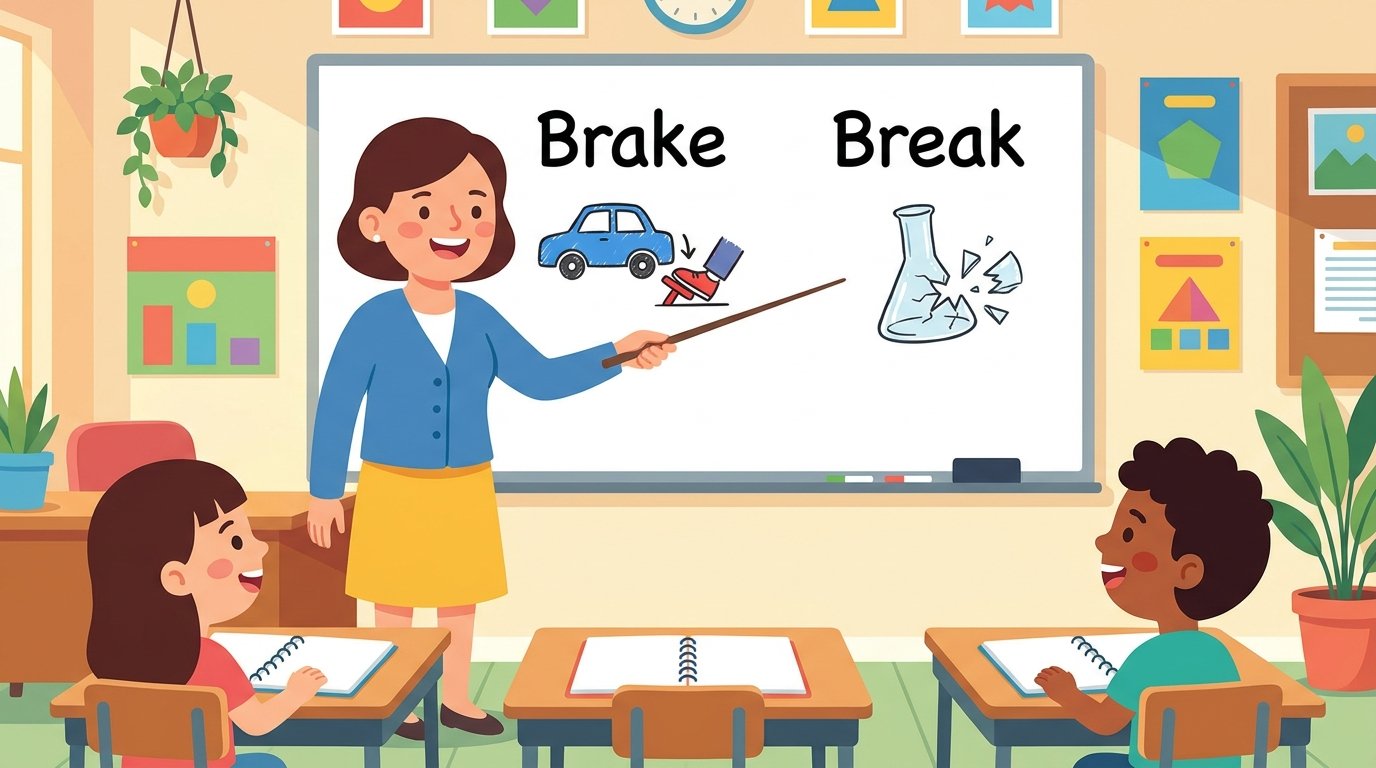
English has plenty of words that sound identical but mean completely different things, and brake metal or break metal is a perfect example. If you’ve spotted both spellings floating around online or heard them used in conversation, it’s natural to wonder which one is actually correct.
The answer depends on what you’re trying to say. In most automotive contexts, brake metal is the correct term, since it relates to a vehicle’s braking system. In metal fabrication and manufacturing, though, some people say break metal when they actually mean bending sheet metal with a machine called a brake. This mix-up happens because “brake” and “break” sound exactly alike but mean entirely different things.
This guide breaks down the difference between brake metal or break metal, when each term applies, and how to steer clear of the common spelling mistake.
Is It Brake Metal or Break Metal?
The first step is understanding what each word actually means.
What “Brake” Means
The word brake refers to a device used to slow or stop motion, a vehicle’s braking system, or a machine used to bend sheet metal (a metal brake).
Examples: brake pads, brake rotors, brake calipers, metal brake.
What “Break” Means
The word break means to separate into pieces, to fracture, or to interrupt something.
Examples: break a window, break a habit, break a record.
Since these words carry different meanings entirely, choosing the correct spelling comes down to context.
What Does “Brake Metal” Actually Mean?
In automotive conversations, brake metal generally points to metal components that are part of a vehicle’s braking system, including brake rotors, brake drums, brake backing plates, brake hardware, and metal brake lines.
For example:
- “The mechanic inspected the brake metal components for signs of wear.”
In this context, writing “break metal” would be incorrect, since the discussion is about brakes, not breaking anything.
What Does “Break Metal” Actually Mean?
The phrase break metal shows up far less often, and it usually appears due to confusion between “brake” and “break.”
That said, in some manufacturing settings, people informally say “break metal” when they mean:
- Breaking metal apart
- Fracturing metal
- Cutting metal sections
- Bending sheet metal
Technically, when the topic is sheet-metal bending, the correct term is usually brake metal or metal braking — not “break metal.”
Why Do People Mix Up Brake Metal and Break Metal?
A few different factors drive this common mistake.
They Sound Exactly Alike
Brake and break are homophones, meaning:
- Same pronunciation
- Different spelling
- Different meaning
Because they sound identical, plenty of people default to the wrong spelling when writing.
Metalworking Terms Add to the Confusion
In fabrication shops, workers regularly use a machine called a metal brake, which bends sheet metal into specific shapes.
Someone unfamiliar with the equipment might assume “break” is the right word, since the metal is technically being altered.
Search Results Reinforce the Confusion
Search engines often show results for both spellings, since so many people make the same mistake. That, in turn, keeps the confusion alive.
What Exactly Is a Metal Brake?
Understanding what a metal brake actually is sits at the center of the brake metal or break metal debate.
A metal brake is a machine used to bend sheet metal into precise angles and shapes.
Common uses include:
- Roofing materials
- HVAC ductwork
- Automotive panels
- Metal enclosures
- Construction components
The term comes from the machine’s name, not from the act of breaking metal.
Correct vs Incorrect Usage
Correct:
- “The technician used a metal brake to bend aluminum panels.”
Incorrect:
- “The technician used a metal break to bend aluminum panels.”
In fabrication terminology, metal brake is the accepted spelling.
Brake Metal in Automotive Applications
When talking about vehicles, “brake” almost always refers to stopping power — brake rotors are the metal discs that slow the vehicle when brake pads apply pressure, brake drums are metal drums used in certain braking systems, brake lines are metal tubes that carry hydraulic brake fluid, and brake hardware covers the various metal components that support the overall braking system.
In every one of these cases, brake is the correct spelling.
Real Examples of Correct Usage
Seeing real examples side by side makes the distinction stick.
Correct
- The brake metal components need replacement.
- The mechanic inspected the brake rotors.
- The fabricator used a metal brake to bend steel.
- The brake system passed inspection.
Incorrect
- The break metal components need replacement.
- The mechanic inspected the break rotors.
- The fabricator used a metal break to bend steel.
Using the wrong spelling can make technical writing look less professional.
A Simple Trick to Remember the Difference
Think about driving a car: you press the brake pedal to stop the vehicle, so brake = stopping or braking system.
Now think about something breaking, like a glass falling and shattering — that’s break = fracture or separate.
If you’re discussing vehicle parts or a sheet-metal bending machine, brake is almost always the right choice.
Brake Metal or Break Metal in Manufacturing
In manufacturing, confusion often crops up because a machine called a brake is used to bend metal.
Workers might say:
- “We need to brake the sheet metal.”
Technically, this means bending the metal using a brake machine.
The correct terminology includes:
- Metal brake
- Press brake
- Brake forming
- Sheet metal brake
Professional fabrication documents almost always spell it “brake.”
Industries That Rely on Metal Brakes
Several industries depend heavily on metal brakes. Construction uses them for flashing, trim pieces, and roofing materials. Automotive manufacturing uses them to create body panels and structural components. Aerospace relies on them for precision sheet-metal fabrication, and HVAC uses them to form ducts and ventilation components.
Across all these industries, the machine is consistently called a brake.
Why Correct Spelling Actually Matters
Using the right term strengthens:
- Professional communication
- Technical documentation
- Search engine visibility
- Workplace accuracy
- Customer understanding
For businesses publishing automotive or manufacturing content, spelling mistakes can chip away at credibility and confuse readers.
FAQs About Brake Metal or Break Metal
Is it brake metal or break metal?
In most automotive and fabrication contexts, brake metal is the correct term. “Break metal” is usually just a spelling mistake.
What does brake metal mean?
Brake metal generally refers to metal components used in a vehicle’s braking system, or sheet metal formed using a metal brake.
What is a metal brake?
A metal brake is a machine used to bend sheet metal into specific shapes and angles.
Why do people write “break metal”?
People often confuse the two words because “brake” and “break” sound identical when spoken.
Is “break metal” ever correct?
It can be correct if you’re literally describing metal that has broken or fractured. But it’s not the right term for brake systems or metal-bending equipment.
Which industries use metal brakes?
Construction, automotive manufacturing, aerospace, HVAC, and general fabrication industries all commonly use metal brakes.
Is a press brake the same as a metal brake?
A press brake is a specific type of metal brake used for precision bending operations.
Conclusion
When weighing brake metal or break metal, the correct choice depends on context, but in most technical situations, brake metal is the right term. Whether you’re talking about vehicle braking components or a machine used to bend sheet metal, “brake” is typically the proper spelling.
The confusion exists because “brake” and “break” are homophones, even though their meanings are entirely different. Brake relates to stopping motion or bending metal with specialized equipment, while break refers to fracturing or separating something. Understanding this distinction helps you communicate more clearly, write more professionally, and steer clear of one of the most common spelling mistakes in automotive and manufacturing writing.
For more language and industry-specific guides, it’s worth exploring related topics on automotive vocabulary, fabrication terminology, and common English homophones.










Leave a Reply