

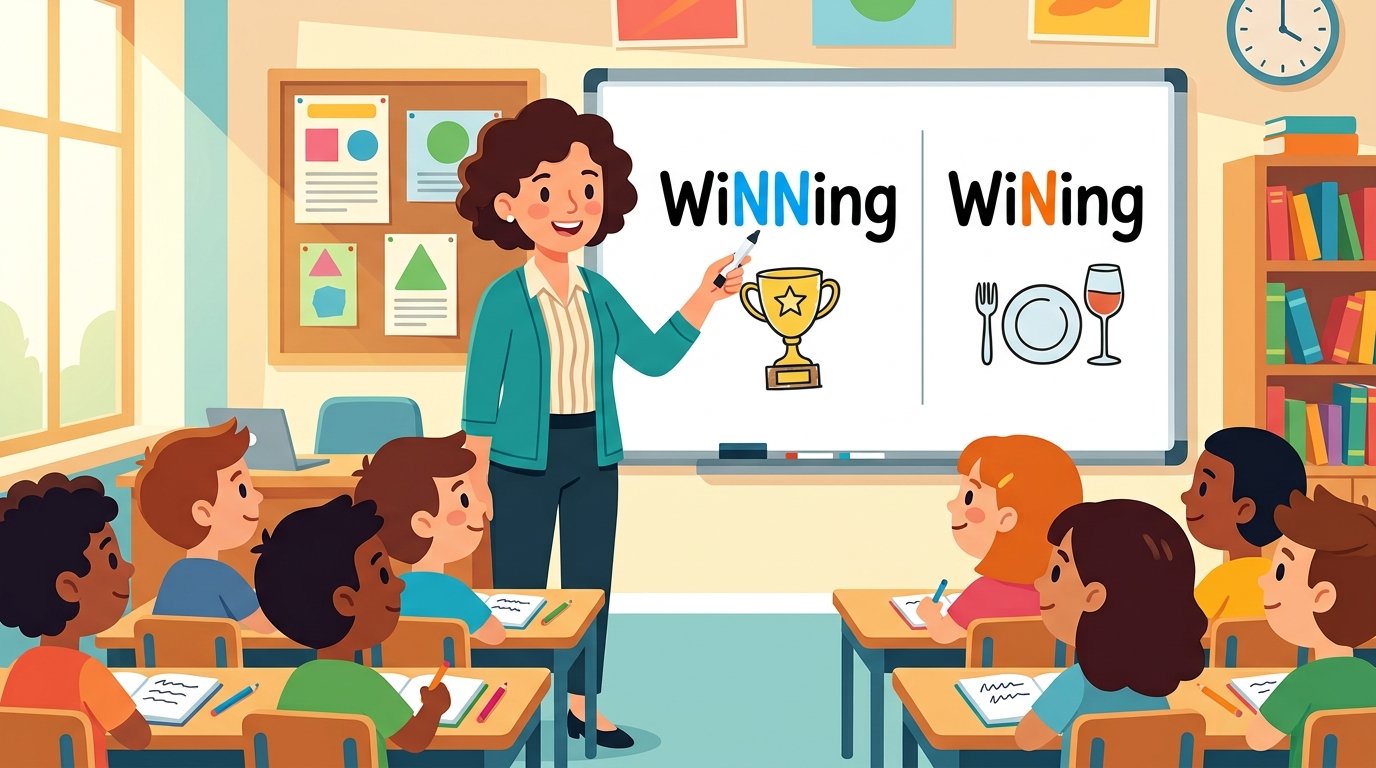
English has plenty of words that look nearly identical but mean something completely different. Wining or winning is a perfect example. At first glance, they might seem like spelling variations of the same word, but they actually carry different meanings and belong in different contexts.
If you’ve searched for wining or winning meaning, the answer depends on what you’re actually trying to say. Winning is the more common word, tied to success or victory, while wining is also a real word — just with a very different meaning connected to serving wine or entertaining someone with drinks.
This guide breaks down the difference, the meanings, real examples, and the grammar rules behind each, so you can use the right word with confidence.
Wining or Winning: Which One Do You Need?
Both wining and winning are legitimate English words, but they don’t mean the same thing at all.
Winning
“Winning” is the present participle of the verb “win,” meaning to achieve victory, succeed, or gain something.
Examples:
- She is winning the race.
- The team kept winning all season.
Wining
“Wining” comes from the phrase “wine and dine,” meaning to entertain someone with food and drinks, especially wine.
Examples:
- The company was wining important clients.
- They spent the evening wining and dining guests.
So unlike a lot of spelling mix-ups, this isn’t a case of one word simply being wrong. The right choice depends entirely on which meaning you’re going for.
What Does “Winning” Actually Mean?
Winning refers to success, victory, or coming out ahead in a competition, contest, or effort.
It shows up in a few different forms.
As a Verb
- He is winning the match.
- They are winning customer trust.
As an Adjective
- That was a winning strategy.
- She has a winning personality.
As a Noun (in Some Contexts)
- Winning isn’t everything, but it matters.
In simple terms, winning means succeeding or achieving victory.
What Does “Wining” Actually Mean?
Wining is far less common in everyday conversation, but it’s still a valid, recognized word.
It refers to serving wine to someone or entertaining them with drinks, usually as part of hospitality or socializing.
Examples:
- The hosts were wining their guests all evening.
- The executive team was busy wining and dining investors.
This word usually pops up in the expression:
Wining and dining
That phrase means treating someone generously with food, drinks, and entertainment.
Why Do People Mix Up Wining and Winning?
The confusion happens because the two words are so close in spelling and pronunciation.
Here are the main reasons:
1. Only One Letter Changes
“Winning” has a double n, while “wining” has just a single n.
2. “Winning” Is Far More Common
Most people encounter “winning” regularly in sports, business, and everyday conversation, so they naturally assume “wining” is a typo.
3. The Pronunciation Can Sound Similar
In casual speech, the difference between the two isn’t always obvious.
The Grammar Rule Behind “Winning”
This spelling follows a well-known English grammar rule.
When a one-syllable verb ends in consonant + vowel + consonant, adding -ing usually doubles the final consonant.
Examples:
- Win → Winning
- Run → Running
- Sit → Sitting
That’s exactly why “winning” carries a double n.
“Wining,” on the other hand, comes from “wine,” where the base word already ends in a silent e.
The rule here works differently:
- Wine → remove the “e” → Wining
- Dine → remove the “e” → Dining
Wining vs Winning: A Side-by-Side Look
Winning
Meaning: achieving victory or success
Examples:
- They are winning the championship.
- She has a winning attitude.
Wining
Meaning: serving wine or entertaining with drinks
Examples:
- They were wining guests before dinner.
- The company focused on wining and dining clients.
Common Mistakes in Usage
People often slip up in these ways.
Incorrect
- The team is wining the championship.
Correct
- The team is winning the championship.
Why? Because the sentence is about victory, not serving wine.
Incorrect
- The hosts were winning and dining guests.
Correct
- The hosts were wining and dining guests.
Why? Because this phrase is about hospitality, not competition.
A Simple Trick to Remember the Difference
Here’s an easy way to keep the two straight:
Winning = Win + Success
Think of the extra n as a small added boost toward victory.
Wining = Wine
If the sentence involves drinks, hospitality, or entertaining, it comes from “wine.”
This makes it much quicker to pick the right spelling on the fly.
Common Expressions With “Winning”
A few popular examples include:
- Winning streak
- Winning team
- Winning formula
- Winning attitude
- Winning strategy
These all tie back to success or victory.
Common Expressions With “Wining”
This word shows up less often, but you’ll typically see it in:
- Wining and dining guests
- Wining clients
- Wining investors
In nearly every case, it points to hospitality or social entertainment.
FAQs About Wining or Winning
Is “wining” a real word?
Yes, “wining” is a real English word. It refers to serving wine or entertaining someone with drinks.
What’s the difference between wining and winning?
Winning means achieving victory or success, while wining relates to wine or hospitality.
Which is more common — wining or winning?
Winning is far more common in everyday English.
Is “winning” spelled with one N or two?
It’s spelled with two Ns: winning.
What does “wining and dining” mean?
It means entertaining someone with food, drinks, and hospitality.
Is “wining” used in sports?
No. In sports or competition, the correct word is always winning.
Conclusion
If you’ve been wondering about wining or winning, the key is understanding the meaning behind each one. Winning refers to success, victory, or achievement, while wining relates to serving wine or entertaining guests.
Understanding wining or winning meaning helps you sidestep an embarrassing spelling mistake and use each word correctly in context. The next time you’re about to write one of these words, ask yourself a simple question: Am I talking about victory, or about wine? That answer will tell you exactly which spelling to use.





Leave a Reply