

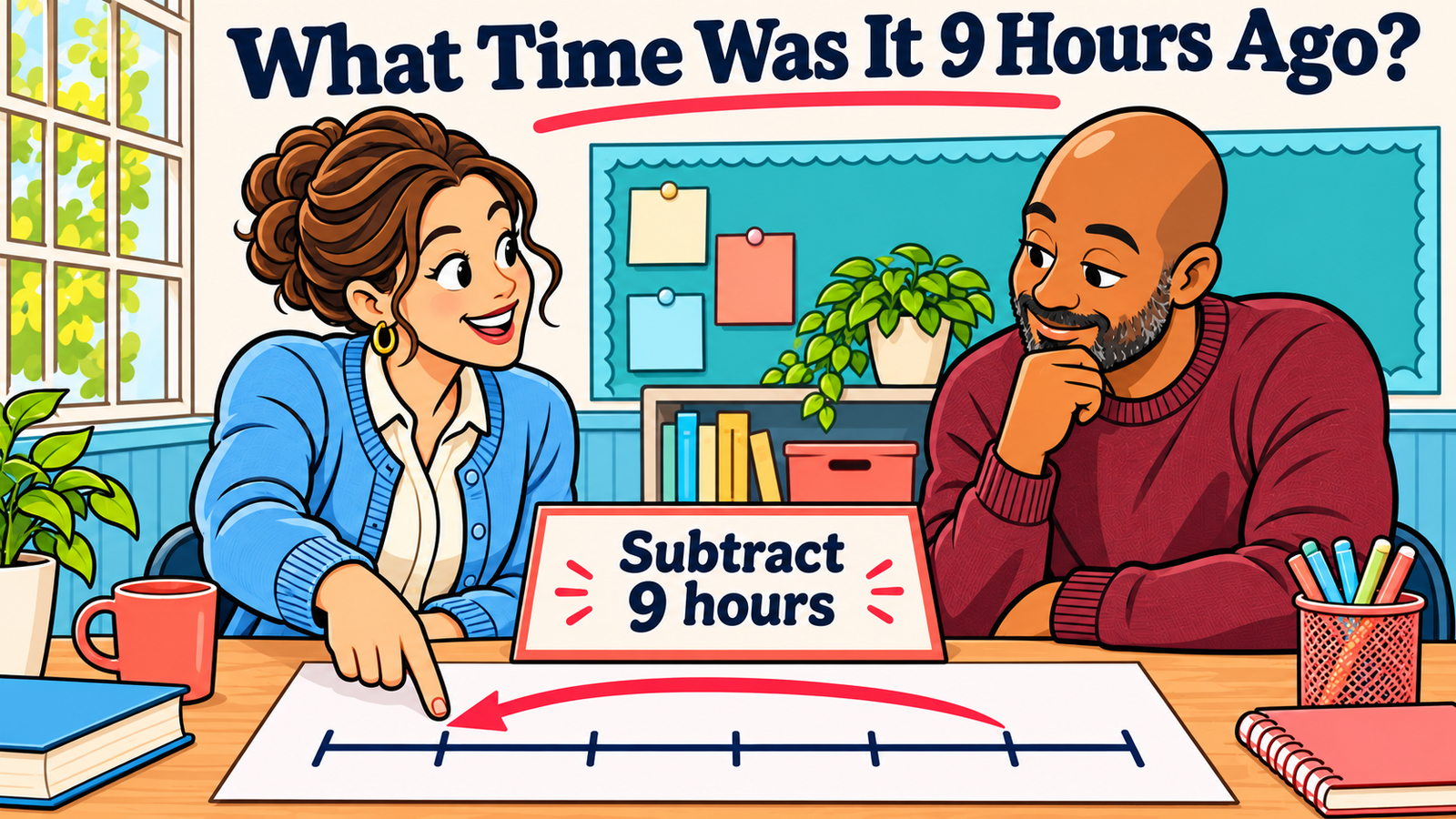
To find what time it was 9 hours ago, subtract nine hours from your starting time. For example, if it is 2:40 PM now, nine hours earlier was 5:40 AM today. If it is 6:25 AM, the answer is 9:25 PM yesterday.
Your answer depends on the time you begin with, so there is no single clock reading that works for everyone. This guide uses worked examples rather than a live clock. Use your actual time and date, then follow the method below.
Start With a Complete Time
Write down the current hour, minutes, and AM or PM before calculating. “Six twenty-five” is incomplete because 6:25 AM and 6:25 PM lead to different answers. Include the date when you are checking an old message, a work record, or a screenshot.
Keep this starting point fixed while you work. If you begin a calculation at 2:40 PM and finish several minutes later, your answer still describes nine hours before 2:40 PM. Recalculate from the newer time only if you need a fresh answer.
Subtract Nine Hours on a 24-Hour Clock
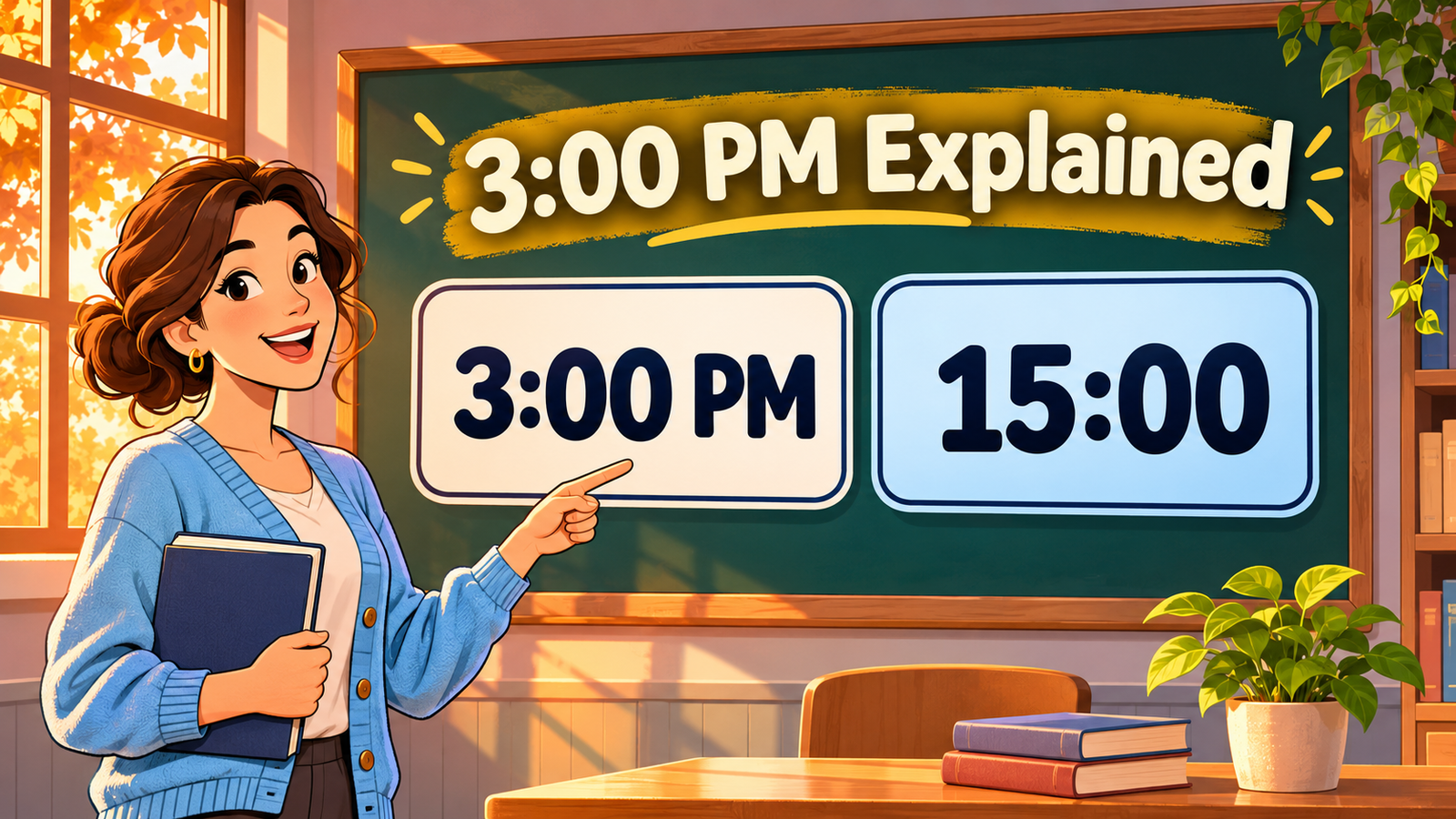
The 24-hour system makes subtraction straightforward. Convert afternoon hours by adding twelve, so 2:40 PM becomes 14:40. Subtract nine from fourteen and keep the minutes: 14:40 minus nine hours is 05:40. That means 5:40 AM on the same date.
For an evening example, 10:15 PM is 22:15. Subtracting nine gives 13:15, or 1:15 PM today. Notice that the answer remains PM. Subtracting nine hours does not automatically switch AM to PM or PM to AM; the result depends on the starting hour.
When the Answer Falls Yesterday
If the starting hour is less than nine in 24-hour notation, the calculation crosses midnight. At 6:25 AM, six minus nine is negative three. Add twenty-four to obtain twenty-one, giving 21:25, and move the calendar back one day. The complete answer is 9:25 PM yesterday.
The boundary is exactly 9:00 AM under ordinary clock conditions. Nine hours before 9:00 AM is midnight at the start of today. Nine hours before 8:59 AM is 11:59 PM yesterday. A one-minute difference in the starting time can therefore change which date belongs in the answer.
A Mental Shortcut Using Twelve Hours
You can also subtract twelve hours, then add three hours back. The net change is minus nine hours. Starting at 7:20 PM, move back twelve hours to 7:20 AM, then forward three hours to 10:20 AM. This can be easier than counting backward one hour at a time.
Keep the date attached throughout the shortcut. From 4:10 AM, subtracting twelve hours gives 4:10 PM yesterday. Adding three hours produces 7:10 PM yesterday. Do not discard “yesterday” simply because you have moved forward during the second part of the calculation.
Minutes and Seconds Usually Stay the Same
When subtracting a whole number of hours with no clock-offset change, the minutes and seconds remain unchanged. If your starting timestamp is 18:42:17, nine hours earlier is 09:42:17. You are moving the hour position, not removing nine minutes from the minute field.
This also helps you spot accidental mistakes. An answer of 09:33:17 would not match that example because the minutes have changed without a reason. If your source only gives hours and minutes, avoid inventing seconds; report the result to the same precision as the information you have.
Check the Calendar at Month and Year Boundaries
“Yesterday” sometimes means a different month or year. If your starting time is January 1 at 7:10 AM, nine hours earlier was December 31 at 10:10 PM in the previous year. Writing only 10:10 PM leaves out a crucial part of the timestamp.
Month lengths also matter when you write the date explicitly. Going back from the first day of a month means using the final date of the previous month. Check a calendar rather than assuming every month has thirty days, especially when the calculation reaches the end of February.
Convert Nine Hours Into Other Units
Nine hours equals 540 minutes because nine multiplied by sixty is 540. It also equals 32,400 seconds because 540 multiplied by sixty is 32,400. These conversions are useful when a duration field accepts minutes or seconds instead of hours.
As a fraction of a standard twenty-four-hour duration, nine hours is 0.375 day, or three-eighths of a day. This describes elapsed duration. It does not mean you should subtract 0.375 from a written calendar date without checking how your spreadsheet or time calculator handles date values.
Understand Relative Message Labels
A message labeled “9 hours ago” is measured from the moment the application generated that label. If you are reading a screenshot captured at 8:30 PM, use 8:30 PM as the reference point. Using your current clock could place the message at an entirely different time.
Some applications round or truncate relative age labels. A label alone may therefore be less precise than a full timestamp. For an exact record, open the message details if available and keep the displayed date, time, and zone. Treat a rounded label as an estimate rather than proof of an exact minute.
Time Zones and Clock Changes
Keep the start and result in the same time zone when doing ordinary subtraction. If two people describe the same event using different local clock readings, their written answers can differ while referring to the same moment. Include the zone when sharing a timestamp across locations.
If the interval crosses a daylight-saving or other clock-offset change, simple local-hour subtraction may differ from subtracting nine elapsed hours. For exact work, subtract the duration from a complete timestamp in UTC and convert back to the intended local zone. The examples here assume the offset stays unchanged.
Verify the Answer by Adding Back
A quick check is to add nine hours to your result. For the 6:25 AM example, begin at 9:25 PM yesterday. Three hours takes you to 12:25 AM today, and another six hours brings you to 6:25 AM. Both the clock and date now match.
This reverse check catches a wrong AM/PM label as well as a forgotten date change. If the result returns to the correct hour on the wrong day, the calculation is still incomplete. The goal is to recover the entire starting timestamp, not just the number printed on the clock.
Frequently Asked Questions
What time was it 9 hours ago if it is 2:40 PM?
It was 5:40 AM today. Convert 2:40 PM to 14:40 and subtract nine hours to get 05:40. The date stays the same because the subtraction does not pass midnight.
What time was it 9 hours ago from 6:25 AM?
It was 9:25 PM yesterday. The calculation crosses the start of the current day, so the previous date must be included with the evening time.
Is nine hours ago always yesterday?
No. With a constant clock offset, starting times from 9:00 AM onward give an answer on the same date. Earlier morning times give an answer on the previous date.
How many minutes are in nine hours?
There are 540 minutes in nine hours. Multiply the number of hours by sixty to convert the duration into minutes, or multiply by 3,600 to obtain seconds.
Do I change the minutes when subtracting nine hours?
Normally, no. Subtracting exactly nine whole hours preserves the minute field. Use complete timestamps if a local clock change occurs during the interval.
Can I use this article as a live time calculator?
This page explains the calculation and provides examples. Read your current clock, include the date, and apply the method to obtain an answer for your own starting time.
Conclusion
Finding nine hours ago becomes easier when you separate the hour calculation from the date check. Subtract nine, preserve the minutes, and move back a day only when the calculation crosses midnight.
Write the full result with AM or PM and the appropriate date. For a final check, add nine hours back and confirm that you return to your original starting point.




Leave a Reply