

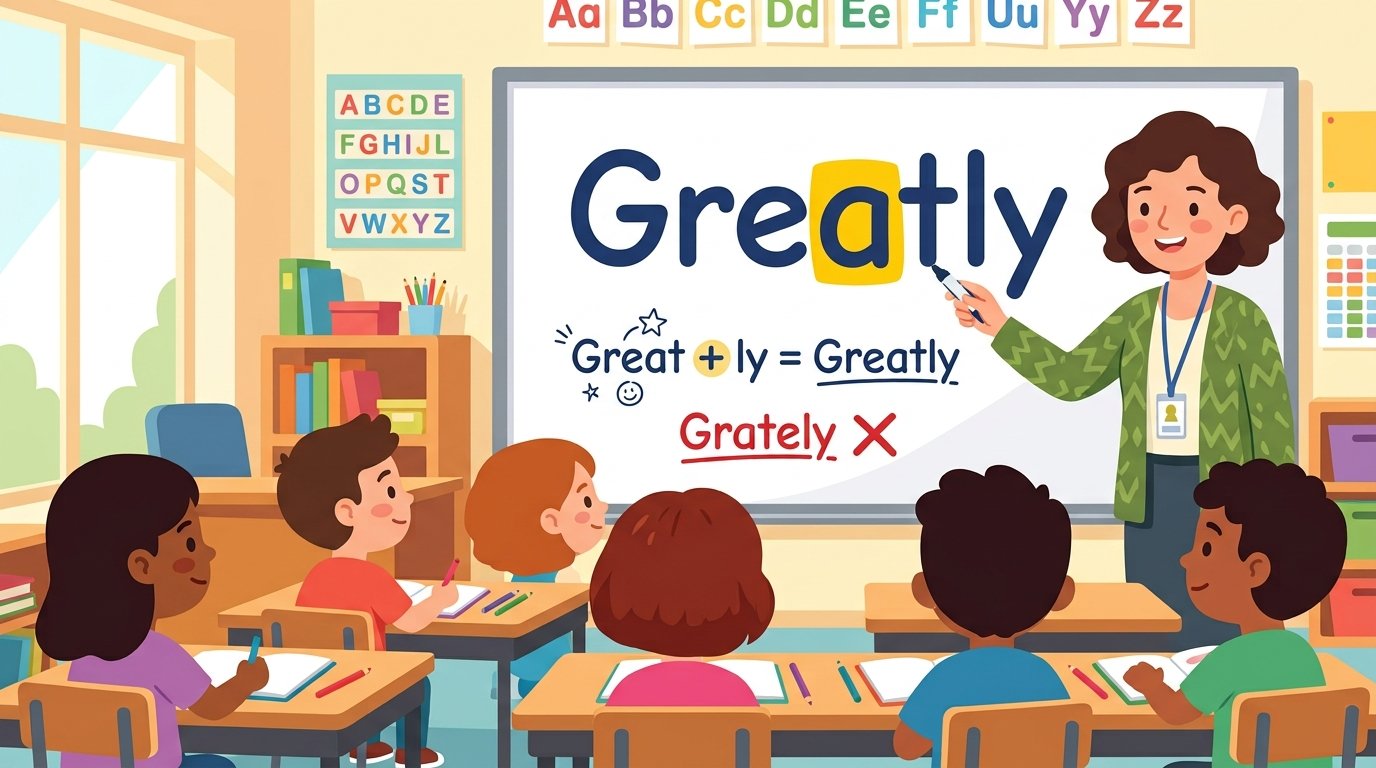
Ever typed “grately” and paused, unsure whether that’s correct or if it should actually be “greatly”? This is a surprisingly common spelling mix-up among both English learners and native speakers. The short answer: “greatly” is correct in nearly every situation, while “grately” is generally treated as a misspelling.
This guide walks through the difference between grately or greatly, unpacks what “greatly” actually means, offers real examples, and shares practical tips to help the correct spelling stick.
Is It Grately or Greatly?
The correct spelling is greatly.
The word “grately” doesn’t exist as a standard English word in dictionaries like Oxford, Merriam-Webster, or Cambridge. It’s typically just a typo caused by dropping the letter “e” from “greatly.”
Correct Examples
- I greatly appreciate your help.
- The new technology has greatly improved our lives.
- Her confidence has greatly increased over the years.
Incorrect Examples
- I grately appreciate your support.
- The situation has grately changed.
When choosing between grately or greatly, always go with greatly.
What Does “Greatly” Actually Mean?
Greatly is an adverb meaning to a large extent, considerably, very much, or significantly. It’s used to describe the degree or amount by which something happens.
For example:
- The company’s profits increased greatly last year.
- Your kindness is greatly appreciated.
- The weather greatly affected our travel plans.
The word adds emphasis, signaling that something has a strong impact or a substantial change.
Common Phrases That Use “Greatly”
“Greatly” shows up in plenty of everyday English expressions. Here are a few of the most common.
Greatly Appreciated
Often used to express gratitude.
Examples:
- Your feedback is greatly appreciated.
- Any donation will be greatly appreciated.
Greatly Improved
Used to describe meaningful progress or positive change.
Examples:
- His English skills have greatly improved.
- The updated software has greatly improved performance.
Greatly Reduced
Refers to a substantial decrease.
Examples:
- The new policy greatly reduced expenses.
- Exercise can greatly reduce stress levels.
Why Do People Write “Grately” Instead of “Greatly”?
This mistake happens because English spelling can be a little inconsistent. Since “great” is such a familiar word, people sometimes spell its adverb form without paying close attention to the “e” right before “ly.”
A few common reasons behind the confusion:
- Fast typing or autocorrect slip-ups
- Uncertainty about English spelling rules
- Mishearing the pronunciation of “greatly”
A simple trick for remembering the correct spelling: great + ly = greatly. The original word “great” holds onto its “e” even after “ly” gets added.
Grately vs Greatly: A Quick Comparison
| Word | Is It Correct? | Meaning |
|---|---|---|
| Grately | No | A common misspelling of greatly |
| Greatly | Yes | To a large degree or significantly |
This side-by-side view makes it easy to remember that greatly is the only accepted spelling in standard English.
Tips to Stop Confusing Grately and Greatly
If grately or greatly trips you up often, try these simple tips:
- Keep the base word “great” in mind.
- Add “ly” without dropping any letters.
- Lean on spell-check tools while writing.
- Read your writing out loud to catch slip-ups.
With a bit of practice, picking the correct spelling becomes second nature.
FAQs About Grately or Greatly
Is “grately” a real word?
No, grately isn’t recognized as a standard English word. It’s simply a spelling mistake of “greatly.”
How do you spell “I greatly appreciate it”?
The correct version is: “I greatly appreciate it.” The word “greatly” means very much or to a significant degree.
What does “greatly” mean in English?
Greatly means very much, significantly, or to a large extent. It’s used to emphasize the amount or impact of something.
Why do people confuse grately and greatly?
The mix-up usually comes down to typing errors or uncertainty about whether “great” keeps its “e” before adding “ly.”
Can I use “grately” in formal writing?
No. You should never use “grately” in formal or informal writing, since it’s considered a misspelling.
Conclusion
When deciding between grately or greatly, the correct choice is always greatly. It’s a commonly used English adverb meaning to a large extent, significantly, or very much. “Grately” is simply a spelling mistake worth avoiding.
Remember the easy rule: great + ly = greatly. Understanding this small distinction and practicing it consistently helps you write with more confidence and steer clear of one of the most common English spelling errors. For more grammar and vocabulary guides, keep exploring reliable English language resources.



Leave a Reply