

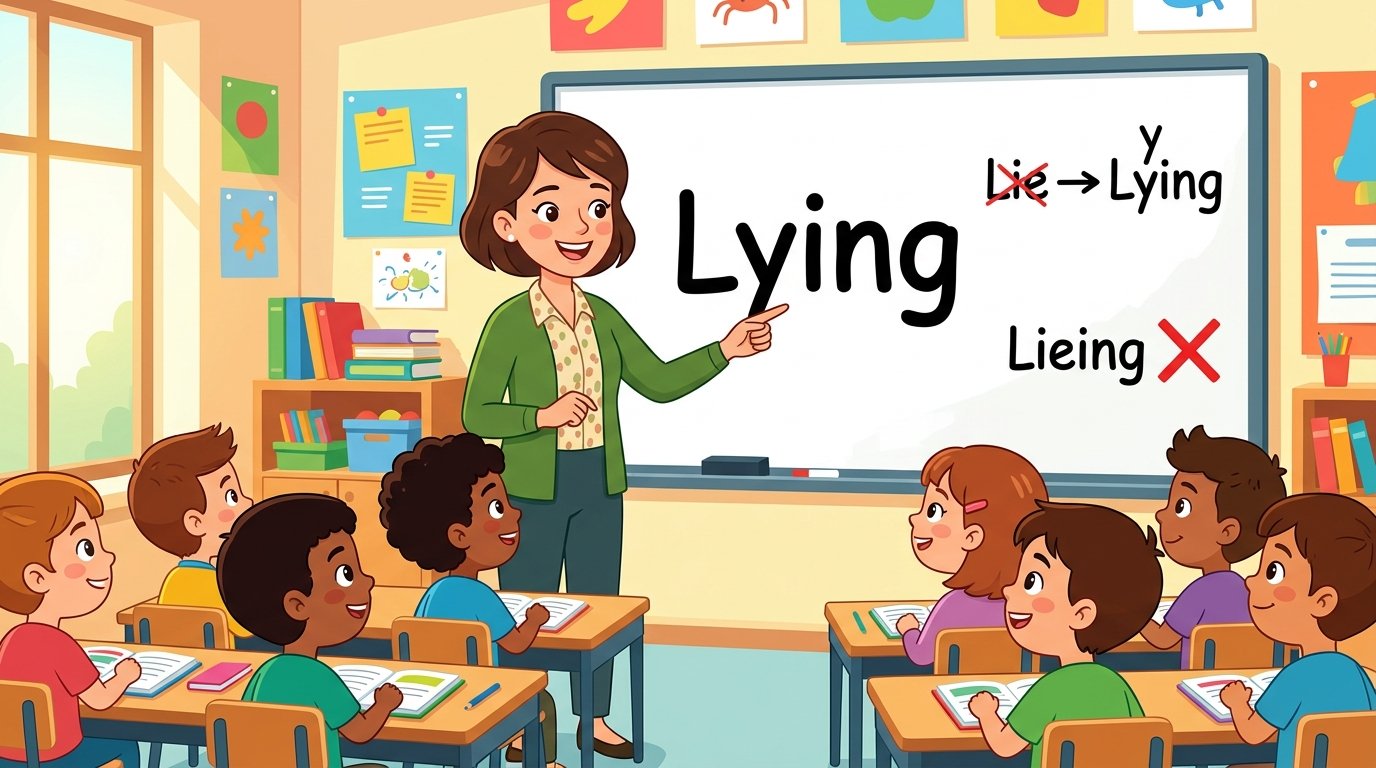
English spelling can throw you off more than expected, especially when words shift form in unexpected ways. One common mix-up people run into is lieing or lying. At first glance, “lieing” might seem logical, since it follows the base word “lie,” but English grammar has a special rule for verbs ending in “ie.”
If you’ve ever wondered is it lieing or lying, this guide clears everything up. You’ll learn the correct spelling, the meanings, the grammar rules, real examples, and the difference between lying down and lying as in not telling the truth. By the end, you’ll know exactly which form to reach for in everyday writing.
Lieing or Lying: Which Spelling Is Correct?
The correct spelling is “lying.”
The word “lieing” is incorrect and isn’t accepted in standard English dictionaries or grammar rules.
Correct
- She is lying on the couch.
- He keeps lying to his friends.
Incorrect
- She is lieing on the couch.
- He is lieing again.
So if you’re asking lieing or lying which is correct, the answer is simple: lying is always correct.
Why “Lying” Gets Spelled This Way
The confusion comes from the fact that the base verb is “lie.” Normally, plenty of English words just add “-ing” at the end. Verbs ending in “ie,” however, follow a special spelling rule.
The Rule
When a verb ends in “ie”:
- Remove the “ie.”
- Replace it with “y.”
- Then add “-ing.”
Examples:
- Lie → Lying
- Die → Dying
- Tie → Tying
That’s exactly why “lieing” is grammatically incorrect.
What Does “Lying” Actually Mean?
The word “lying” carries two main meanings in English, and context tells you which one applies.
1. Lying Down
This meaning describes resting or being in a horizontal position. The cat is lying on the floor. I was lying in bed all morning. He is lying on the sofa watching television.
2. Lying as in Not Telling the Truth
This meaning refers to dishonesty or giving false information. She was lying about her age. Stop lying to your parents. He admitted he had been lying.
Although the two meanings are completely different, the spelling stays exactly the same either way.
Correct Usage When Talking About Resting
When talking about physical position or resting, the correct phrase is always “lying down.”
Correct Examples
- She is lying down after work.
- The baby was lying peacefully in bed.
- He spent the afternoon lying on the beach.
Incorrect Examples
- She is lieing down.
- He was lieing in bed.
This is one of the most common spelling slip-ups in informal writing.
When It Comes to Dishonesty
Another common search relates to dishonesty. In this sense, “lying” means saying something false on purpose.
Examples:
- They caught him lying during the interview.
- She apologized for lying.
- Children sometimes avoid punishment by lying.
Keep in mind that the spelling never changes based on meaning. Whether someone is resting or being dishonest, “lying” is still the correct form.
Definitions of “Lying”
Here are the standard definitions:
Lying (Position)
Resting or reclining in a horizontal position.
Lying (Dishonesty)
Making false statements or not telling the truth.
Since both meanings trace back to the verb “lie,” they share the same present participle form: lying.
Grammar Rules Behind “Lying”
Understanding the grammar makes it much easier to avoid slipping up.
Present Tense
- I lie down every afternoon.
- They lie to avoid trouble.
Present Participle
- I am lying on the bed.
- He is lying again.
Past Tense
This is where things get trickier, since English actually has two separate verbs called “lie.”
Lie Meaning “Recline”
- Present: lie
- Past: lay
- Past participle: lain
Example:
- Yesterday I lay on the couch.
Lie Meaning “Tell Falsehoods”
- Present: lie
- Past: lied
- Past participle: lied
Example:
- She lied about the situation.
This split trips up a lot of English learners.
Examples in Everyday Sentences
Seeing correct examples in context helps the usage stick naturally.
Examples About Resting
The dog is lying near the fireplace. I enjoy lying in bed on rainy mornings. They were lying under the stars.
Examples About Dishonesty
He keeps lying about his homework. She regrets lying to her family. The witness was accused of lying in court.
Incorrect Usage Examples
He is lieing on the floor. She was lieing to everyone. I saw him lieing in bed.
Every one of these should use “lying” instead.
Lieing or Lying in UK English
Some learners wonder whether British English follows a different spelling. It doesn’t.
Across:
- British English
- American English
- Australian English
- Canadian English
the correct spelling is always “lying.”
So if you’re searching for lieing or lying UK, the answer stays exactly the same.
How Do You Spell “Lying” Correctly?
Here’s the simplest way to remember it:
- Start with the verb “lie.”
- Remove the “ie.”
- Add “ying.”
Result:
Lying
The same pattern applies to:
- Tie → Tying
- Die → Dying
Once this grammar pattern clicks, the spelling becomes much easier to remember.
Why Do People Write “Lieing” in the First Place?
A few reasons explain why this mistake is so common.
1. English Spelling Isn’t Always Consistent
English contains plenty of irregular patterns, so people naturally guess spellings based on how a word sounds.
2. The Base Word Ends in “ie”
Writers often assume they only need to tack on “-ing.”
3. Informal Internet Writing
Typos and incorrect spellings spread fast online, which can make errors seem acceptable even when they aren’t.
A Quick Memory Trick for “Lying”
An easy trick to remember:
“ie” changes to “y” before “-ing” gets added.
Think of:
- Dying
- Tying
- Lying
All three follow the exact same spelling pattern.
Common Mistakes to Watch For
Incorrect: Lieing, lieing down, lieing in bed, lieing to people.
Correct: Lying, lying down, lying in bed, lying to people.
Even small spelling slips like this one can affect how polished your professional writing looks, so it’s worth locking in the correct form.
FAQs About This Common Spelling Mix-Up
Is it lieing or lying?
The correct spelling is “lying.” “Lieing” is incorrect.
Why is “lying” spelled with a Y?
English grammar changes verbs ending in “ie” by swapping “ie” for “y” before adding “-ing.”
Is “lieing” in the dictionary?
Standard dictionaries don’t recognize “lieing” as a correct spelling.
Does “lying” mean resting or dishonesty?
It can mean either one. Context determines which meaning applies.
How do you spell “lying in bed”?
The correct phrase is “lying in bed.”
What’s the difference between “lay” and “lie”?
“Lie” means to recline, while “lay” usually means to place something down.
Examples:
- I lie on the sofa.
- I lay the book on the table.
Is the spelling the same in UK English?
Yes. British English also uses “lying.”
What’s the past tense of “lie”?
It depends on the meaning:
- Recline → lay
- Tell falsehoods → lied
Conclusion
The debate around lieing or lying becomes simple once you understand the grammar rule behind it. The only correct spelling is “lying.” English changes verbs ending in “ie” by swapping those letters for “y” before adding “-ing.”
Whether you’re talking about lying in bed, lying down on a couch, or lying as in not telling the truth, the spelling stays exactly the same. Avoiding the incorrect form “lieing” will instantly make your writing look more polished and professional.
Now that you know the correct usage, pay attention to how the word shows up in books, articles, and everyday conversations. The more you see it used correctly, the easier it becomes to remember naturally in your own writing.









Leave a Reply