

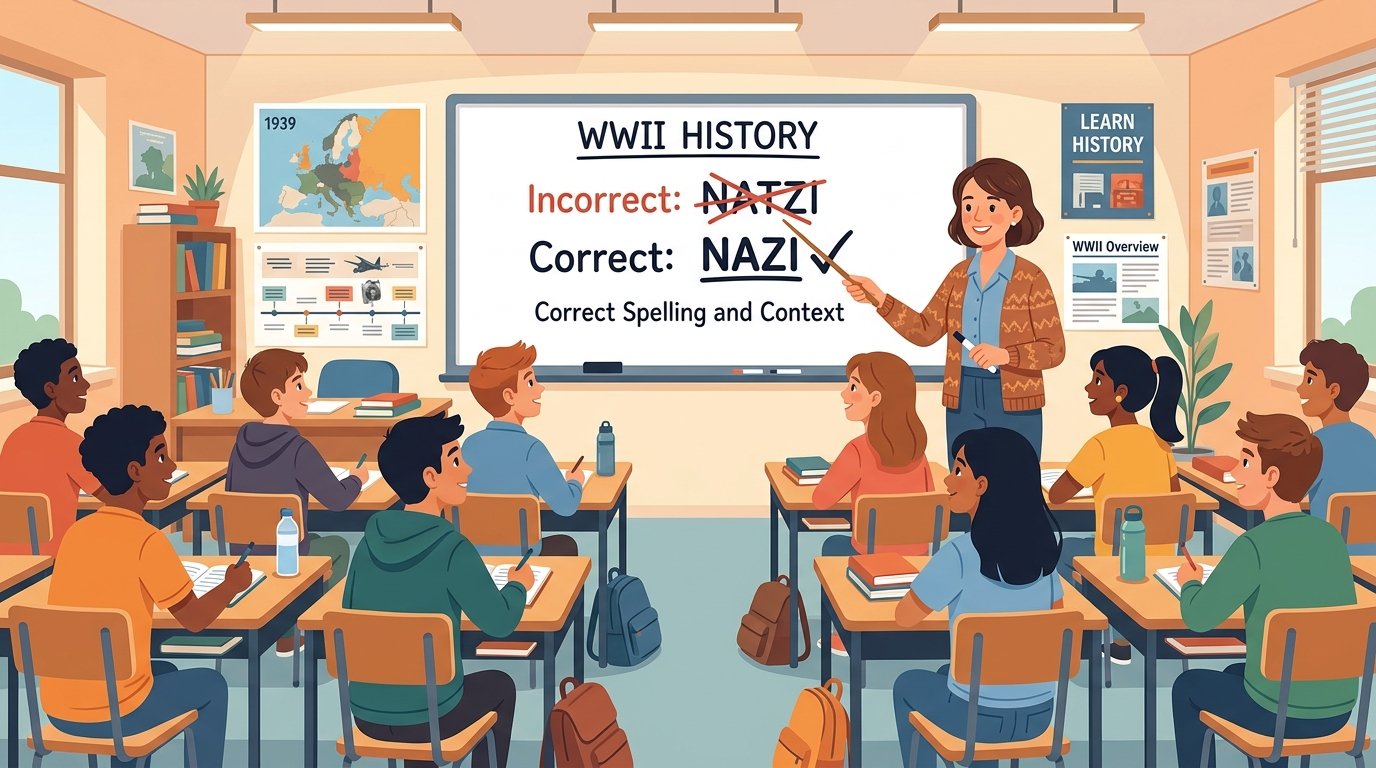
English has plenty of words that trip people up because of how they sound versus how they are written. One word that causes this kind of mix-up all the time is “Natzi or Nazi.” Since this term shows up often in history books, news articles, and World War II documentaries, getting the spelling right really matters.
To answer it quickly: the correct word is “Nazi.” Writing it as “natzi” is simply a spelling error and is not recognized in English or German.
Below, we will look at the right spelling, how the word is pronounced, what it actually means, its plural form, and the mistakes people commonly make while typing it.
Natzi or Nazi: What Is the Correct Spelling?
Only one version is correct, and that is “Nazi.”
“Natzi” is not a recognized word in any dictionary, and you won’t find it in academic or historical writing either.
The word “Nazi” is used to describe:
- A member of the National Socialist German Workers’ Party
- The political movement headed by Adolf Hitler between 1933 and 1945
- The overall belief system that this regime followed
So whenever someone types “Natzi or Nazi” into a search bar wondering which one is right, the answer stays the same every time: “Nazi.”
What Does the Word “Nazi” Actually Mean?
The word originates from a longer German term: “Nationalsozialist.”
Over time, this got shortened to “Nazi,” and it was used for members and supporters of the party that governed Germany right before and during World War II.
In modern usage, the word is closely linked with ideas such as:
- Fascist rule
- Dictatorship
- Hatred toward Jewish people
- Authoritarian government
- Genocide and war crimes
Given how heavy this history is, the word deserves careful and accurate use, not casual guessing between “Natzi or Nazi.”
Why Do So Many People Type “Natzi” by Mistake?
This error usually comes down to how the word sounds when spoken aloud.
Most people pronounce it something like: “NAHT-see”
Because of that “t” sound in the middle, a lot of writers assume there must be a “t” in the spelling too, and end up typing “natzi.”
But the actual spelling only has these four letters:
- N
- A
- Z
- I
There is no “t” anywhere in the word, even though it sounds like there might be one.
Natzi or Nazi: How Should You Pronounce It?
The accepted pronunciation is close to: “NAHT-see”
Even though your ear might pick up a slight “t” sound in the middle, the written form stays “Nazi” with no extra letter added.
This kind of mismatch between spelling and sound is common across many languages, and English speakers often assume a word is spelled exactly the way it sounds — which isn’t always true.
A Quick Look at Nazi Germany
“Nazi Germany” is the term used for the country during the years the Nazi Party held power, from 1933 to 1945.
Major events from this era include:
- Adolf Hitler coming into power
- The outbreak of World War II
- The Holocaust
- Military expansion across much of Europe
Anyone searching “Natzi or Nazi Germany” should know the historically accurate phrase is always “Nazi Germany,” never with the extra “t.”
Nazi Symbols, Flags, and Signs
A number of symbols are tied to the Nazi era and are widely recognized today.
Some of the most well-known include:
- The swastika
- Military badges and insignia used by Nazi forces
- Propaganda posters and political banners
Because these symbols represent hate and violence, many countries have laws limiting or banning their public use.
Whether people search for:
- “Natzi or Nazi symbol”
- “Natzi or Nazi flag”
- “Natzi or Nazi sign”
the correctly spelled word in every case is “Nazi.”
What Was the Nazi Salute?
The “Nazi salute” refers to a gesture that was used across Nazi Germany to show loyalty to the ruling party.
It went on to become one of the most identifiable political symbols from the last century, and today it is strongly connected to fascist and hate-driven movements.
A number of countries have made this gesture illegal or strictly limited in public, because of the extremist history behind it.
Plural Form of Nazi
To make the word plural, you simply add an “s”:
“Nazis”
Example Sentences
- The Nazis held control over Germany throughout the war years.
- Students studying World War II often research the actions of the Nazis.
Nothing else changes in the spelling — just the added “s” at the end.
Common Spelling Errors to Avoid
Take a look at these incorrect versus correct examples.
Incorrect
- Natzi Germany
- Natzi flag
- The Natzis invaded Poland.
Correct
- Nazi Germany
- Nazi flag
- The Nazis invaded Poland.
Choosing the right spelling keeps your writing accurate, especially when discussing sensitive historical topics.
Why the Correct Spelling Matters So Much
“Nazi” is a word tied to one of the darkest periods in modern history. Getting the spelling wrong can:
- Make your writing look unclear
- Confuse readers
- Come across as careless in formal or academic work
Correct spelling becomes especially important in:
- History assignments and essays
- Classroom teaching materials
- News reporting
- Academic research papers
- Documentary scripts and discussions
Why This Word Still Matters Historically
The Nazi regime left a lasting mark on:
- The course of World War II
- The tragedy of the Holocaust
- The political history of Europe
- Ongoing conversations about extremism and human rights today
Because of this lasting impact, the topic continues to be taught in schools, colleges, museums, and historical research programs around the world.
Frequently Asked Questions
Is it natzi or nazi?
The correct spelling is “Nazi.”
Why do some people write it as “natzi”?
It usually happens because the word’s pronunciation sounds like it contains a “t,” even though the spelling doesn’t include one.
What does the word “Nazi” mean?
It refers to members and supporters of the National Socialist party that ruled Germany under Adolf Hitler.
How is “Nazi” pronounced?
It’s typically pronounced “NAHT-see.”
What’s the plural of “Nazi”?
The plural is “Nazis.”
What does “Nazi Germany” refer to?
It refers to the country of Germany while it was under Nazi Party control, from 1933 until 1945.
Is “natzi” an actual word?
No, it isn’t. “Natzi” is simply a common misspelling of “Nazi.”
Final Thoughts
The confusion between “Natzi or Nazi” almost always comes from how the word sounds rather than how it’s actually written. The correct spelling, in every case, is “Nazi” — referring to the political party and regime that controlled Germany under Adolf Hitler during World War II.
Knowing the right spelling, pronunciation, and historical background helps you communicate clearly, especially when the topic involves important and sensitive events from the past. Since this word connects to history, politics, and human rights, using it correctly is always worth the extra attention.





Leave a Reply