

English is full of word pairs that look nearly identical but serve completely different grammatical roles. One pair that trips people up constantly is showed or shown. If you’ve ever stopped mid-sentence wondering which one to use, you’re in good company.
Here’s the reassuring part: both showed and shown are correct — they just belong in different situations. Showed is the simple past tense of the verb show, while shown is the past participle, typically paired with helping verbs like has, have, had, was, were, or been. This guide breaks down the difference, walks through examples, and offers practical tips so you can pick the right word with confidence every time.
Showed or Shown: Where the Real Difference Lies
The core distinction comes down to grammar.
- Showed is the simple past tense.
- Shown is the past participle.
Both describe actions that happened in the past, but they aren’t interchangeable in every sentence.
Knowing when each form applies makes your writing noticeably clearer and grammatically sound.
When “Showed” Is the Right Choice
Use showed when describing a completed action in the simple past tense.
Examples:
- She showed me her new apartment.
- The teacher showed the class how to solve the equation.
- They showed great kindness during the event.
- He showed everyone his vacation photos.
In each of these, showed stands on its own as the main verb, with no helping verb needed.
When “Shown” Is the Right Choice
Shown is the past participle form of show.
It’s normally paired with helping verbs such as:
- Has
- Have
- Had
- Was
- Were
- Is
- Been
- Being
Examples:
- She has shown remarkable improvement.
- The results were shown during the presentation.
- I had already shown him the report.
- The artwork has been shown in several galleries.
Notice that shown almost always shows up alongside another verb.
Shown vs Showed: A Side-by-Side Look
Comparing shown vs showed directly makes the pattern much easier to spot.
| Sentence | Correct Form |
|---|---|
| She showed me the documents yesterday. | Showed |
| She has shown excellent leadership. | Shown |
| They showed us the new office. | Showed |
| The results have been shown online. | Shown |
The structure of the sentence is what tells you which word fits.
A Grammar Rule Worth Remembering
A simple rule can guide your choice every time.
Use:
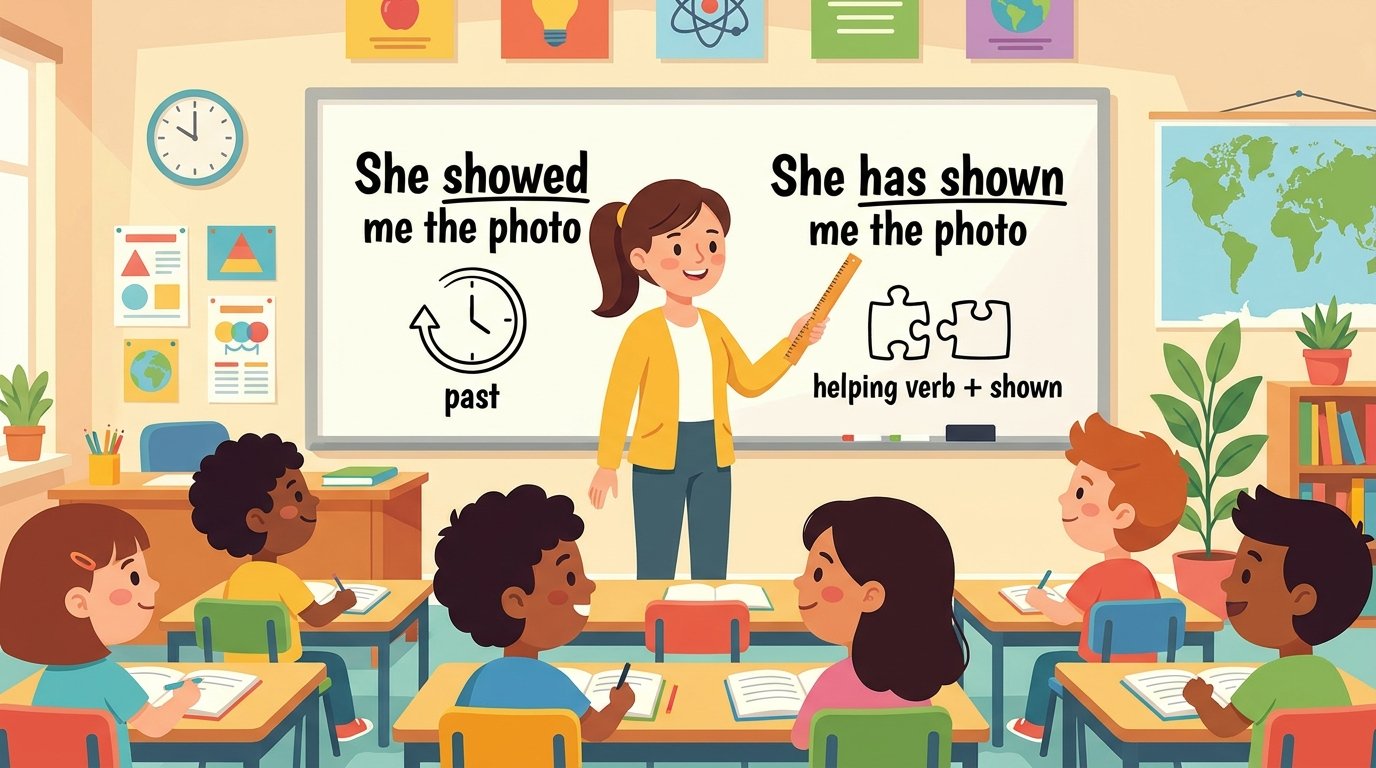
- Showed → Simple past tense
- Shown → Past participle paired with a helping verb
For example:
- I showed my friend the photo.
- I have shown my friend the photo.
The presence of a helping verb is what changes which form applies.
A Common Mistake to Watch For
Many learners accidentally use shown without any helping verb attached.
Incorrect:
- I shown him the picture.
Correct:
- I showed him the picture.
- I have shown him the picture.
Checking for a helping verb is usually the fastest way to catch this error.
Showed and Shown in Everyday Conversation
Here are a few real-world examples to reinforce the pattern.
Using “Showed”
- My brother showed me how to ride a bicycle.
- The guide showed us around the museum.
- She showed her appreciation with a thank-you note.
Using “Shown”
- He has shown tremendous patience.
- The movie has been shown in several countries.
- Evidence was shown during the trial.
Reading through full sentences like these helps the correct usage stick.
Why This Pair Trips Up So Many Writers
Several factors contribute to the confusion between these two words:
- English’s irregular verb patterns
- Overlapping meanings
- Mixing simple past tense with perfect tenses
- Forgetting to include the helping verb
Thankfully, the distinction gets much easier once the underlying grammar clicks.
Quick Checks to Pick the Right Word
If you’re unsure whether to use showed or shown, ask yourself:
- Is there a helping verb like has, have, had, or been in the sentence?
- Am I describing a simple action that happened in the past?
- Does the sentence sound complete without another verb?
If there’s no helping verb present, showed is almost always the right choice.
FAQs About Showed or Shown
Showed or shown — which one is correct?
Both are correct. Showed is the simple past tense, while shown is the past participle used alongside helping verbs.
Can I use “shown” without has or have?
Generally, no. Shown is typically used with helping verbs such as has, have, had, was, were, or been.
Is “I showed him” correct?
Yes. “I showed him” is grammatically correct since it uses the simple past tense.
Is “I have showed” correct?
Modern standard English generally favors “I have shown” over “I have showed.” While “showed” has historically appeared as a past participle in some contexts, shown is the standard, widely accepted form today.
What’s the past tense of “show”?
The simple past tense of show is showed.
What’s the past participle of “show”?
The past participle is shown.
Conclusion
Understanding the difference between showed or shown becomes far easier once you know their grammatical roles. Showed is the simple past tense used for completed actions, while shown is the past participle that usually appears alongside helping verbs such as has, have, had, or been.
Whenever you’re uncertain, remember this simple rule: if the sentence includes a helping verb, shown is usually correct. If you’re just describing something that already happened, showed is the form you want. Practicing these patterns and reviewing real examples will have you using both words with confidence in no time.








Leave a Reply