

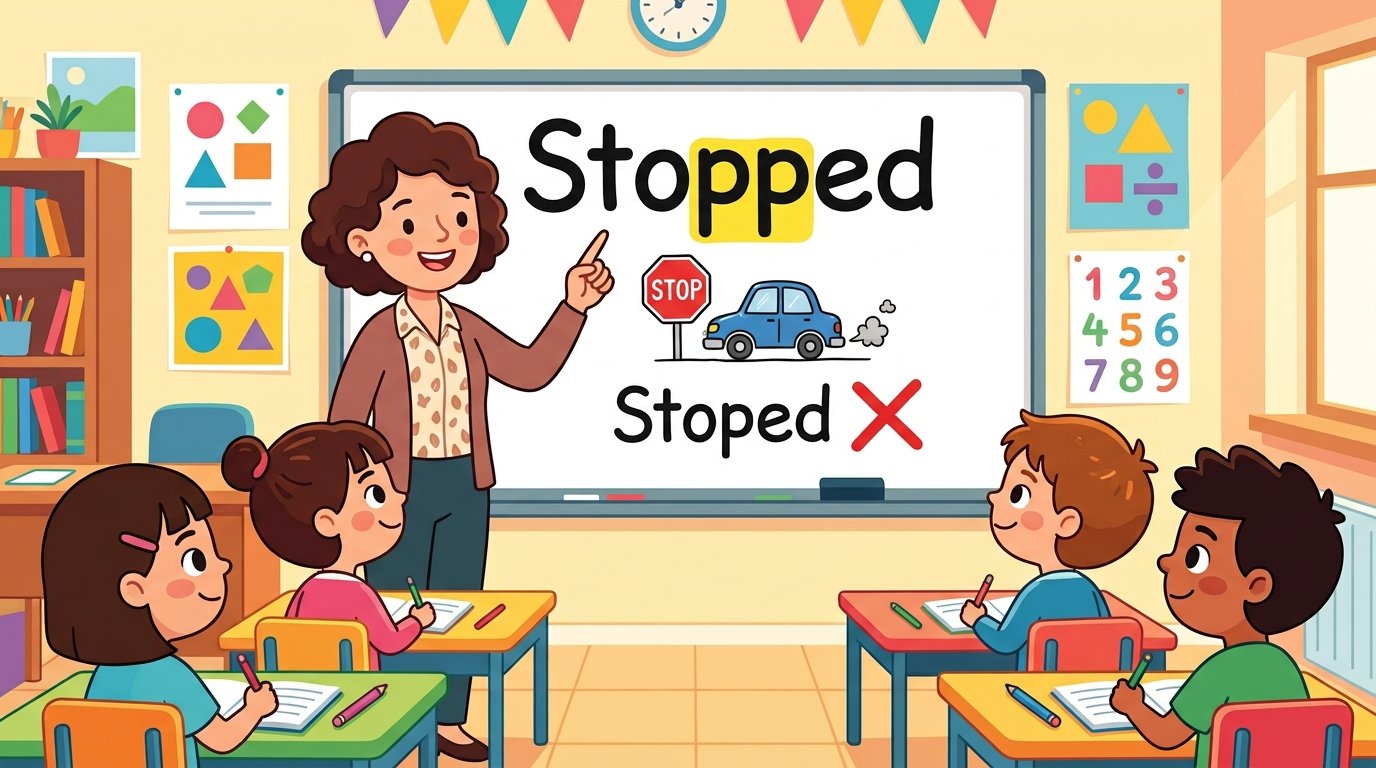
English spelling rules can be genuinely frustrating, especially when double letters show up out of nowhere in certain words. One of the most common mistakes writers make is spelling stoped or stopped incorrectly. Since both versions can look believable at first glance, plenty of people pause and wonder which one is actually right.
The answer is simple: “stopped” is the correct spelling, while “stoped” is incorrect in standard English. Whether you’re writing a text message, an essay, an email, or a social media post, the proper past tense of “stop” always includes two “p” letters.
This guide explains why “stopped” is correct, how the underlying grammar rule works, and how to avoid similar spelling mistakes going forward.
Stoped or Stopped: Which Is Correct?
The correct spelling is:
Stopped
The incorrect spelling is:
Stoped
Examples of Correct Usage
- The car stopped suddenly.
- She stopped talking during the movie.
- Rain stopped after midnight.
If you write “stoped,” most grammar and spell-check tools will flag it right away.
Why “Stopped” Gets Two P’s
The spelling rule behind “stopped” is actually a very common pattern in English grammar.
When a verb:
- Has one syllable
- Ends in a consonant-vowel-consonant pattern
- Receives “-ed” or “-ing”
the final consonant usually doubles.
The word “stop” follows this exact pattern:
- S = consonant
- to = vowel sound
- p = consonant
So when forming the past tense:
Stop → Stopped
The “p” doubles right before “-ed” gets added.
Stoped or Stopped Meaning
The word “stopped” is the past tense and past participle of the verb “stop.”
It means:
- To cease movement
- To end an action
- To discontinue something
Examples
- He stopped running.
- The teacher stopped the lesson early.
- Traffic stopped because of the accident.
The incorrect spelling “stoped” doesn’t carry any recognized meaning in standard English.
Which Is Correct, Stoped or Stopped?
If you’re asking “which is correct, stoped or stopped,” the answer is always:
Stopped
This holds true across:
- American English
- British English
- Academic writing
- Professional communication
- Informal conversation
There’s no major English dialect where “stoped” counts as correct.
Why People Write “Stoped” by Mistake
This spelling error happens for a few different reasons.
1. Fast Typing
Many people accidentally drop one “p” while typing quickly.
2. Confusion About Double Consonants
English spelling rules can feel inconsistent. Some verbs double their final letter, while others don’t.
For example:
- Stop → Stopped
- Plan → Planned
- Hop → Hopped
But:
- Open → Opened
- Visit → Visited
This inconsistency naturally causes confusion.
3. Pronunciation Assumptions
Some writers focus only on how the word sounds and assume one “p” is enough, since the spoken version doesn’t strongly emphasize the double consonant.
An Easy Rule to Remember
Here’s a simple trick to lock in the correct spelling.
If the verb:
- Has one syllable
- Ends in consonant-vowel-consonant
then double the final consonant before adding “-ed.”
Examples:
- Stop → Stopped
- Clap → Clapped
- Drop → Dropped
- Grab → Grabbed
This pattern shows up frequently throughout English.
Examples of “Stopped” in Everyday Sentences
Seeing the word naturally in context helps the correct spelling stick.
Examples:
- The bus stopped near the station.
- She stopped answering calls.
- They stopped working after sunset.
- My phone suddenly stopped charging.
In every case, “stopped” uses two “p” letters.
Similar Grammar Mistakes Worth Knowing
This kind of mistake isn’t unique to the word “stop.”
People often mix up similar verbs, such as:
- Planed vs. planned
- Droped vs. dropped
- Grabed vs. grabbed
- Shoped vs. shopped
Understanding the double-consonant rule helps you avoid a whole cluster of these errors at once.
Stopped vs Stop: Understanding the Difference
These two words serve different grammatical roles.
“Stop”
The base verb form.
Examples:
- Please stop talking.
- Stop the car.
“Stopped”
The past tense or past participle form.
Examples:
- The machine stopped working.
- She had stopped by noon.
Using the correct form strengthens both sentence clarity and grammar accuracy.
Why Correct Spelling Actually Matters
Small spelling errors might seem harmless, but they can shape how your writing gets perceived.
Correct spelling:
- Improves professionalism
- Builds credibility
- Enhances readability
- Supports academic and workplace communication
Even a small slip like “stoped” can distract readers from your actual message.
How Spell-Check Handles “Stoped”
Most modern grammar tools will automatically correct:
Stoped → Stopped
That said, relying entirely on software carries some risk. Learning the underlying grammar rule yourself helps build stronger long-term writing skills.
Tips to Avoid Writing “Stoped”
Here are a few practical ways to remember the correct spelling.
1. Think Through the Rule
Short verbs ending in consonant-vowel-consonant usually double the last letter.
2. Read Your Writing Slowly
Proofreading helps you catch a missing letter before it slips through.
3. Practice Similar Words
Practicing related examples strengthens your spelling memory over time.
Words worth practicing:
- Dropped
- Planned
- Grabbed
- Clapped
FAQs About Stoped or Stopped
Is it stoped or stopped?
The correct spelling is “stopped.”
Is “stoped” ever correct?
No. “Stoped” is considered a spelling mistake in standard English.
Why does “stopped” have two P’s?
Because “stop” follows the consonant-vowel-consonant pattern, the final consonant doubles before “-ed” gets added.
What does “stopped” mean?
“Stopped” means something ended, paused, or ceased moving.
Is “stopped” correct in British English?
Yes. Both British and American English use “stopped.”
How can I remember the correct spelling?
Remember the rule: short verbs ending in consonant-vowel-consonant usually double the final consonant.
What are similar words to “stopped”?
Examples include dropped, hopped, planned, and grabbed.
Conclusion
The confusion around stoped or stopped is common, but the grammar rule makes the answer completely clear. The correct spelling is always “stopped” with two “p” letters. The version “stoped” is incorrect and should be avoided in both casual and professional writing.
Understanding why the final consonant doubles can also help you spell plenty of other English verbs correctly. Once the pattern clicks, words like “planned,” “dropped,” and “grabbed” become much easier to write with confidence.
If you’re looking to sharpen your grammar and steer clear of common spelling mistakes, exploring more English usage guides can make your writing stronger, clearer, and more professional.


Leave a Reply