

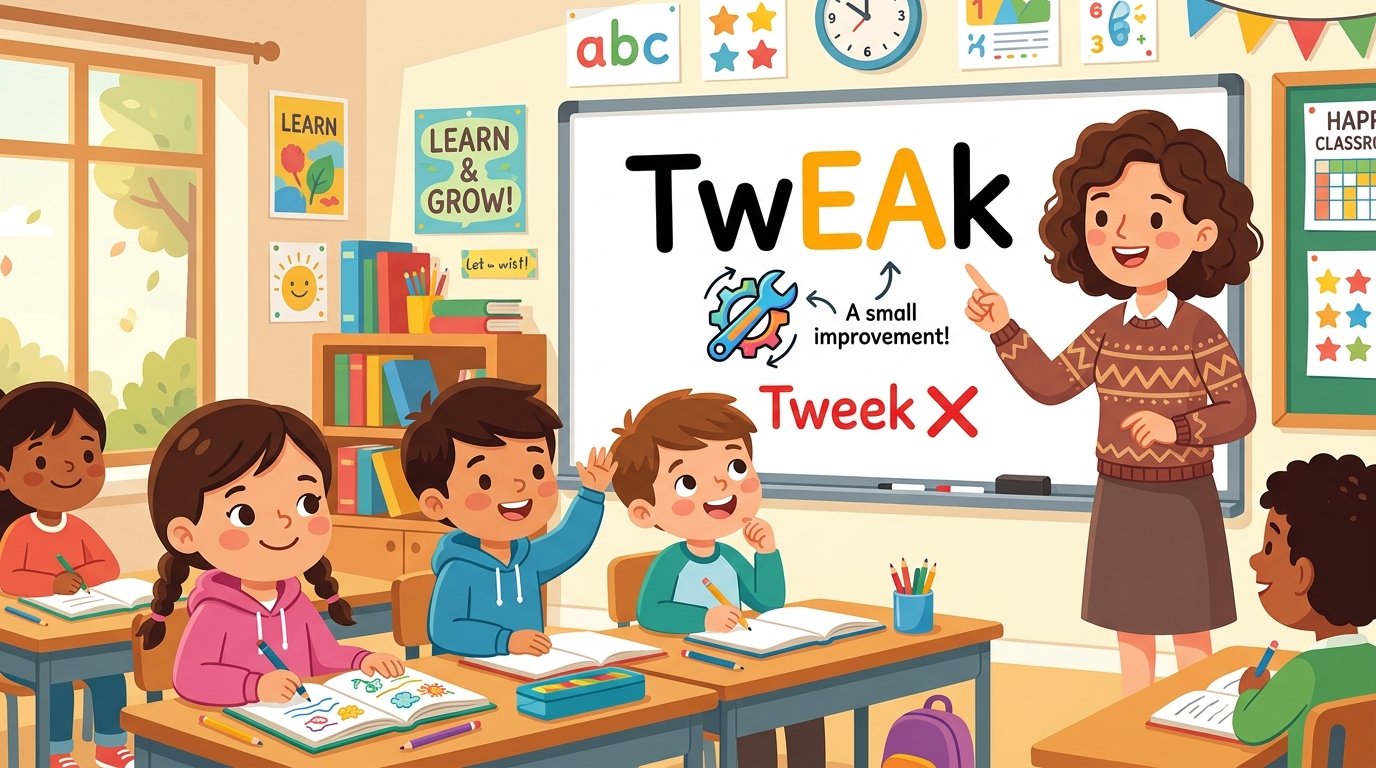
Ever typed a word quickly and paused, unsure whether it should be “tweek” or “tweak”? You’re not alone. The confusion around tweek vs tweak is surprisingly common, mainly because both spellings look believable, and plenty of people run into them online in casual conversations, gaming forums, and social media posts.
The truth is simple: one spelling is standard English, while the other is generally treated as a misspelling or informal variation. Still, there’s more to the story than a basic spelling correction. Understanding the difference can sharpen your writing, communication, and confidence when using the word in either professional or casual settings.
This guide walks through the full tweek vs tweak meaning, correct usage, common mistakes, real examples, and why the confusion exists in the first place.
What Does “Tweak” Mean?
“Tweak” is the correct, widely accepted English word.
It usually means:
- To make a small adjustment
- To improve something slightly
- To pinch or twist suddenly
People typically reach for this word when talking about improvements, edits, or fine-tuning details.
Common Examples of “Tweak”
- I need to tweak the design before publishing it.
- She tweaked the recipe to make it healthier.
- The developer tweaked the app settings for better performance.
In modern usage, “tweak” pops up constantly across:
- Technology
- Writing and editing
- Gaming
- Marketing
- Design
- Software customization
The word suggests small but meaningful changes, rather than major overhauls.
What Does “Tweek” Mean?
Here’s where the confusion actually begins.
“Tweek” generally isn’t recognized as the standard spelling in English dictionaries. Most of the time, people write it accidentally in place of “tweak.”
That said, a few exceptions exist where “Tweek” shows up as:
- A surname
- A username or online alias
- A fictional character name
- A stylized brand or gamer tag
For instance, fans of the TV show South Park may recognize “Tweek” as a character’s name. Outside of proper nouns or intentional branding, though, “tweek” is typically treated as a spelling error.
Tweek vs Tweak: Breaking Down the Meaning
The simplest way to understand the difference:
- “Tweak” = the correct English word
- “Tweek” = usually an incorrect spelling, or a special name
Many people accidentally swap the “a” for a second “e,” since the pronunciation can sound similar in fast, casual speech.
Why Do People Mix Up Tweek and Tweak?
English spelling patterns aren’t always predictable. Words that sound alike often lead to confusion, especially in informal writing.
Here are the most common reasons people get this one wrong.
1. Similar Pronunciation
Both words sound nearly identical in casual speech. Because of this, plenty of people spell the word based on sound rather than memory.
2. Typing Errors
Fast typing, autocorrect mistakes, and mobile keyboards can easily churn out “tweek.”
3. Internet Slang and Usernames
Online communities sometimes deliberately use unusual spellings to stand out. Over time, repeated exposure can make the alternate spelling start to feel normal.
4. Spell-Check Isn’t Always Reliable
Some platforms fail to flag the error, especially in usernames, chats, or gaming discussions.
A Simple Trick to Remember the Correct Spelling
Here’s a handy trick:
Think of the word “weak.”
When you tweak something, you’re taking a weak spot and making it better through small improvements.
This memory shortcut helps a lot of writers remember that the correct spelling includes “ea.”
When Should You Use “Tweak”?
Use “tweak” whenever you want to describe:
- Small changes
- Minor improvements
- Fine adjustments
- Careful modifications
Examples Across Everyday Writing
Technology:
- The engineer tweaked the software settings.
Writing:
- I tweaked the introduction to improve readability.
Fitness:
- He tweaked his workout routine for better results.
Business:
- The company tweaked its marketing strategy.
The word works comfortably in both formal and informal communication.
Is “Tweek” Ever Actually Correct?
Technically, yes — but only in limited situations.
“Tweek” may be correct when referring to:
- A person’s name
- A fictional character
- A brand identity
- A username
For standard grammar and professional writing, though, you should almost always go with “tweak.”
Common Mistakes to Avoid
People often mix up tweek vs tweak in emails, blog posts, and social media captions.
Incorrect
- I need to tweek the settings.
Correct
- I need to tweak the settings.
Incorrect
- She tweeked the design yesterday.
Correct
- She tweaked the design yesterday.
Even small spelling errors like this one can chip away at credibility in professional writing.
Synonyms for “Tweak”
If you’re after some variety in your writing, these words can work similarly depending on context:
- Adjust
- Modify
- Refine
- Improve
- Fine-tune
- Edit
- Alter
- Customize
Each carries a slightly different tone, but all point toward making changes.
How “Tweak” Shows Up in Digital Culture
Over the years, “tweak” has become especially popular in technology and online communities.
You’ll often run into phrases like:
- Tweak the code
- Tweak the graphics
- Tweak the algorithm
- Tweak the settings
The word fits naturally into environments where constant optimization matters.
Gamers, developers, creators, and marketers reach for it regularly, since it describes quick, precise improvements.
Grammar Notes on “Tweak”
“Tweak” can function as both a verb and a noun.
As a Verb
- I tweaked the image brightness.
As a Noun
- The app needs a small tweak.
This flexibility is part of what makes the word so useful across many types of writing.
Is “Tweak” Formal or Informal?
“Tweak” sits comfortably between casual and professional language.
It works well in:
- Business communication
- Academic discussions
- Technical writing
- Casual conversation
That said, in highly formal documents, some writers may lean toward alternatives like:
- Modify
- Optimize
- Revise
- Adjust
Even so, “tweak” remains widely accepted throughout modern English.
FAQs About Tweek vs Tweak
Here are the most common questions people ask about tweek vs tweak.
Is “tweek” a real word?
Usually, no. Most dictionaries recognize “tweak” as the correct spelling. “Tweek” mainly shows up as a name or an intentional stylistic variation.
Which spelling is correct — tweek or tweak?
“Tweak” is the correct, standard English spelling.
Why do people spell “tweak” as “tweek”?
People often spell it based on pronunciation, typing habits, or exposure to online slang.
Can I use “tweek” in professional writing?
It’s best to avoid it, unless it’s part of a proper noun or brand name.
What does “tweak” mean in slang?
In slang, “tweak” can sometimes describe acting nervously, obsessively, or energetically. The meaning shifts heavily depending on context.
Is “tweak” a noun or a verb?
It can be both. You can “tweak” something, or make “a tweak” to something.
Conclusion
Understanding tweek vs tweak gets a lot easier once you know that “tweak” is the standard, correct spelling in everyday English. The word describes small adjustments, improvements, or refinements, and shows up constantly across technology, writing, business, and casual conversation.
Meanwhile, “tweek” mostly survives as a typo, a fictional name, or an online variation. Using the correct spelling helps your writing come across as more polished and professional.
If you often trip up on similar-looking words, exploring more grammar and vocabulary guides can sharpen your communication skills and make everyday writing that much easier.








Leave a Reply