

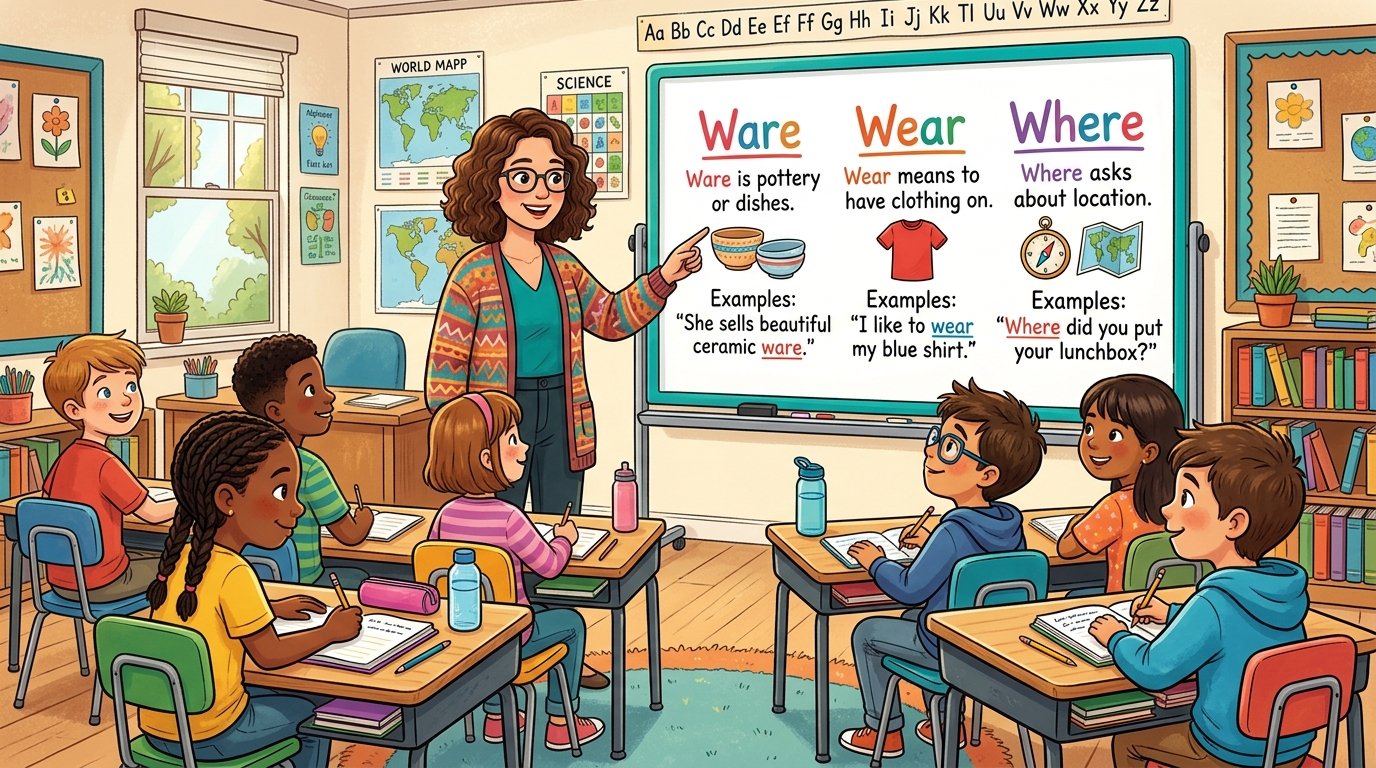
Ever stopped in the middle of a sentence, unsure whether to write “ware,” “wear,” or “where”? You’re far from the only one. The ware vs wear vs where mix-up is one of the most common spelling headaches in English, tripping up learners and native speakers alike.
These three words are pronounced almost identically, yet each one carries a completely different meaning. This guide breaks them down clearly and practically so you can stop second-guessing yourself for good.
Getting to Know Ware vs Wear vs Where
Before jumping into examples, here’s a quick snapshot of what each word means:
- Ware → Goods, products, or merchandise
- Wear → To put on clothing, or to break down gradually over time
- Where → Points to a place or location
Even though they all sound the same out loud, their spelling and meaning are worlds apart.
What Does “Ware” Actually Mean? (Goods and Products)
The word ware generally connects to items, products, or merchandise. It shows up often as part of compound words.
Familiar Examples Using “Ware”
- Hardware (tools, machines, equipment)
- Software (computer programs)
- Kitchenware (plates, pots, utensils)
- Digital ware, like apps or software updates
Simple Sentences
- The shop sells handmade wares crafted by local artisans.
- Digital ware can include apps, games, and various online tools.
Think of ware as shorthand for “things people buy and sell.”
What Does “Wear” Actually Mean? Clothing and Gradual Damage
The word wear carries two main meanings: putting on clothes, and gradual damage over time.
1. Wearing Clothes
- I wear a jacket once winter arrives.
- She enjoys wearing traditional outfits.
2. Damage That Builds Up Over Time
- The shoes began to wear out after just a year.
- Heavy use will eventually wear down the fabric.
A Quick Memory Trick
“Wear = what you put on, or what slowly gets worn down.”
What Does “Where” Actually Mean? Talking About Location
The word where comes into play whenever you’re asking about or referring to a location.
A Few Examples Using “Where”
- Where are you headed?
- Do you happen to know where she lives?
- This is the spot where we first met.
An Easy Trick to Remember
Whenever your sentence is about a place or position, reach for where.
Ware vs Wear vs Where: A Quick Comparison
| Word | Meaning | Example Sentence |
|---|---|---|
| Ware | Goods or products | The store sells glassware. |
| Wear | Clothing or gradual damage | I wear jeans every day. |
| Where | Location or place | Where is your house? |
Frequent Mistakes People Make
A lot of errors happen simply because these words sound exactly alike. Here are some common slip-ups:
- Where my shoes? → Where are my shoes?
- I ware a watch → I wear a watch
- Kitchen wear → Kitchenware
Quick tip: Always focus on meaning first, not how the word sounds.
Simple Tricks to Keep These Words Straight
Here are a few handy memory shortcuts.
- Ware = Warehouse full of goods
- Wear = Clothing you put on
- Where = A question word asking about place
Another way to picture it:
- Ware = objects
- Wear = an action (putting something on)
- Where = a location
Why This Mix-Up Happens So Often
The main reason ware vs wear vs where trips people up so often comes down to a few things:
- They’re homophones, meaning they sound identical
- All three appear constantly in everyday English
- It’s easy to mix them up while typing quickly
Paying attention to context is really the key to using each one correctly.
Frequently Asked Questions
What’s the actual difference between ware, wear, and where?
Ware refers to goods or products, wear relates to clothing or gradual damage, and where points to a location.
Why do ware, wear, and where all sound the same?
They’re homophones in English — words that share the same pronunciation while carrying completely different spellings and meanings.
What’s a simple way to remember ware vs wear vs where?
Link each word to a single keyword: ware = goods, wear = clothing, where = place.
Is “ware” still a commonly used word today?
Yes, it shows up regularly in words like hardware, software, and kitchenware.
What’s the most common mistake people make with these words?
Mixing up “wear” and “where” in a sentence, mostly because they sound so identical when spoken.
Wrapping Up: Mastering Ware vs Wear vs Where
Getting a solid handle on ware vs wear vs where becomes much easier once you connect each word to its core meaning — goods, clothing or damage, and location. These small distinctions can make a noticeable difference in how clearly you write and help you steer clear of common grammar slip-ups.
Next time you find yourself hesitating, just pause and ask: Am I talking about things, clothing, or a place? That one simple question will point you toward the right word every time.
If you’re looking to sharpen your English even further, digging into other tricky homophones like there/their/they’re or your/you’re makes for a great next step.






Leave a Reply